Zweigelt
Make 2026 THE year.
Take 10% OFF your first 12 months of Tasting Group!
Code:
Macabeo (also called Viura and sometimes Macabeu) is a farily neutral white grape variety from Spain that has built its reputation through versatility. It is widely associated with Rioja, Cava, and French Catalan vineyards, where it can appear in fresh still wines, long-aged whites, traditional-method sparkling wines, and even oxidative sweet styles.
You can expect some floral and fruity notes, balanced structure, and a wine that often shows more on the palate than on the nose. Its neutral profile is exactly what makes it so useful across very different wine traditions.
A few more notes on Macabeo/Viura:
This guide walks through what Macabeo/Viura smells and tastes like, how its structure usually shows up in the glass, where its key regional expressions come from, what foods suit it, and which other grapes it is most often confused with.
Macabeo/Viura can move comfortably between fresh still wine, sparkling wine, lees-aged styles, oak-aged whites, and oxidative sweet wines because its structure adapts well to different cellar approaches. It is considered “a winemaker’s grape”!
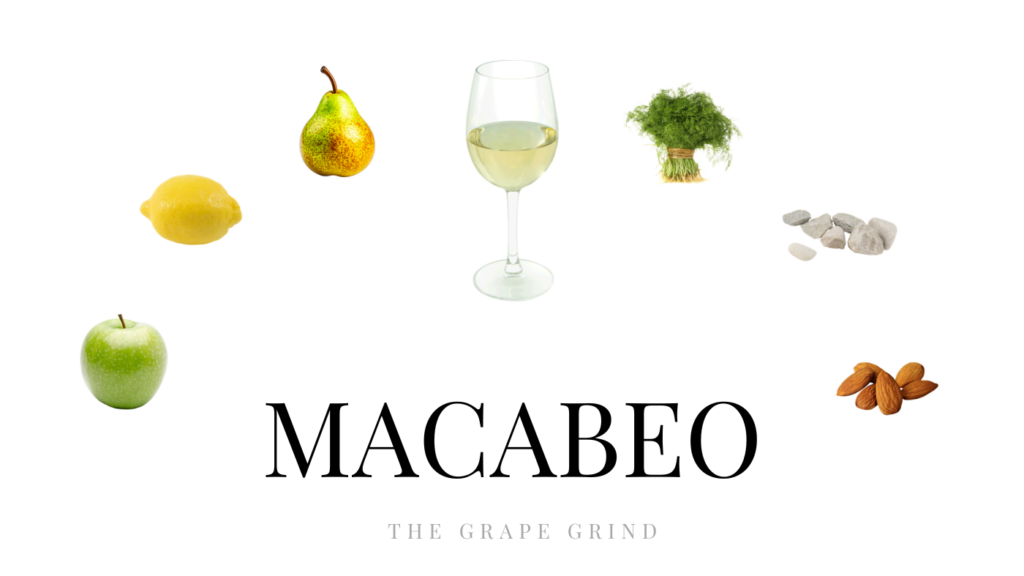
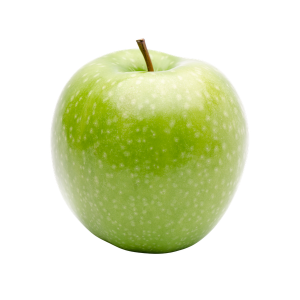
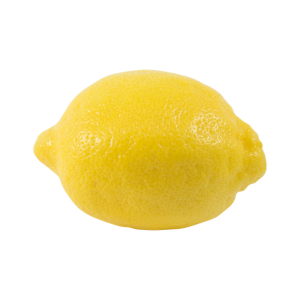
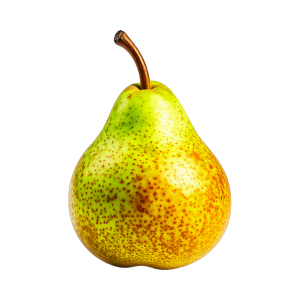
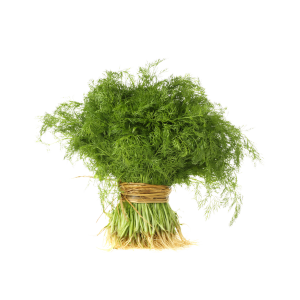
Its aromas are usually light to medium in intensity, with notes like apple, pear, citrus, fennel, or anise rather than anything especially forceful.
Macabeo/Viura often shows more through palate shape than aromatic volume. Lees, oak, and age can build creaminess, breadth, and persistence without needing loud primary fruit.
STANDARD TASTING NOTES: These are your benchmark exam-style tasting notes.
There is no “one size fits all” when it comes to structure for every grape, however, there IS a general range when it comes to body, acid, alcohol, and tannin for each. Below are general guidelines for classic representations. Growing conditions and winemaking techniques can impact each of the following.
Typical range: medium (-) to medium (+). Fresh styles stay lighter, while warmer sites, lees work, or oak can broaden the palate and make the wine feel more centered and fuller.

Typical range: medium to medium (+). Acidity is strongly site- and harvest-dependent, with cooler or higher sites preserving more freshness and warmer conditions softening the wine.

Typical range: medium to medium (+). Sparkling wines and earlier-picked still wines often stay moderate, while warmer zones or riper harvests can push the wine higher.

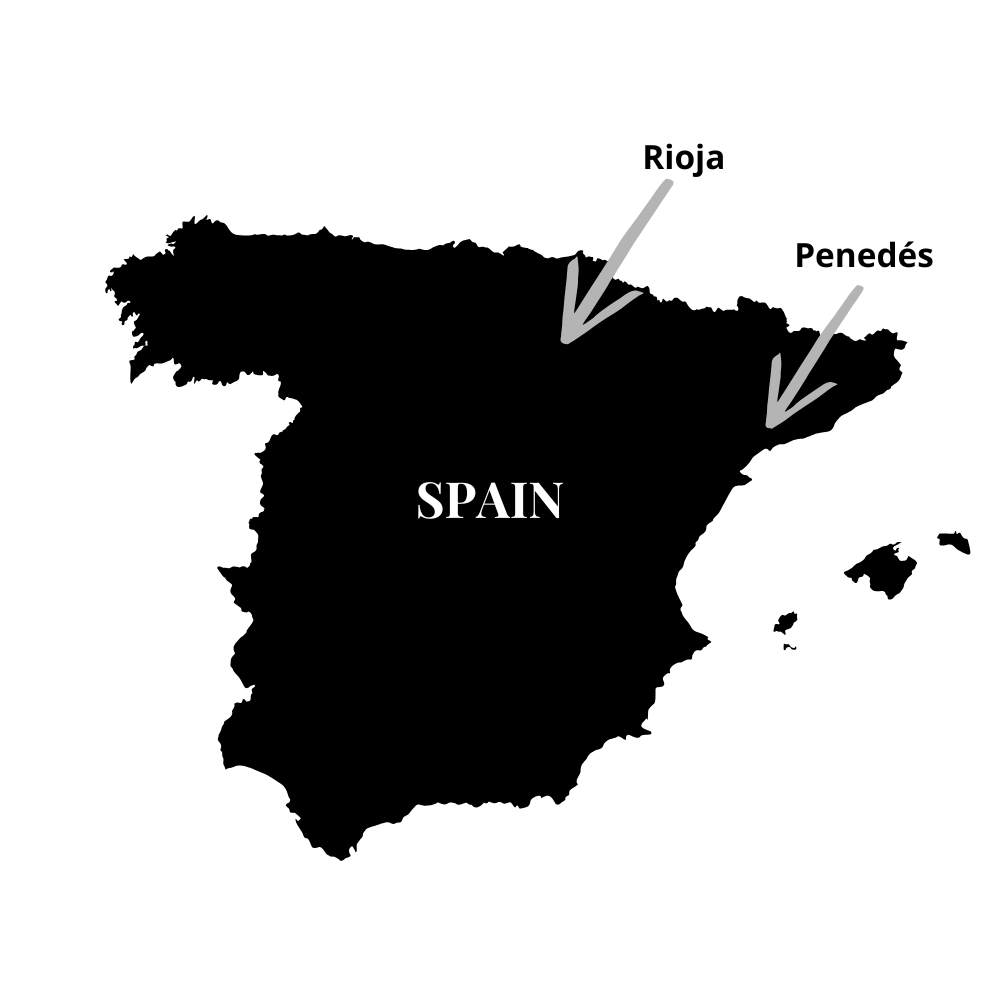
Catalonia & Rioja
Catalonia (Penedès): Macabeo as the backbone of Cava
Macabeo’s identity in Catalonia is closely tied to the rise of Cava and the region’s long tradition of sparkling wine production. In the Penedès region, especially around the Valls d’Anoia-Foix valley, Macabeo became one of the three essential Cava varieties alongside Xarel·lo and Parellada. Its importance comes from its ability to bring balance: enough acidity to keep sparkling wines fresh, delicate floral and apple notes for aromatic lift, and a relatively neutral personality that allows the character of the place and the traditional-method process to shine. The Mediterranean climate gives Macabeo plenty of ripeness, while elevation and sea influence help preserve freshness and acid. In Cava, Macabeo is less about making a loud varietal statement and more about creating harmony.
In Rioja, Macabeo takes on a completely different personality under the name Viura. It became the region’s dominant white grape after phylloxera reshaped Rioja’s vineyards in the late 19th century, when producers replanted vineyards and expanded white wine production. For much of the 20th century, traditional Rioja Blanco was defined by long aging, often in oak, where Viura’s naturally subtle fruit profile became a canvas for time, oxygen, and winemaking. The grape’s ability to retain acidity while slowly developing complexity made it uniquely suited to this style. In Rioja Alta and Rioja Alavesa, higher elevations, cooler influences from the Atlantic, and clay-limestone soils help maintain freshness, allowing Viura to evolve from youthful citrus, green apple, and floral notes into fascinating mature aromas of beeswax, nuts, dried fruit, tea, spice, and honey. Today, Rioja producers make everything from bright, modern stainless-steel Viura to serious old-vine, barrel-aged wines.
Other important areas include other Cava Zones, as well as La Mancha, where Macabeo/Viura is valued for drought adaptation. In France, Roussillon, where it is integrated into both dry white blends and oxidative fortified wines.
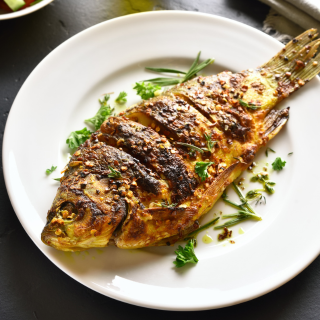
Macabeo/Viura’s bright acidity, citrus notes, and subtle herbal character make it a natural partner for grilled Mediterranean fish like dorada (sea bream), lubina (sea bass), or sardines. The wine’s freshness balances the richness from olive oil and grilled flavors, while its delicate fruit and floral notes complement the clean, savory flavors of the fish without overpowering them.
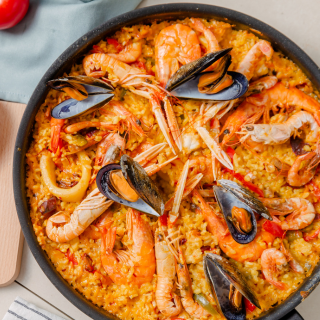
This is a classic Catalan and Mediterranean pairing for Macabeo, especially when served as Cava. The wine’s acidity refreshes the palate alongside saffron, shellfish, and olive oil, while its apple, citrus, and mineral notes echo the flavors of the sea. The bubbles in Cava also help lift the dish’s richness, making each bite feel lighter.
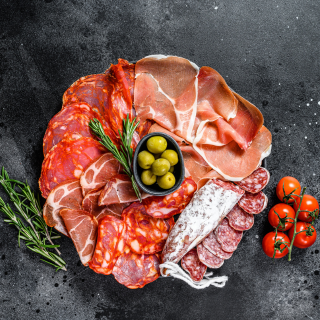
A more traditional Spanish pairing than generic charcuterie, embutidos showcase Macabeo/Viura’s versatility. Fresh Cava works especially well with jamón Ibérico, cured ham, and lighter sausages because the acidity and bubbles cut through fat and salt. Richer, aged Rioja Viuras can also pair beautifully with cured meats because their nutty, oxidative, and savory notes complement the complex flavors of aged pork products.
Traditional-method sparkling examples are also very comfortable with fried foods, salt, and fat thanks to bubbles, acidity, and a rounded fruit center.
(common confusions)
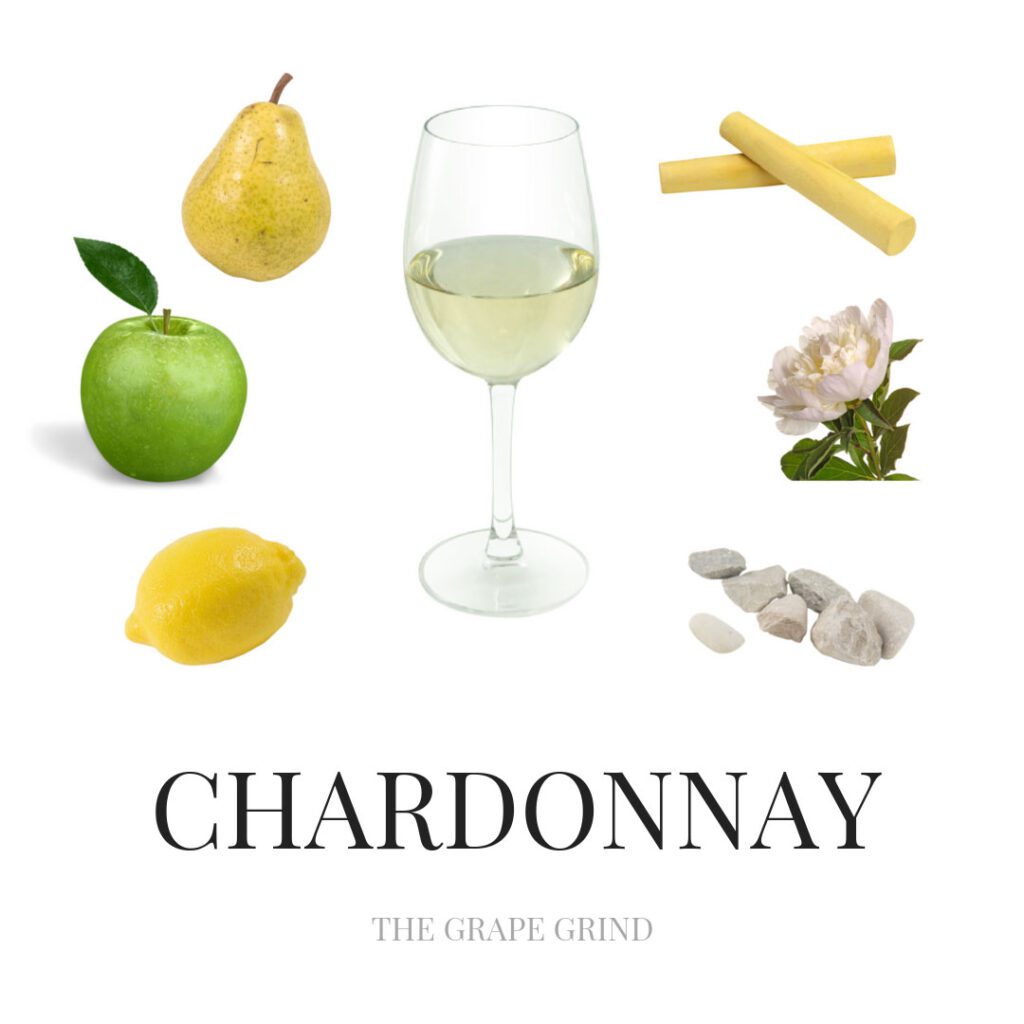
Chardonnay Has:
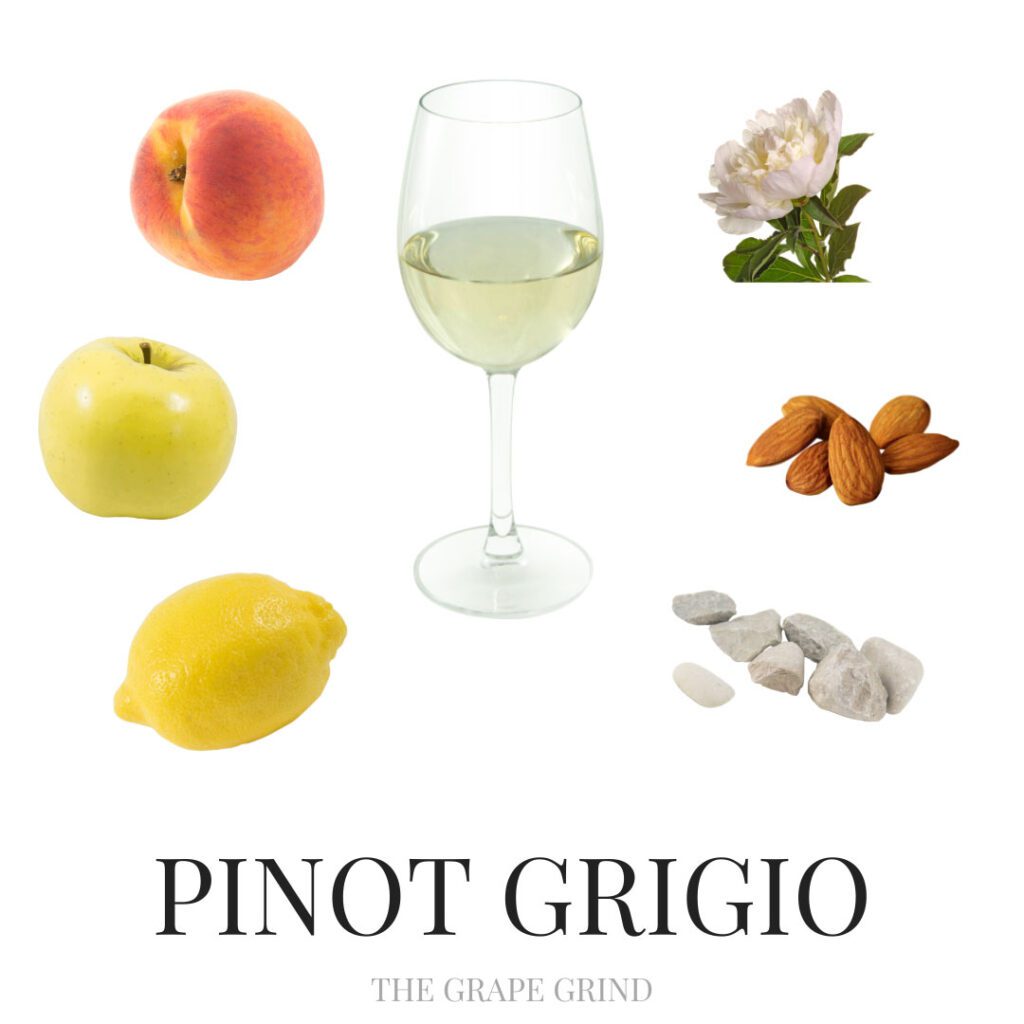
Pinot Grigio Has:
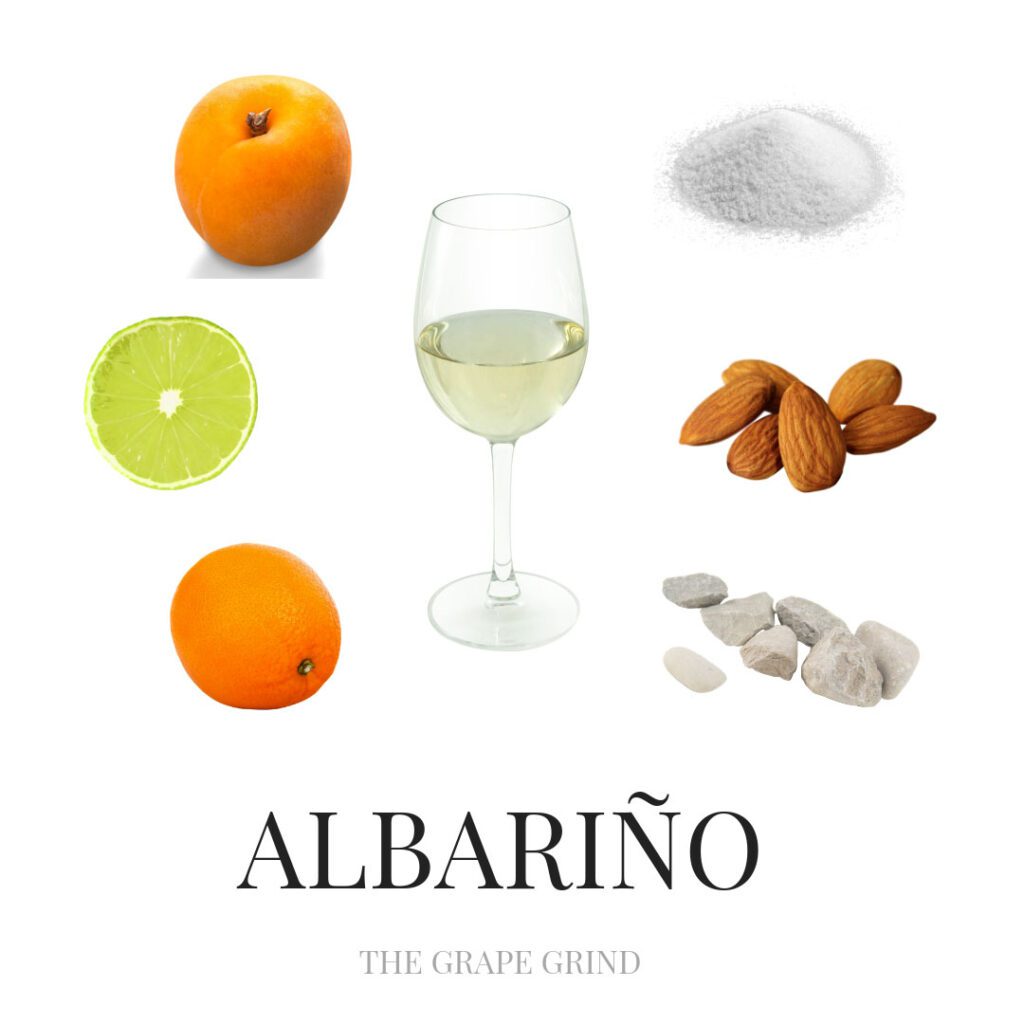
Albariño Has:
(Learn to Taste or Refresh Foundations)
(Ask, Discuss, & Connect)
(Gain Tasting Confidence)
Join our totally free community, which includes:
Just submit your info to receive your invite!
By submitting, you are consenting to receive marketing emails from The Grape Grind, including much of the core educational content you’re specifically signing up for now. You can unsubscribe at any time.
Joining the free Grape Grind community means your wine tasting journey begins NOW!
STEP 1 of 2 – Fill this out:
After you click the button above, you’ll be asked to enter your email again to set up your free account. Please use this same email address to create your account.
By submitting, you are consenting to receive marketing emails from The Grape Grind, including much of the core educational content you’re specifically signing up for now. You can unsubscribe at any time.
Learn & improve your wine tasting skills for free!