
6 of the most questionable words in wine
Explore six commonly used yet vague wine terms like “natural,” “clean,” and “small production” and learn why they often lack clear definitions or regulations.
Make 2026 THE year.
Take 10% OFF your first 12 months of Tasting Group!
Code:
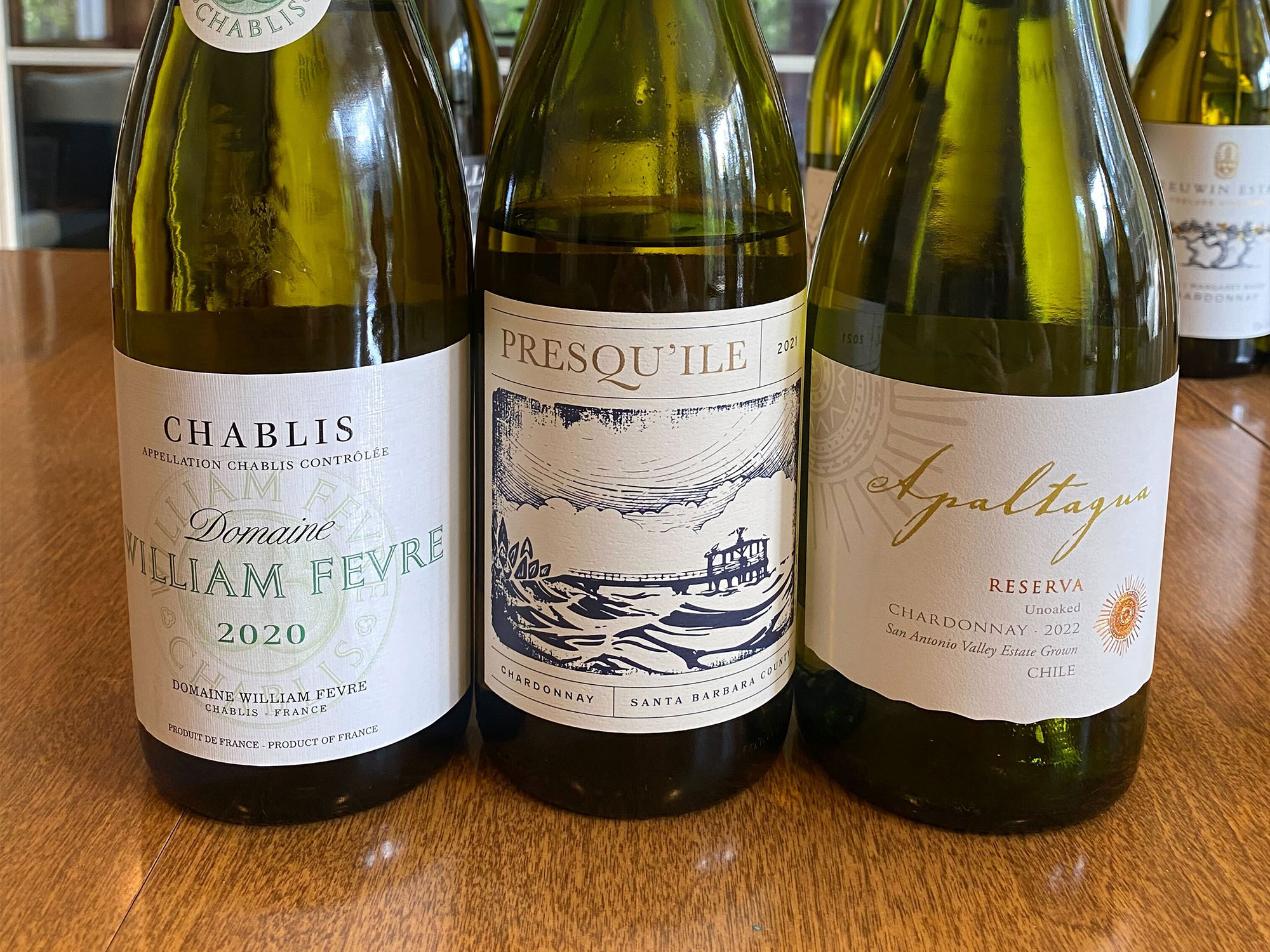
Chardonnay might be the most misunderstood grape in the glass.
Ask someone if they like Chardonnay and you will often get a strong reaction, usually based on one particular style. “Too buttery.” “Too oaky.” Or the opposite: “I can’t stand oaky.” What is interesting is that most of those opinions are really opinions about winemaking choices, not the grape itself.
In this post, we are going to walk through what oaked and unoaked Chardonnay actually mean, how they differ in aroma, body, texture, and finish, and how you can taste them side by side in a way that builds real tasting confidence. We will also clear up one of the most common points of confusion in wine: the relationship between oak and butteriness.
Let’s start with why Chardonnay is the right grape for this conversation.
Chardonnay is sometimes called a “winemaker’s grape,”. The grape itself is relatively neutral. It does not have the intensely floral aromatic compounds you find in grapes like Riesling or Gewürztraminer, and it does not have the vegetal compounds that show up in some Sauvignon Blanc. What it has, is a kind of clean adaptability.
That neutrality is exactly what makes it so useful as a teaching tool!
When you taste an unoaked Chardonnay next to an oaked one, you are not trying to sort through layers of variety-driven aromatics. You are watching winemaking choices play out in the glass, clearly and directly. The fruit shows up. The texture shifts. The acidity changes in how it feels. It is as close to a controlled comparison as wine tasting gets.
Chardonnay also grows in a wide range of climates, from cool regions like Chablis in northern Burgundy to warmer California valleys, which means you have plenty of options when you go looking for bottles to practice with.
For anyone building a structured tasting practice, Chardonnay is one of the most reliable places to start.
Unoaked Chardonnay refers to Chardonnay that has been fermented or aged without meaningful oak contact. That usually means stainless steel tanks, concrete, or neutral vessels that do not contribute flavor to the wine.
The result is a wine where the fruit, acidity, and freshness come through without anything softening or layering over them. Unoaked Chardonnay tends to feel lighter, brighter, and more direct. The citrus and apple character that is naturally present in the grape shows up more clearly. The acid feels more pronounced, not because it is higher necessarily, but because there is nothing rounding it out.
This style is often described as crisp, mineral-driven, or refreshing. It is the kind of wine that feels precise.
From a calibration standpoint, unoaked Chardonnay is a helpful baseline. When you know what the grape tastes like without winemaking intervention, you have a clearer reference point for recognizing what oak is actually doing in the wines that have it.
A few places to look: California and Oregon producers sometimes label their wines “unoaked” explicitly. Chablis is a classic example of a region in Burgundy (classic) where minimal or no oak is the norm, though styles can vary by producer.
Oak does two things to wine: it adds flavor, and it adds texture. Those are worth separating in your mind because they work differently.
On the flavor side, oak barrels introduce compounds that were not in the grape to begin with. The most recognizable is vanillin, which is where vanilla notes come from. Toasted barrels can contribute baking spice, smoke, and toast. Depending on the type of oak, you might also notice coconut or dill, which are more common with new American oak.
Worth noting: new oak tends to be used more often with Chardonnay from warmer climates, where the riper fruit character integrates with those flavors more naturally. A wine with very ripe, tropical fruit and significant new oak tends to feel cohesive. The same oak on a leaner, cooler-climate wine can feel more obvious.
On the texture side, oak aging involves slow oxygen exposure through the barrel staves. That gradual process softens the wine’s structure. Acidity can feel lower or less sharp. The mouthfeel becomes fuller and rounder. There can be a subtle grip from oak tannins that adds a different kind of weight to the finish.
The overall impression of an oaked Chardonnay is usually: more body, softer edges, richer feel.
This one is worth slowing down on because it catches a lot of people off guard.
Most oaked Chardonnays are fully dry, with little to no residual sugar. But they can still come across as slightly sweet.
What many pick up on isn’t actual sugar, it’s perceived sweetness.
A few things are working together here. Oak often brings aromas like vanilla, baking spice, and toast, things we naturally associate with sweet foods. At the same time, these wines tend to have a rounder texture and, in many cases, slightly softer acidity. When acidity is low and texture is round, the wine does not have the sharp edges that signal dryness. So it registers as richer, softer, and sometimes sweet-adjacent.
This is the big one. It comes up constantly.
Buttery notes in wine do not come directly from oak. They can be enhanced by oak, but the source is something else entirely: a process called malolactic fermentation.
Malolactic fermentation (often shortened to MLF) is not actually a fermentation, but a conversion where bacteria transform malic acid into lactic acid. Malic acid is sharp and tart, like green apples. Lactic acid is softer, more rounded, more dairy-like. During that conversion, a compound called diacetyl is produced, and diacetyl is what creates buttery, creamy, sometimes yogurt-like notes in wine. It is the same compound responsible for the flavor of movie theater popcorn butter.
Oak can amplify that impression, but it is not the source of it.
Why does this matter? Because oak and malolactic fermentation often happen together in winemaking, especially with fuller-style Chardonnay. That overlap is why they get confused. But they are separate decisions, and a wine can have one without the other.
If you taste a Chardonnay that has clear butter or dairy notes but not much vanilla or spice, you may be tasting MLF without significant oak influence. If you taste vanilla and toast but the wine still feels fairly crisp, you may have oak without full MLF.

Buttery does not always mean oaked.
Buttery notes in Chardonnay typically come from malolactic fermentation, a separate winemaking process. Oak can enhance that impression, but it is not the direct source.
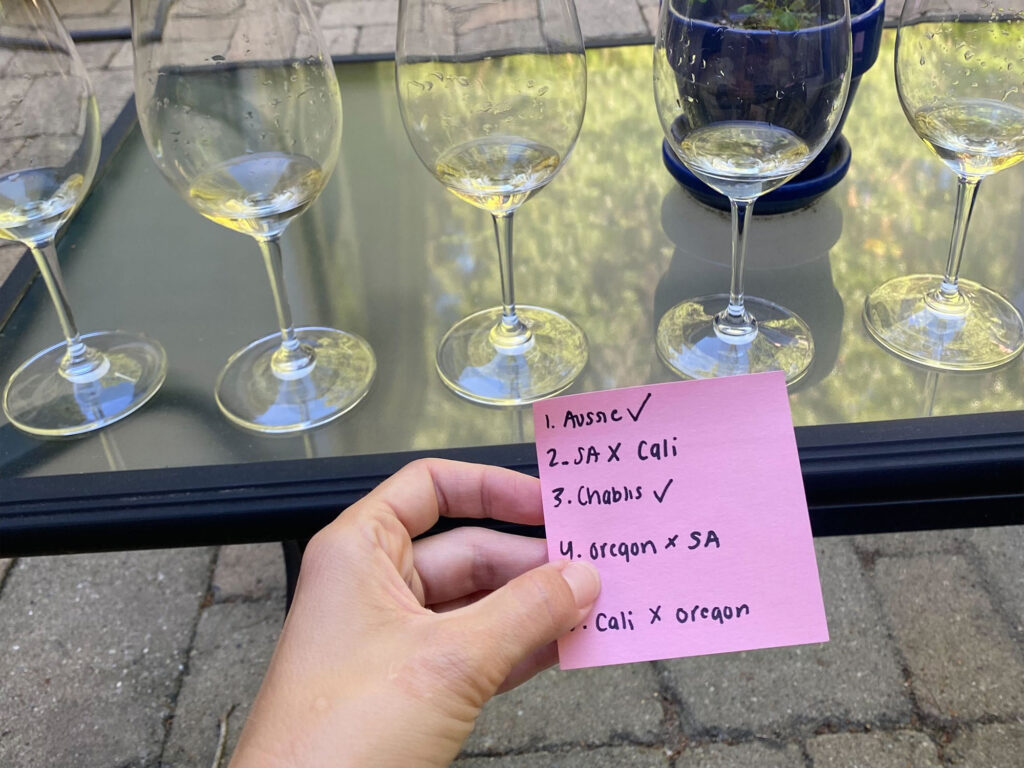
The best way to understand this comparison is not to read about it. It is to taste it, of course!
Side-by-side tasting is one of the most effective tools for building pattern recognition and tasting confidence. When two wines are in the glass at the same time, you do not have to rely on memory to make comparisons. The contrast is right there.
A good practical pairing for this exercise: An Unoaked Chardonnay as one reference point, and an Oaked Chardonnay as your comparison. Ideally both from the same country (same region would be even better). These are relatively accessible bottles, and the contrast tends to be clear and instructive.
Here is the approach:
Pour both wines. Start with the unoaked. Smell it first, before you taste anything. Notice what comes forward: fruit, freshness, citrus, maybe a mineral edge. Then move to the oaked. Smell that. Notice what is different: vanilla, spice, something warmer or rounder.
Then taste both, in the same order.
What to note in a side-by-side tasting
Structured note-taking during this exercise will help you translate what you are sensing into something you can build on. You do not need elaborate vocabulary. A few clear observations per wine is a strong start.
| Attribute | Unoaked | Oaked |
|---|---|---|
| Aroma | Fresh fruit, citrus, apple, mineral | Vanilla, baking spice, toast, riper fruit |
| Body | Light to medium | Medium to full |
| Acidity | Feels higher or more pronounced | Feels softer or more rounded |
| Texture | Precise, clean | Creamy, rounder, sometimes grippy |
| Perceived sweetness | Lower | Higher (even when dry) |
| Common notes | Lemon, green apple, chalk, pear | Vanilla, butter (if MLF), toasted oak, tropical fruit |
| Food pairing fit | Seafood, sushi, lighter dishes | Roasted chicken, cream sauces, richer meals |
| Feature | Oak | Malolactic Fermentation |
|---|---|---|
| What it is | A vessel used for aging or fermenting wine | A bacterial conversion of malic acid to lactic acid |
| What it affects | Flavor, texture, oxygen exposure, tannin | Acid perception, mouthfeel, aromatic character |
| Common sensory clues | Vanilla, spice, toast, smoke, fuller body | Butter, cream, yogurt, softer acidity |
| Common confusion point | Often used alongside MLF, so effects overlap | Often assumed to be caused by oak |
Different, not better.
Neither oaked nor unoaked Chardonnay is the superior style. They are different experiences, shaped by different winemaking choices. The goal in tasting is to notice the difference clearly, not to rank them.
Reading about the difference between oaked and unoaked Chardonnay will only take you so far. The real work happens when you taste.
This kind of practice over memorization is what actually builds tasting skill. You are not trying to memorize flavor notes. You are training your palate to notice contrast, and then to describe it accurately in your words.
If you want a framework to guide that process from the beginning, our Beginner Frameworks walk through how to taste with structure, build vocabulary, and take your own notes that actually stick. It is a good place to start if you want to make sure you are building the right habits from the ground up.
And if you are already thinking about blind tasting, our Intro to Blind Tasting free course is a natural next step for building comparative tasting confidence!
Chardonnay is a remarkable teaching tool. Two bottles, one grape, very different experiences. Start there.
↑ Some of the links above are affiliate links, which means that I will earn a commission if you choose to purchase them. I will never recommend anything that isn’t valuable or useful in my wine study journey, or something I have no experience with. I hope these products/resources are equally helpful in your wine journey.
Explore six commonly used yet vague wine terms like “natural,” “clean,” and “small production” and learn why they often lack clear definitions or regulations.
Explore how the French Wine Scholar focuses on French regions, storytelling, and exam structure, offering a distinct experience from WSET3.
Rediscover vermouth’s rich history, styles, and how to serve it as a vibrant sipping wine, not just a cocktail enhancer.
(Learn to Taste or Refresh Foundations)
(Ask, Discuss, & Connect)
(Gain Tasting Confidence)
Join our totally free community, which includes:
Just submit your info to receive your invite!
By submitting, you are consenting to receive marketing emails from The Grape Grind, including much of the core educational content you’re specifically signing up for now. You can unsubscribe at any time.
Joining the free Grape Grind community means your wine tasting journey begins NOW!
STEP 1 of 2 – Fill this out:
After you click the button above, you’ll be asked to enter your email again to set up your free account. Please use this same email address to create your account.
By submitting, you are consenting to receive marketing emails from The Grape Grind, including much of the core educational content you’re specifically signing up for now. You can unsubscribe at any time.
Learn & improve your wine tasting skills for free!