Wine Blends: The Treasures of the Wine World
See how every grape in a blend plays a role in body, aroma, color, acid, tannin—artistry in harmony.
Make 2026 THE year.
Take 10% OFF your first 12 months of Tasting Group!
Code:
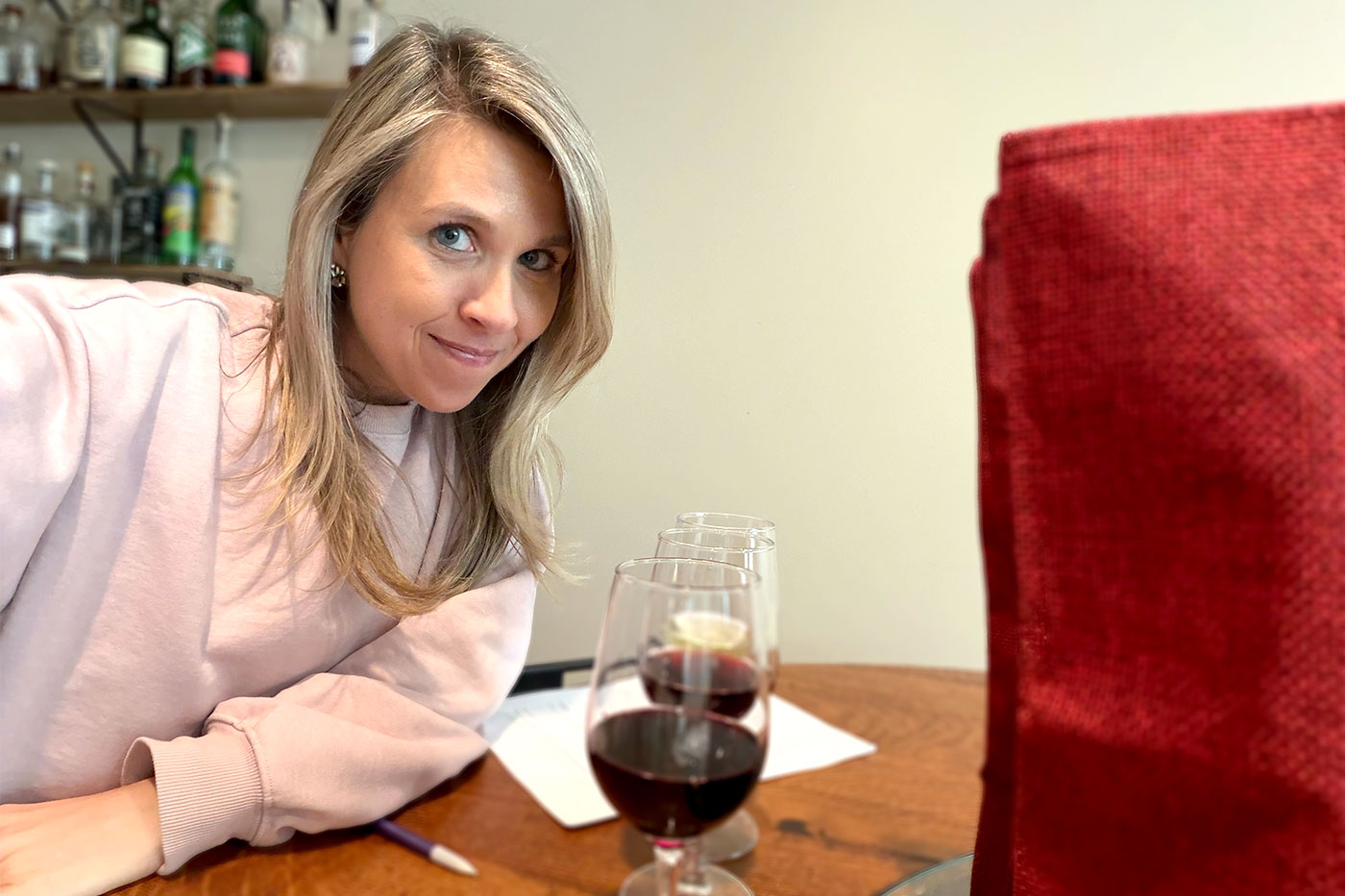
Intuition has a real place in blind tasting. So does experience. But one of the most important skills in blind tasting is something more than a “gut feeling”.
This is calibration.
Calibration is what happens when repeated exposure, benchmark wines, and correction over time shape your internal reference points. It is part of a consistent tasting process.
The distinction between these two things matters because a lot of certification-minded wine students want to trust their instincts right off the bat. A strong first impression can feel convincing. It can even be right. But in blind tasting practice, especially under pressure, the question is not whether an impression feels quick and easy. It is whether it is reliable.
A lot of tasters think they need better intuition.
Often, what they really need is better calibration.
In tasting terms, intuition is the quick sense that a wine resembles something we have seen before. It is a pattern recognition shortcut. It can be useful. It can also be misleading.
A lot of intuition comes from one strong memory. Maybe it is a wine from a trip. Maybe it is a bottle that made a big impression early in your study. Maybe it is a single taste that felt so vivid it became a picture in your mind.
That is not nothing. But one memorable experience can dominate future calls if we do not check it.
Intuition helps us move quickly.
It can surface a likely region or grape, point us toward a familiar style, or give us a starting hypothesis.
Used well, intuition is a useful first draft.
Intuition becomes risky when we let it outrun evidence.
It can mislead us when one aroma note feels familiar and we stop there, or if we ignore structure after “getting a vibe”.
A strong first impression is not the same as a correct conclusion.
Again, this happens more often than people admit. We have one good call, one memorable bottle, one vivid comparison, and suddenly our brains start treating that experience like a rule.
We smell something familiar and immediately think:
The problem is that familiar aromas can create premature conclusions. A single note can feel so persuasive that we stop checking the rest of the wine. We skip the structure. We skip the comparison. We skip the part where we ask, “What does not fit?”
Under pressure, the brain wants closure.
That is true in a classroom. It is true in a tasting group. It is definitely true in exam-based wine study. Pressure makes us more eager to lock in a call, especially if we think we have seen something similar before.
But tasting under pressure is exactly where calibration shows its value. Pressure exposes whether we have really built a framework for ourselves or whether we are leaning on a few lucky memories.
Calibration is different from intuition. Calibration is repetition plus correction. It is the ongoing process of comparing your impression to reality, then adjusting your internal reference. It is the slow work of making your palate more trustworthy.
Calibration means we taste, we compare, we check, and we adjust. We revisit the same styles over time. We build an internal library through comparative tasting and consistent benchmarking. We learn what fits, what does not, and why.
This is what makes blind tasting more reliable.
If we taste a wine once and file it away as “learned,” we are probably overestimating what we know. Real calibration comes from repeated exposure and repeated checking against the actual wine.
Here is the work:
That loop is not very showy. It’s often quite humbling. It’s the part you don’t often see in tasting videos online!
Calibration is slower than intuition. It is less exciting than a sudden “aha” moment.
But it is dependable.
It builds better pattern recognition, cleaner decisions under uncertainty, more reliable structure calls, and honestly LESS guesswork over time.
For serious tasters, that matters more than feeling clever in the moment.
The best tasters do use intuition. They just do not let it stand alone.
Their intuition is usually the result of thousands of calibrated reps. It is a fast pattern match built on a much slower process underneath.
That is why side-by-side tasting is so useful. It sharpens comparative tasting and makes structure easier to benchmark. We stop relying on vague memory and start building a usable internal reference.
They begin with a hypothesis.
Then they verify it!
There is no mystery here. The work is repetitive on purpose.
If you want to get serious about blind tasting, do these few things consistently:
This is deliberate practice in the most practical sense. It is not about memorizing more descriptors. It is about making the tasting process more dependable.
Getting it wrong is part of calibration.
The important part is what happens next.
If the note was vague, make it more structured. If the structure was misread, write down what you missed. If the wine felt familiar but the call was off, identify the specific cue that misled you.
Over time, that creates a better reference library.
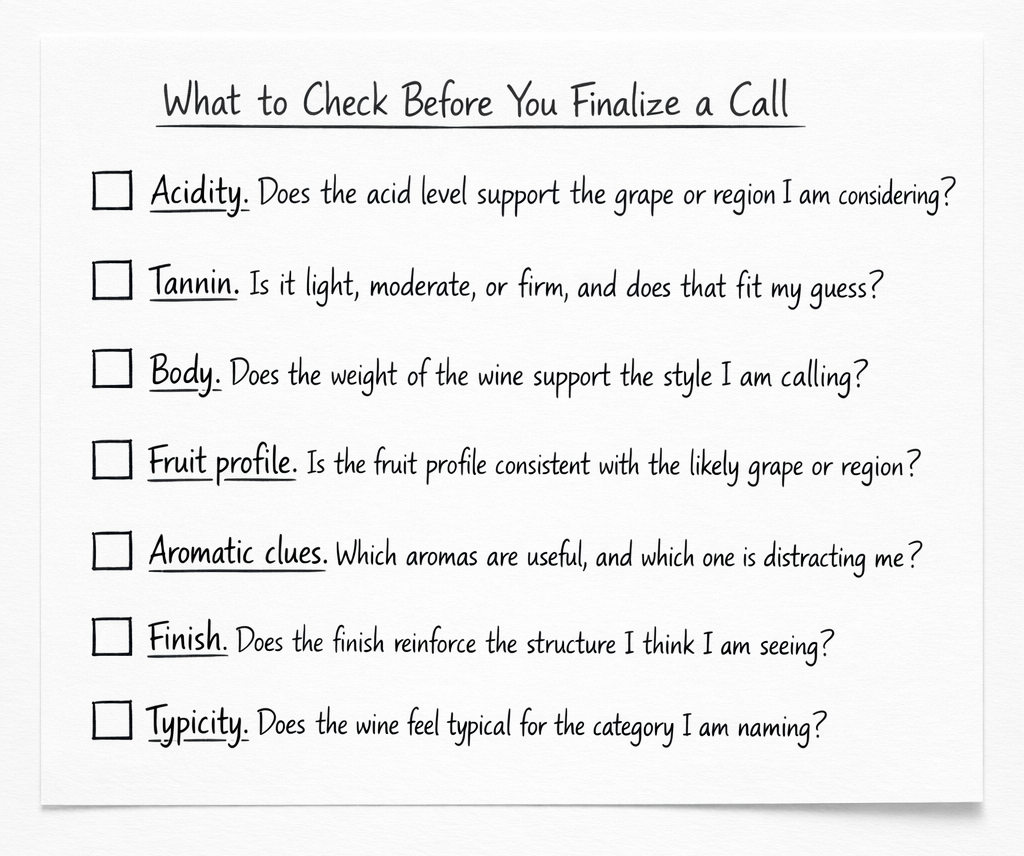
Here is a simple checkpoint list you can use before you finalize a blind call.
Blind tasting rewards consistency.
That is true in informal study, and it becomes even more obvious in exam-based wine study. The formats used across major certification programs are not about lucky calls. They reward structure, calibration, and decision-making under uncertainty.
Students studying within the WSET system, or working through tasting formats commonly used by the CMS, tend to run into the same issue: intuition can get them started, but calibration is what makes the final answer more dependable.
If you want a more repeatable way to build that skill, Tasting Frameworks is the next step.
Not because it gives you a shortcut.
Because it gives you a system you can keep using!
If we want better results under pressure, we need a repeatable tasting process. We need benchmark wines. We need structured blind tasting. We need the habit of checking the wine against our own guess instead of defending the guess too early.
That is what builds real tasting confidence.
See how every grape in a blend plays a role in body, aroma, color, acid, tannin—artistry in harmony.
Discover effective strategies for WSET Level 3 success, including structured planning, mastering sparkling & fortified wines, & focusing on command words for exam readiness.
Discover how wine bottles evolved from fragile glass to iconic shapes, and how packaging influences perception, preservation, and the modern wine experience.
(Learn to Taste or Refresh Foundations)
(Ask, Discuss, & Connect)
(Gain Tasting Confidence)
Join our totally free community, which includes:
Just submit your info to receive your invite!
By submitting, you are consenting to receive marketing emails from The Grape Grind, including much of the core educational content you’re specifically signing up for now. You can unsubscribe at any time.
Joining the free Grape Grind community means your wine tasting journey begins NOW!
STEP 1 of 2 – Fill this out:
After you click the button above, you’ll be asked to enter your email again to set up your free account. Please use this same email address to create your account.
By submitting, you are consenting to receive marketing emails from The Grape Grind, including much of the core educational content you’re specifically signing up for now. You can unsubscribe at any time.
Learn & improve your wine tasting skills for free!