How to Taste Wine Formally (without Feeling Behind OR Pretentious)
Wine tasting does not need to feel stiff, fake, or intimidating. Start with a simple framework, then build enough confidence to use your own words.
Make 2026 THE year.
Take 10% OFF your first 12 months of Tasting Group!
Code:
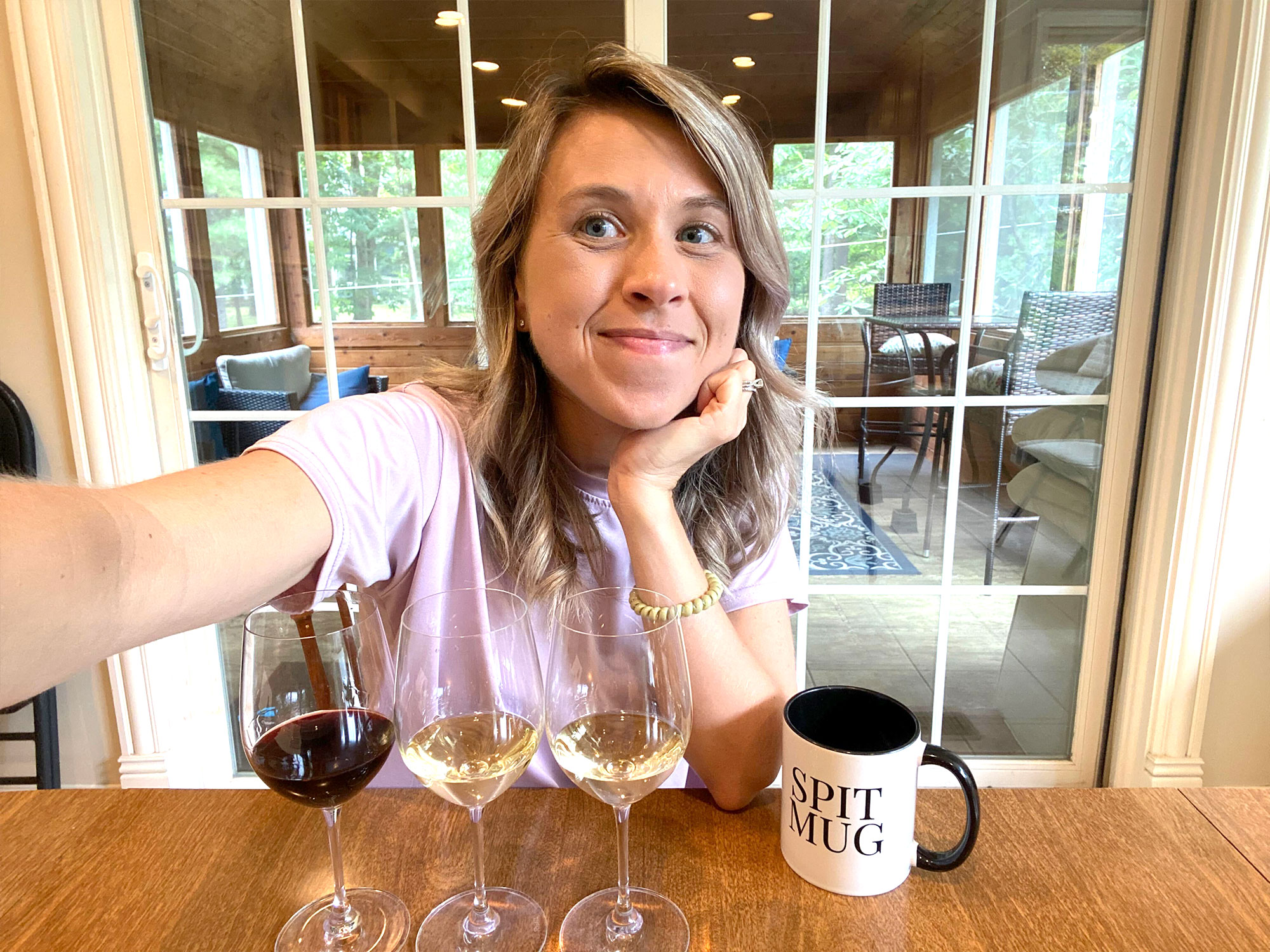
There is a version of blind tasting that feels manageable. You are at your kitchen table, no one is watching, the timer is optional. You can pause, re-smell, & reconsider.
Then there is the version where someone is watching you, or grading you, or the clock is running and you can feel it!
I have noticed a significant difference between those two situations in my own tasting. And I do not think I am unusual in that. The pressure of being timed, observed, or evaluated changes something. For some people it creates a kind of tunnel focus. For others, it triggers something closer to a mental shutdown. For most of us, it does both at different moments.
What I have come to understand is that the goal is not to eliminate that pressure. It is to build a system that holds up inside of the pressure.
Casual blind tasting practice at home and exam-style timed tasting are not the same activity, even if the wine in the glass is identical.
When you are being timed, watched, or graded, your nervous system responds differently. This is not a personal weakness. It is a physiological reality. The conditions of the exam room, the awareness of the clock, the stakes attached to accuracy, all of that changes how the body and brain respond.
Pressure can sharpen your focus and it can also cause you to lose access to things you genuinely know. Both outcomes are possible, sometimes in the same tasting.
What matters here is not whether pressure exists. It is whether you have something to hold onto when it shows up. That is where structured blind tasting practice becomes the real variable so you have a lead back into focus.
In my experience, the most honest way to describe exam-style pressure is this: it feels like a fight-or-flight response that happens to show up while you are trying to describe wine.
Under pressure, especially in formal exam conditions, I notice that my working memory feels compressed. Things I know well become harder to retrieve. Vocabulary that flows easily in low-stakes practice suddenly feels just out of reach. It is not that the knowledge is gone. It is that access to it narrows.
This is one of the most common failure modes in timed blind tasting. The clock becomes the object of focus, not the glass. Once your attention shifts to time, accuracy tends to drop. You are no longer tasting. You are managing anxiety about tasting.
Under pressure, the brain wants resolution. It wants to be done. So it reaches for the first plausible answer and tries to commit. This is one of the biggest problems in blind tasting under pressure, and resisting it is a skill that has to be practiced deliberately.
and on the flip side…
The picture is not entirely bleak. Pressure can create hyperfocus also. Less time can mean less overthinking. Patterns can surface faster when you are not second-guessing every observation. The point is not that pressure is bad. It is that a strong system helps you access the upside of pressure instead of just absorbing the downside.
Here is the reframe that has helped me most: calm in blind tasting does not mean relaxed. It does not mean slow. It does not mean pressure-free.
Calm means contained focus.
It is staying inside your process when everything around you wants to pull you out. It is knowing what comes next even when your brain feels scattered. It is trusting a sequence you have practiced enough times that it runs almost automatically.
Contained focus means your attention is narrow, purposeful, and procedural. You are not trying to feel peaceful. You are trying to stay inside systems that keep things flowing.
A lot of advice about blind tasting exam anxiety points people toward relaxation techniques, breathing exercises, or general confidence building. Those things are fantastic and I’m a big fan of the 4-7-8 breathing technique. But they are not the core solution. The core solution is a repeatable tasting process that your brain can trust when the clock is running.
This sort of “calm” is build in practice and repetition.
The time to build your anchors is not during the exam. It is in the weeks and months of practice before it.
An anchor, in this context, is anything that gives your brain a reliable handhold when pressure spikes. The most important anchor is a memorized tasting sequence. But there are others.
You should not have to think about what comes next. The order should be automatic. Appearance, nose, palate, structure, conclusion. That sequence is the backbone of structured tasting practice, and it needs to be internalized through repetition, not just understood intellectually. Whether it’s the CMS Grid or the WSET SAT or the SWE format!
When you use the same format every time, the act of writing becomes part of the anchor. Your hand knows where to go. That physical consistency supports mental consistency under pressure. This is how pattern recognition develops over time.
If you have never practiced with a timer, the first time you encounter one in an exam will feel foreign. Timing your practice sessions is not just about building speed, it is about making the sensation of a running clock familiar enough that it stops being a distraction.
This sounds simple, but it works. Mentally rehearsing the exam setting, the table, the glass, the notebook, the clock, makes the actual setting feel less novel when you arrive. Novelty is one of the things that amplifies pressure. Familiarity reduces it. Have you heard the phrase “picture yourself winning”? If you do, you are often half way there!
The tasting sequence exists for a reason. It is not bureaucratic. It is protective.
When you follow a fixed order, you prevent your brain from doing the thing it most wants to do under pressure: jump to a conclusion before the evidence supports it.
The sequence most commonly used in exam-based wine study moves through:
The temptation under pressure is to skip ahead. To smell something and immediately reach for a grape. To taste and immediately commit to a region.
Resist that.
Early grape guesses are one of the most reliable ways to derail accuracy in blind tasting. Once your brain commits to an answer, it starts filtering everything else through that lens. Evidence that contradicts the guess gets minimized. Evidence that supports it gets amplified. We’ve all been here!
Description matters more than certainty. Getting through the sequence accurately, even if you cannot name the grape with confidence, is more valuable than a confident wrong answer reached by skipping the process.
Even with a strong system, there will be moments mid-tasting when pressure spikes. The clock is ticking. The aroma memory goes blank. The wine just feels foriegn.
Here is what to do…
Not the beginning. The next step. Ask yourself: where am I in the sequence? What comes next? Then do that. The framework is your reset point. You do not need to start over. You just need to find your place and keep moving.
This is a small but useful anchor. Even under significant pressure, there is usually something observable. The color. The intensity of the nose. Terpenes! The level of acidity. SOMETHING. Think of your top standout(s). This can reorient the brain into focus.
This is the core principle of almost every exam and it applies especially when pressure is high. Do not try to force a conclusion. Describe what is in the glass. The conclusion often follows naturally once the description is complete. If it does not, you still have a complete set of observations, and that usually is enough!
Blind tasting practice that never includes pressure is incomplete preparation for conditions that will include it.
This does not mean every practice session needs to be high-stakes. It means that some of your practice, regularly, should include the specific conditions that create pressure.
Practice with a timer until the pacing feels familiar. Practice with other people present, even informally, so the sensation of being observed loses some of its novelty (We do this aloud in Tasting Group monthly) Practice writing your notes in the same format every time until the structure becomes automatic.
Rehearse the exam environment mentally. Think through what it will look and feel like to sit down at that table. The more familiar the setting feels in advance, the less cognitive bandwidth it will consume when you are actually there.
Review your sessions afterward. Look for the moments where pressure disrupted the process. Was it at the nose? At the conclusion? Did you skip a step? Did you rush the structure assessment?
The goal of all of this is procedural memory. Not just knowing the framework intellectually, but having practiced it enough that it runs with less conscious effort. That is what creates reliable access under pressure.
Calm is not something you find in the exam room. It is something you build in practice, over time, through repetition and structure.
Consistency in blind tasting comes from having a process you trust. That trust is not manufactured through positive thinking. It is earned through practice sessions where you showed up, ran the sequence, wrote the notes, and did it again.
Structure reduces guesswork. A memorized framework means fewer decisions in the moment. Fewer decisions means less cognitive load. Less cognitive load means more access to what you actually know.
The exam room does not have to feel like unfamiliar territory. With enough structured practice, it can feel like a place you have already been.
| Practice method | What it trains | Why it helps |
|---|---|---|
| Timed drills | Pacing and comfort with a running clock | Makes the sensation of time pressure familiar before exam day |
| Visualization | Mental familiarity with the exam setting | Reduces the novelty of the actual environment, which reduces the pressure spike |
| Repeated note-taking in a fixed format | Procedural memory for writing | The structure of the notes becomes automatic, freeing cognitive bandwidth for observation |
| Structured review after each session | Identifying where pressure disrupted the process | Turns each session into useful calibration data |
| Peer-observed practice | Comfort with being watched or evaluated | Reduces the novelty of external observation so it stops consuming attention |
Your anchor list for timed blind tasting
When pressure spikes, return to these:
Three things to practice before exam day
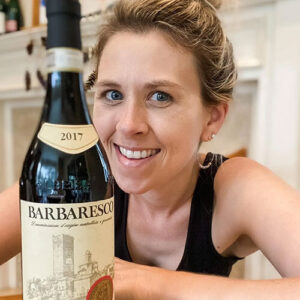
Wine tasting does not need to feel stiff, fake, or intimidating. Start with a simple framework, then build enough confidence to use your own words.
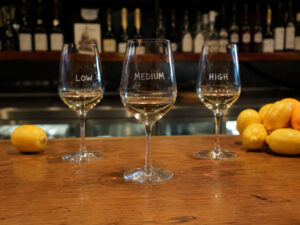
“Medium” can feel safe in blind tasting, but safe and sure are two differnet things. Here’s how to move beyond the middle with better benchmarks, side-by-side tasting, and a more repeatable structure.
Narrowing grape varieties gets much easier when you stop trying to identify the answer first. Here’s a structured blind tasting process that starts broad, uses elimination, and helps you build more reliable conclusions.
(Learn to Taste or Refresh Foundations)
(Ask, Discuss, & Connect)
(Gain Tasting Confidence)
Join our totally free community, which includes:
Just submit your info to receive your invite!
By submitting, you are consenting to receive marketing emails from The Grape Grind, including much of the core educational content you’re specifically signing up for now. You can unsubscribe at any time.
Joining the free Grape Grind community means your wine tasting journey begins NOW!
STEP 1 of 2 – Fill this out:
After you click the button above, you’ll be asked to enter your email again to set up your free account. Please use this same email address to create your account.
By submitting, you are consenting to receive marketing emails from The Grape Grind, including much of the core educational content you’re specifically signing up for now. You can unsubscribe at any time.
Learn & improve your wine tasting skills for free!