What Does “Good Balance” in Wine Actually Mean?
“Balanced” is one of the most common wine words, and one of the easiest to misunderstand. Here’s a simple way to think about wine balance through structure, not just taste impression.
Make 2026 THE year.
Take 10% OFF your first 12 months of Tasting Group!
Code:
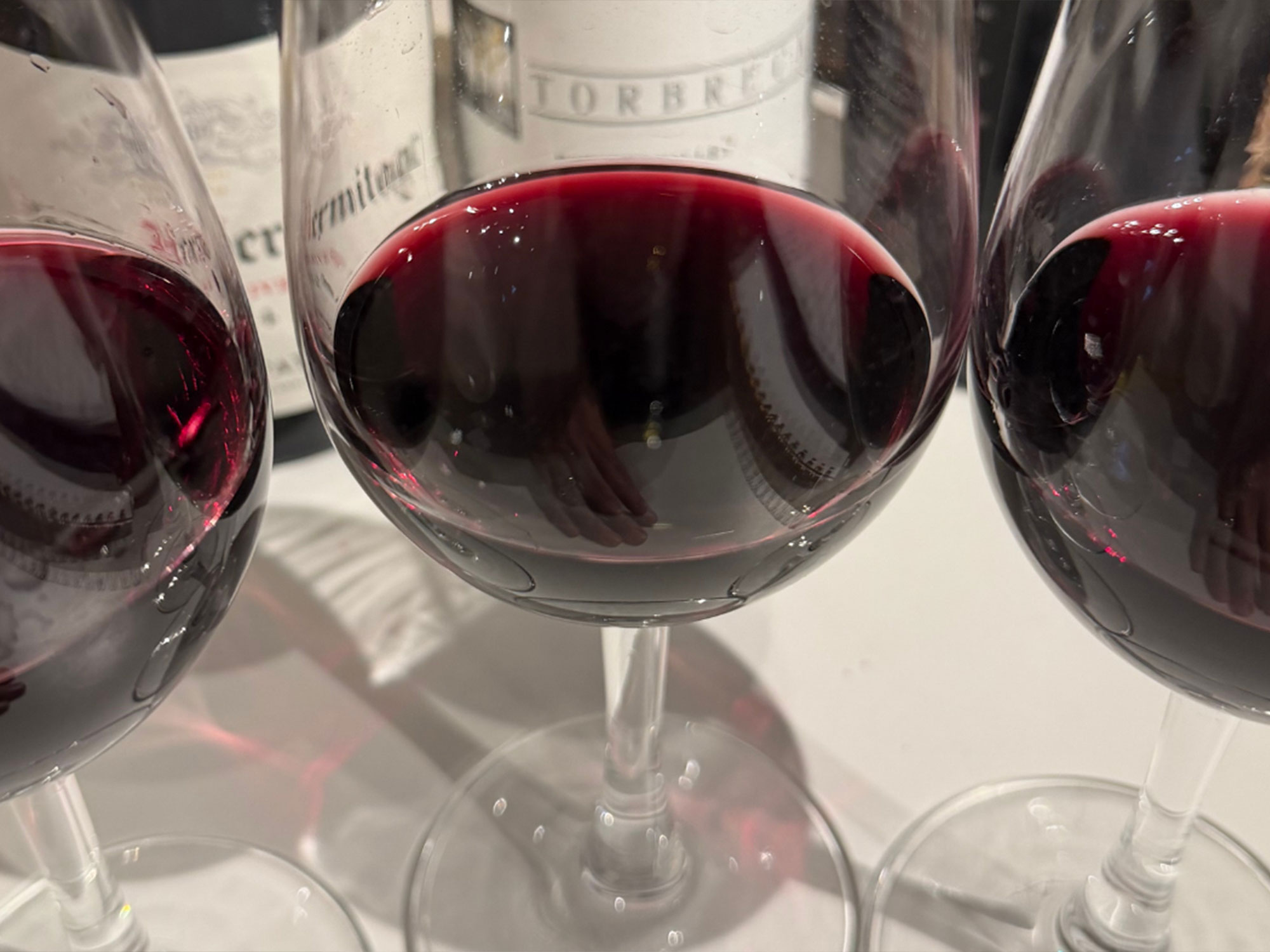
“Green” is one of those words that can show up in tasting notes and can mean something different depending on who is using it.
Bell pepper. Jalapeño. Mint. Rosemary. Stemmy. Bitter. These are all things I’ve heard described in this category of sorts!
We spent a full month tasting through wines that showed different kinds of green character, and what became clear to me is that the word “green” can often be used for many notes, but can point to very different causes, compounds, and ripeness levels.
This post is about making that distinction!
Most tasters, especially early on, describe the above aromas as simply “green.” This is a useful umbrella term, but as your tasting skills improve, you’ll learn to separate that broad category into more specific aromas.
“Green” can come from:
Collapsing them into one word means you are describing the impression. Let’s break down the various types of “Green” you may get in a wine!
Herbaceous is the most vegetable-forward of the three categories. When a wine is herbaceous, the green quality feels snappy, sharp, and raw. Think less “garden herb” and more “green thing you just bit into.”
Common herbaceous descriptors include:
These notes are often associated with pyrazines, a family of compounds that occur naturally in certain grape varieties. Cabernet Sauvignon and Cabernet Franc are probably the most commonly cited examples, though Sauvignon Blanc can also show strong herbaceous character as a white wine!
The key sensory quality of herbaceous notes is that they feel immediate and a little aggressive. There is a crispness to them. To me the”green” is snappy! When you smell bell pepper in a wine, this is that!
Herbaceous notes tend to be more prominent in cooler climates or in wines made from grapes harvested before full phenolic ripeness. They can also be a varietal signature. In Cabernet Franc, for example, a leafy or peppery green quality is often part of the grape’s expected character, not a flaw. Context matters a lot here.
Herbal is a different category. The notes are still green, but they feel more aromatic, more rounded, and less like a raw vegetable. Think of the difference between biting into a green pepper and rubbing a sprig of rosemary between your fingers. Both are green but not always the same experience.
Common herbal descriptors include:
These notes are often associated with terpenes and related compounds, including rotundone, a sesquiterpene that contributes peppery, sometimes green-pepper-adjacent spice. Rotundone tends to feel less like a raw vegetable and more like a savory, herbal spice. Many compounds found in grape skins can also contribute herbal and spicy character that reads as less snappy and more savory aromatic than pyrazine-driven notes.
Fresh herbal notes (mint, basil, rosemary) tend to feel brighter and more immediate. As wines age, or as these compounds evolve, those notes can shift toward dried herb character. The green quality softens. The impression becomes more even more savory.
A wine that shows fresh mint young may lean toward dried herb or even earthy character with a few years of bottle age.
The reason herbal notes feel softer than herbaceous ones comes down to the underlying compounds. Terpenes and skin-derived compounds tend to create impressions that are more aromatic and lingering, less like a sharp vegetable bite. They blend more easily into the wine’s overall aromatic profile.
That said, mint in particular can feel quite pronounced. It is still in the herbal family, but it has more immediacy than, say, dried sage.
Underripe is different from both of the above categories. It is not primarily about a specific aroma compound. It is more about ripeness and balance in the wine.
A wine that is underripe often shows green character, but the green quality comes with other signals:
When a wine is underripe, the whole wine can feel slightly offf. The fruit does not feel ripe. The structure feels angular. The green quality is not just an aroma note you can appreciate or set aside. It is woven into the experience of the wine often in a way that feels unpleasant.
This is where tasting with structure helps. If you are only focused on aroma, you might write “green pepper” and move on. But if you are also tracking fruit ripeness, tannin quality, and overall balance, you will notice that the wine does not just smell green. It tastes green in a way that suggests the grapes were not ready.
A wine can have pyrazine-driven bell pepper character and still be well-made, balanced, and delicious. That is a varietal characteristic. A wine can also taste green because the fruit was harvested too early, which is a different situation. The former is an aroma note. The latter is a quality signal.
Harsh tannin plus green fruit plus bitter finish is not the same as bell pepper in a ripe, structured Cabernet Franc.
Probably the most common oversimplification we see in early tasting notes. Someone smells something green, they remember learning about pyrazines, and they write “pyrazines” in the note. Sometimes that is right, sometimes it’s something else.
Different compounds create different green impressions. Pyrazines tend toward the vegetable side. Terpenes tend toward the herbal side. Rotundone can create a peppery, spicy green quality. Compounds from grape skins can add herbal or savory character. Environmental factors can introduce green impressions that have nothing to do with the grape variety at all.
Eucalyptus trees growing near vineyards in parts of Australia and Napa, for example, can contribute oils that find their way into the wine, adding a menthol or eucalyptus-like green quality.
Pyrazines are an important source of green aromas in wine, but they aren’t responsible for every herbaceous or vegetal character you encounter. Different grape varieties, winemaking decisions, ripeness levels, and other aroma compounds can all contribute to similar perceptions.
The strongest tasting habit is to separate observation from interpretation. Describe exactly what you smell and taste first, then evaluate what might be creating those aromas.
Terpenes are a broad compound family found in many grapes and responsible for a wide range of aromatic impressions, including herbal, floral, and spicy notes. Rotundone, a sesquiterpene, is specifically associated with peppery character and shows up in varieties like Syrah and Grüner Veltliner, among others. As with other aroma compounds, the goal is not to identify one compound as the answer, but to understand how different chemical components can shape what we perceive in the glass.
Green is a great FIRST umbrealla category! As you taste more, separating these three categories can make your notes more useful.
Here is the sequence we recommend:
This is the kind of repeatable tasting process makes your notes far more useful for pattern recognition across wines.
When you encounter a green note in a wine, work through these questions in order.
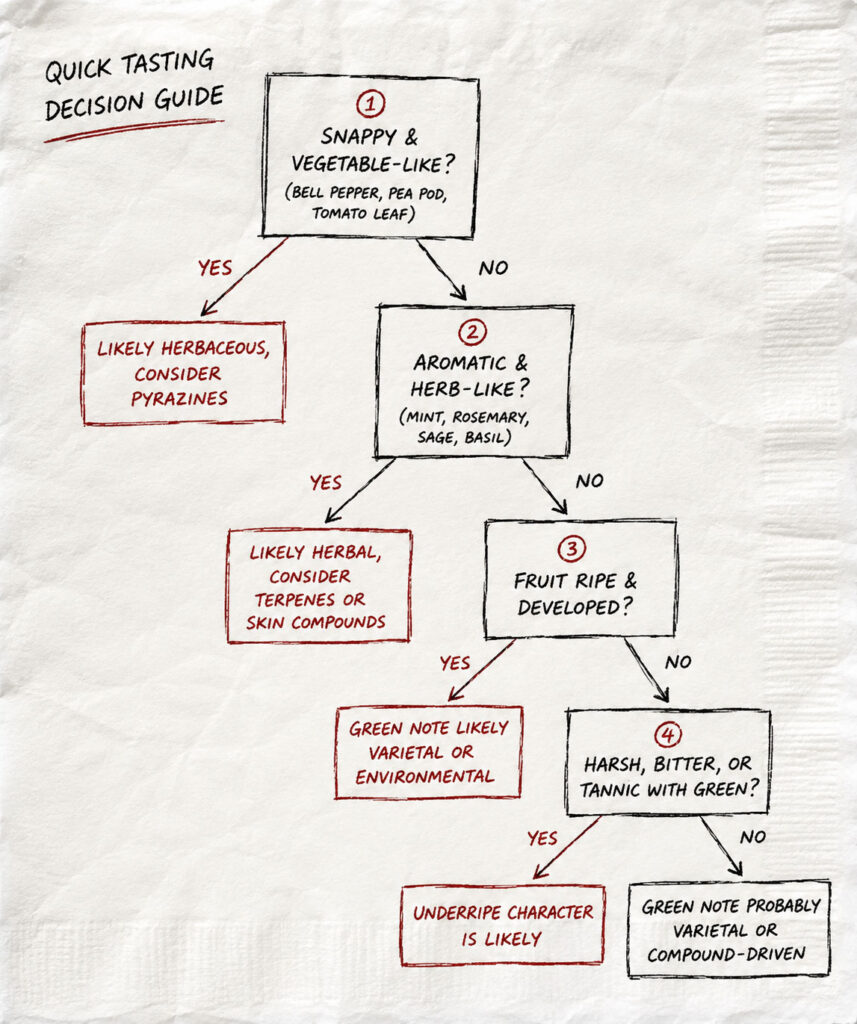
Quick Tasting Decision Guide
| Question | If Yes | If No |
|---|---|---|
| Does it feel snappy and vegetable-like (bell pepper, pea pod, tomato leaf)? | Likely herbaceous, consider pyrazines | Move to next question |
| Does it feel aromatic and herb-like (mint, rosemary, sage, basil)? | Likely herbal, consider terpenes or skin compounds | Move to next question |
| Does the fruit feel ripe and developed? | Green note is likely varietal or environmental | Underripe character is possible, check structure. Move to next question |
| Does the note feel harsh, bitter, or tannic alongside the green impression? | Underripe character is likely | Green note is probably varietal or compound-driven |
Students preparing within formal wine education programs, including those studying within the WSET system and similar certification frameworks, are often asked to separate aroma character from structural character in their tasting notes. Tasting formats commonly used across major certification programs reward the kind of descriptive precision we are talking about here.
Knowing that bell pepper belongs in a different category than mint, and that both are different from the bitter, stemmy quality of an underripe wine, gives you clearer language, more reliable calibration, and better conclusions under pressure.
This is not about memorizing compound names. It is about building a tasting methodology that helps you describe what you are actually perceiving, then reason from there. That is the kind of systematic tasting approach that serves you whether you are studying for an exam or just trying to understand a wine more deeply.
The best way to internalize this distinction is to taste through it deliberately.
Here is a simple drill:
Over time, you start to build a small library of wines that anchor each category clearly.
Before you go, here are the mistakes we see most often with green notes:
Green notes are not automatically problems. In many grapes and many wines, they are part of what makes the wine interesting. Some absolutely love them, some only like a touch!

“Balanced” is one of the most common wine words, and one of the easiest to misunderstand. Here’s a simple way to think about wine balance through structure, not just taste impression.

A savvy insider’s map to buying wine in volume: savings, pitfalls, and how to keep quality intact.
Rediscover vermouth’s rich history, styles, and how to serve it as a vibrant sipping wine, not just a cocktail enhancer.
(Learn to Taste or Refresh Foundations)
(Ask, Discuss, & Connect)
(Gain Tasting Confidence)
Join our totally free community, which includes:
Just submit your info to receive your invite!
By submitting, you are consenting to receive marketing emails from The Grape Grind, including much of the core educational content you’re specifically signing up for now. You can unsubscribe at any time.
Joining the free Grape Grind community means your wine tasting journey begins NOW!
STEP 1 of 2 – Fill this out:
After you click the button above, you’ll be asked to enter your email again to set up your free account. Please use this same email address to create your account.
By submitting, you are consenting to receive marketing emails from The Grape Grind, including much of the core educational content you’re specifically signing up for now. You can unsubscribe at any time.
Learn & improve your wine tasting skills for free!