
Preparing for WSET 3: What it’s like and tips for study!
Discover effective strategies for WSET Level 3 success, including structured planning, mastering sparkling & fortified wines, & focusing on command words for exam readiness.
Make 2026 THE year.
Take 10% OFF your first 12 months of Tasting Group!
Code:
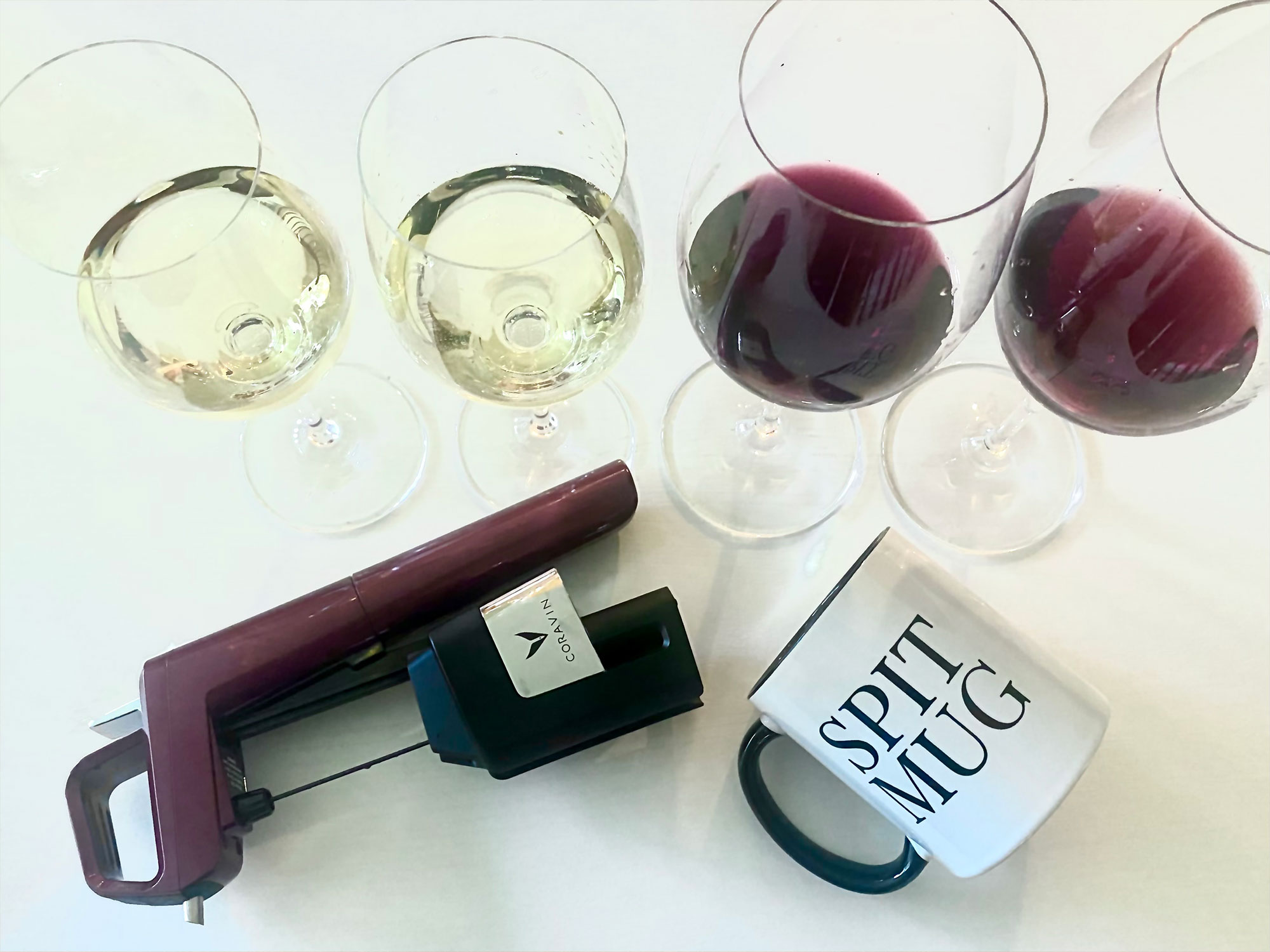
A good beginner tasting routine does not need to be complicated or intense. You do not need to identify every aroma, sound like a professional, or memorize a long list of descriptors. What you do need is a simple process you can repeat every time you open a bottle.
That is what this post is about. A clear, repeatable tasting routine that helps you notice more, learn faster, and build real tasting confidence over time.
The goal of a tasting routine is not to perform. It is to learn!
When you taste the same way every time, your brain starts building a reference library. You begin to recognize patterns. Wines that once felt random start to feel familiar.
There is nothing wrong with opening a bottle and enjoying it. In fact, it’s important you don’t overthink wine and actually make many wine nights just experiential and fun! If that is the goal of the evening, you do not need a deep analytical process. Drink what you like, trust your instincts, and have a good time!
If your goal is to actually learn, to know what you like and why, to describe a wine with some clarity, or to study wine more seriously, then you need a goal and a repeatable system. Tasting intentionally is what separates people who improve from people who just accumulate experience without learning from it.
This does not need to be elaborate. A clean table, a proper glass, and a few small adjustments are enough.
| Item | Why it helps | Needed or optional |
|---|---|---|
| Proper wine glass | Gives wine room to open up, concentrates aroma | Needed if possible |
| Good lighting | Helps you observe color and clarity | Needed |
| Water for rinsing | Clears your palate between wines | Needed |
| Notebook or notes app | Tracks what you observe and builds a record | Needed |
| Neutral crackers or bread | Resets your palate between wines | Optional |
| Fragrance-free environment | Removes competing aromas | Needed |
| Spittoon or dump bucket | Useful if tasting multiple wines | Optional |
You do not need a wine fridge, a formal tasting room, a specific lighting setup, or any special equipment beyond a decent glass and a notebook. The routine matters far more than the setting!
One of the most common beginner mistakes is tasting a single wine in isolation. It feels like the obvious starting point, but it actually makes learning harder.
Your brain notices differences faster than it notices absolutes. When you taste one wine alone, you have no reference point. When you taste two wines side by side, suddenly everything becomes clearer. This one is more acidic. That one is fuller in body. The fruit on this one is darker.
That contrast is where learning happens.
Start with two clearly different varieties. The goal is to notice contrast, so pick wines that are genuinely different from each other.
Once you are comfortable noticing differences between varieties, you can explore the same variety from two different regions. But start with variety contrast. It is the most useful comparison at the beginner stage.
Comparison tasting is one of the core tools used across serious wine study. When you taste two wines together, you are not just describing them, you are calibrating your palate. You are building a sense of where each wine sits relative to something else. This is the foundation of everything that comes after.
This is the most important habit in the entire routine.
Most beginners go straight to aromas and flavors when they taste wine. Flavors are fun and easy to talk about. But they are also the least reliable entry point when you are just starting out.
Structure is more consistent, more useful, and more directly connected to what makes a wine taste the way it does.
| What to notice | Beginner question | Example answer |
|---|---|---|
| Sweetness | Does it taste sweet or dry? | Dry, no residual sweetness |
| Acidity | Does it feel crisp and bright, or soft and round? | High acidity, feels very fresh |
| Tannin | Does it feel grippy or drying on the gums? (red wines) | Medium tannin, slightly drying |
| Body | Does it feel light, medium, or full in your mouth? | Medium body |
| Flavor intensity | Are the flavors subtle or bold? | Medium-plus intensity |
| Finish | How long does the flavor last after you swallow? | Medium-long finish |
Work through those six elements in order. Then pick one defining feature. Maybe it is the sharp acidity that makes the wine feel bright and lively. Maybe it is the full body that makes it feel rich and coating. Naming one defining feature gives you something to anchor the wine to in your memory.
Structure gives you the clearest signal about what a wine is doing and why. High acidity often points toward cooler climates or certain varieties. Full body often signals riper grapes or warmer growing conditions. These connections build over time, but they only build if you are paying attention to structure first.
Flavor notes are subjective and vary from person to person. Two people can taste the same wine and describe completely different fruits. That is normal. But both of those people will likely agree on whether the wine is high in acidity or low. Structure is more often shared. Flavor is more often personal. Start with what is consistent.
Once you have worked through structure, you can layer in aromas and flavors. The key word here is categories. You are not trying to name every specific fruit or spice you detect. You are trying to place the wine in a general zone.
For white wines, start by asking whether the fruit reads as citrus or tropical. Citrus tends to feel brighter and more acidic. Tropical tends to feel rounder and richer.
For red wines, ask whether the fruit is more red or black. Red fruit, like cherry or raspberry, tends to feel lighter and more tart. Black fruit, like blackberry or plum, tends to feel fuller and riper.
Beyond fruit, notice whether there is anything floral, herbal, or earthy. Any sense of oak or vanilla usually signals the wine spent time in barrel. Earthy or savory notes often point toward age or certain regional styles.
You do not need to name everything. Three observations is plenty. The habit of noticing is more important than the accuracy of the notes!
A tasting without a conclusion is an incomplete learning experience!
You do not need to write a paragraph. You need to answer a few honest questions:
That last question is your takeaway. One short lesson from this specific wine.
A few examples of what a beginner takeaway might look like:
The takeaway is what connects this wine to the next one you taste. Over time, those takeaways become a library of pattern recognition. Your brain starts to anticipate what certain structural cues mean. That is when tasting starts to feel less like guessing and more like reading.
Note-taking does not need to be intimidating. All you need is a notebook and a consistent format.
Title each entry by variety. Then work through the same order every time:
That is it. The whole note can fit on one page, or even half a page.
If you want a format that is already laid out for you, our beginner tasting notes are designed exactly for this kind of practice.
Most of these mistakes come from pressure, not carelessness. Understanding them makes it easier to let them go.
Taste with curiosity, not pressure. Notice what you can, write it down, and keep tasting!
You do not need a lot of time. Ten minutes of intentional attention before you drink is enough to turn an ordinary bottle into a learning experience.
Opening a bottle two or three times a week and spending a few minutes with it before you drink is a genuinely useful practice cadence. You do not need formal tasting sessions. You just need to taste with purpose before you settle in to enjoy the wine.
A person who tastes thoughtfully once a week will often improve faster than someone who attends one large tasting every few months.
This is where deliberate practice pays off. Each time you work through the same routine, your brain is reinforcing the same pathways. Structure starts to feel automatic. Patterns start to emerge without effort. That is the compound effect of consistent, intentional tasting.
It is not dramatic. It does not happen after one session. But over weeks and months, the accumulation is real.
| Wine A | Wine B | What changed | |
|---|---|---|---|
| Example | Sauvignon Blanc | Pinot Grigio | Body felt fuller in Wine B; acidity felt sharper in Wine A |
| Sweetness | Dry | Dry | Similar |
| Acidity | High | Medium | Noticeable difference |
| Tannin | None | None | Both white wines |
| Body | Light | Light-medium | Slight difference |
| Defining feature | Bright, sharp acidity | Softer, rounder texture | Texture contrast |
| Takeaway | Sauvignon Blanc feels more electric | Pinot Grigio feels gentler | Useful reference point for both varieties |
If this routine resonates with you, the natural next step is to build on it with a little more structure.
Our free Intro to Wine Tasting Course is designed for exactly this stage. It walks you through the foundational skills that serious wine students use to taste more consistently, including how to read structure, how to take useful notes, and how to start building real tasting confidence without overcomplicating the process.
The routine itself is simple. Taste two wines. Start with structure. Add broad aroma categories. Write a conclusion. Record one takeaway. Repeat.
The magic is not in the notes. It is in tasting enough wines, consistently enough, that your brain starts doing the work automatically. That is what a repeatable tasting process actually builds. And it starts with the next bottle you open. Have fun!

Discover effective strategies for WSET Level 3 success, including structured planning, mastering sparkling & fortified wines, & focusing on command words for exam readiness.
A tasting note is not a test of whether you guessed the exact same words as someone else. It is a structured interpretation of what you perceive, and the best notes connect observation, description, and deduction.

Immerse in Alsace’s aromatic whites, terroir personalities, and balance between elegance and tension.
(Learn to Taste or Refresh Foundations)
(Ask, Discuss, & Connect)
(Gain Tasting Confidence)
Join our totally free community, which includes:
Just submit your info to receive your invite!
By submitting, you are consenting to receive marketing emails from The Grape Grind, including much of the core educational content you’re specifically signing up for now. You can unsubscribe at any time.
Joining the free Grape Grind community means your wine tasting journey begins NOW!
STEP 1 of 2 – Fill this out:
After you click the button above, you’ll be asked to enter your email again to set up your free account. Please use this same email address to create your account.
By submitting, you are consenting to receive marketing emails from The Grape Grind, including much of the core educational content you’re specifically signing up for now. You can unsubscribe at any time.
Learn & improve your wine tasting skills for free!