Calibration vs. Intuition: The Skill Tasters Need Most
Intuition has a place in wine tasting, but blind tasting under pressure asks for something more reliable. Here’s why calibration matters more than guesswork, and how serious tasters build it.
Make 2026 THE year.
Take 10% OFF your first 12 months of Tasting Group!
Code:
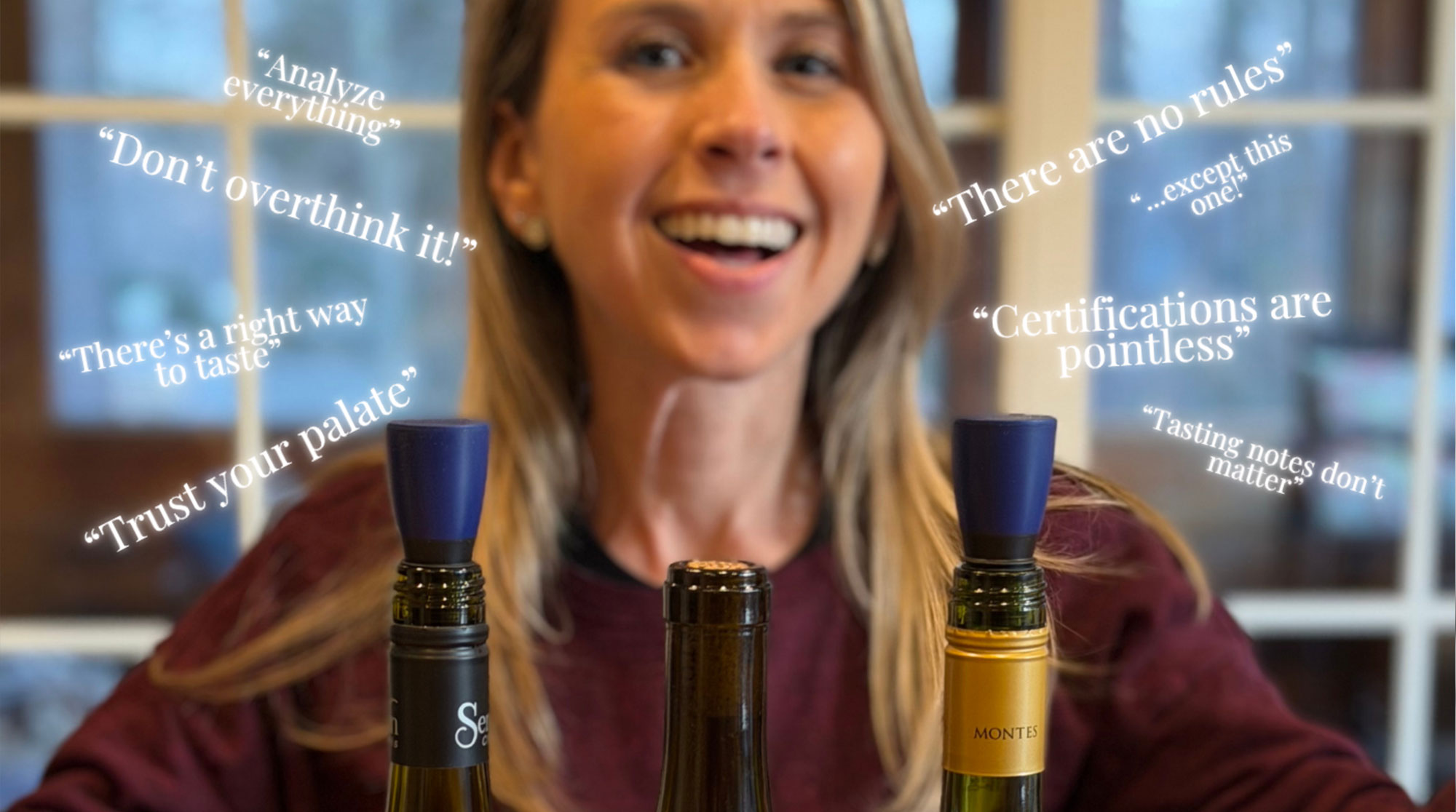
Wine advice is everywhere, and a lot of it sounds like it cannot possibly all be true at the same time. It’s not.
Follow a formal tasting system. No, stop overthinking it. Taste blind. Actually, blind tasting is a parlor trick. Trust the scores. Scores are meaningless. There are no wrong answers. Some of your answers are wrong.
Cool. Cool cool cool.
If you’ve spent any real amount of time studying wine, you’ve probably run into this. And if you’re currently working toward a certification, trying to get better at blind tasting, or simply attempting to figure out how the heck you’re supposed to learn all of this, the conflicting advice can get exhausting.
I know it has for me.
And these are just some of the big ones that seem to really fire up the wine industry and make it feel like there are sides you have to choose between.
There are plenty of others.
Glassware. Ice in wine. Decanting. Serving temperature. Cork versus screwcap. Food pairing. Whether you should spit or swallow at a tasting. Even how you’re “supposed” to hold a wine glass.
And so many of these have a grey zone.
They’re often completely dependent on the goal, the wine, the situation, or the person drinking it.
But we love taking them to extremes.
Always. Never. Right. Wrong.
But I’ve started to think that a lot of this advice isn’t actually contradictory.
It’s contextual.
The person telling you to follow the grid may be talking about passing an exam. The person telling you to throw the grid out the window may be talking about enjoying dinner with friends. The person telling you to taste blind may be trying to build calibration. Someone else may be trying to teach you what Sauvignon Blanc actually tastes like for the first time.
These can all be right.
And if you start looking at wine advice this way, it gets a whole lot easier to decide what to listen to, what to ignore, and what to put in the mental folder labeled “maybe, but not right now.”
Usually, it’s not.
Usually, it’s someone telling you what has worked for them.
One thing I’ve started doing when I hear wine advice is mentally putting “in my experience” in front of it.
“In my experience, you should always taste blind.”
“In my experience, tasting notes don’t matter.”
“In my experience, the grid is essential.”
It’s a small change, but it helps me remember that most wine advice is really someone sharing what has worked for them, in their context, at their level, with their particular goals.
That doesn’t make the advice wrong. It makes it useful information rather than a universal rule.
I can take what’s helpful, test it against my own experience, and decide whether it works for me.
I genuinely think this is a much healthier way to learn wine than trying to collect a bunch of rules and hoping they never contradict each other.
Because they will.
So here are a few of the wine-advice battles I keep running into…and how I think about them…
This one might be my favorite.
On one side, you have the formal tasting crowd:
Follow the structure. Be systematic. Work through the wine. Don’t skip steps.
On the other:
For the love of God, just taste the wine.
And honestly?
I understand both.
A tasting framework gives you somewhere to start. It keeps you from bouncing randomly between observations and conclusions. It gives you a repeatable process that you can use across different wines and different tasting sessions.
This is incredibly useful when you are learning.
It is especially useful when you are preparing for an exam, where you are being asked to assess wine consistently and under pressure.
The structure is intentional. It serves a purpose.
But a framework is a tool, not an authority.
The grid does not get the final vote on what your palate experienced.
The more time you spend with formal tasting systems, the more you realize how much your own palate enters the equation, and how often your experience doesn’t fit neatly into a grid.
If you have ever changed a tasting note because you knew what the exam wanted to see rather than what you actually perceived, you already understand this tension.
It is not a failure of structure. It is a signal that the framework is serving the exam, not your sensory experience.
Both things can coexist.
The trick is recognizing which one you’re doing in the moment!
I love blind tasting.
I also don’t think everything needs to be tasted blind.
Blind tasting is incredibly useful when the thing you are trying to practice is deduction.
When you don’t know what is in the glass, you can’t lean on the label to fill in the blanks. You have to work from the evidence in front of you.
You might think:
High acidity. Medium alcohol. No obvious oak. Lemon. Green apple. Maybe some lees character…
Instead of:
Oh, it’s Chablis. I know what Chablis tastes like.
SO helpful when you are trying to build calibration.
But if I am learning a grape variety for the first time?
Give me the label.
I want to know that I’m tasting so I can connect what I’m smelling and tasting to the name of the grape. I want to build a reference point.
And even better, give me two Sauvignon Blancs side by side.
Now I can compare them.
I’m not trying to guess.
I’m trying to notice.
This is a completely different kind of learning.
So when someone tells me I should always taste blind, my question is:
Always blind for what?
If I’m practicing deduction, and/or challenging myself, blind makes a ton of sense.
If I’m building sensory memory, open-label may be far more useful.
Neither method wins.
The goal determines the method.
PS Students preparing for exam-style tasting, where calibration and consistency are rewarded, will find structured blind tasting practice especially valuable here. It’s something we do monthly in Blind Tasting Group.
This one gets especially interesting in wine education.
You’ll hear people say:
There are no wrong answers in wine.
And I understand what they mean.
If I smell pear and you smell apple, neither of us necessarily needs to be corrected. If I describe something as chalky and you call it mineral, that isn’t a situation that requires a wine referee.
Tasting descriptors are interpretive.
But some swing far in the other direction and suddenly everything is subjective.
And I don’t totally buy that either.
Some things in wine are more directly observable than others.
Sweetness. Acidity. Tannin. Alcohol. Faults.
Those can absolutely be assessed with reasonable consistency.
Your personal experience still matters, but that doesn’t mean every conclusion is equally supported by the wine.
This is one of the things I think wine education sometimes struggles to explain.
There is a difference between:
“You perceived something differently than I did.”
and
“The wine gives us no useful information, so anything goes.”
Not the same thing.
Your palate is always allowed to have an opinion.
And the wine is allowed to have evidence of high acid.
This one sounds contradictory until you think about the goal.
If you’re having a glass of wine after a long day and someone tells you that you need to drink something you don’t enjoy because it will expand your palate…
No.
Drink the thing you like.
Life is short.
But if you’re trying to learn wine?
I absolutely want you to try things you don’t immediately love.
Not because you need to develop some sophisticated palate worthy of approval from “the wine people”.
Because sometimes you need more information.
Maybe you hate high-acid wines.
Maybe you actually hate young high-acid wines but love them with food.
Maybe you thought you hated Chardonnay and then discovered you really just hate heavily oaked Chardonnay.
Maybe you don’t hate Riesling.
Maybe you hate Riesling that you thought was dry but wasn’t.
This is where comparative tasting gets so useful.
Put the thing you love next to the thing you think you hate.
Now you have something to work with.
You’re not trying to convince yourself to like it.
You’re trying to figure out what you actually like and why.
Since opinions are everywhere… I try not to immediately decide that one person is right and the other person is wrong.
Instead, I ask:
What problem is this advice trying to solve?
What is it based on, evidence, convention, preference, or personal experience?
Does it fit what I’m trying to accomplish right now?
Sometimes the answer is yes.
Sometimes it’s no.
Sometimes it’s “not yet.”
All of these are okay.
You don’t need to collect every piece of wine advice you hear.
You don’t need to reject every formal system because it has limitations.
You don’t need to abandon structure in the name of freedom.
And you certainly don’t need to treat someone else’s tasting note as more authoritative than your own experience.
Take the useful stuff.
Try things.
Compare.
Pay attention to what happens in your own glass.
And when someone gives you a very confident piece of wine advice, try adding two little words:
“In my experience…”
It doesn’t make the advice less valuable.
It just puts it back where it belongs:
in context.
The goal is not to eliminate disagreement in wine. Wine is too varied, and palates are too individual, for that to be realistic. The goal is to use disagreement better. To hear advice as perspective, filter it through your own goals, and keep building a practice that you can trust. And if you want a place to do that monthly, come hang out in our free Tasting Room.
What wine advice would you add to the list? What’s something you’ve heard that made you think, “Wait…but that’s not always true”?
Intuition has a place in wine tasting, but blind tasting under pressure asks for something more reliable. Here’s why calibration matters more than guesswork, and how serious tasters build it.
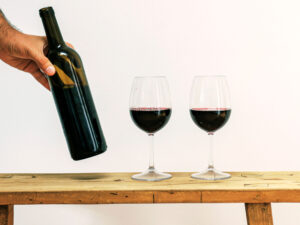
Cabernet Sauvignon and Merlot can overlap more than many wine drinkers expect. The most useful way to separate them is to focus on structure first, then use fruit profile and green notes as supporting clues.
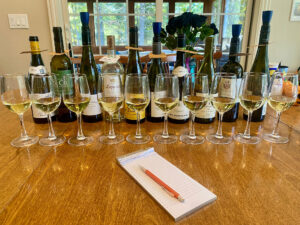
Studying alone does not have to slow you down. With a simple tasting framework, a few comparison wines, and a repeatable practice routine, you can build real tasting confidence on your own.
(Learn to Taste or Refresh Foundations)
(Ask, Discuss, & Connect)
(Gain Tasting Confidence)
Join our totally free community, which includes:
Just submit your info to receive your invite!
By submitting, you are consenting to receive marketing emails from The Grape Grind, including much of the core educational content you’re specifically signing up for now. You can unsubscribe at any time.
Joining the free Grape Grind community means your wine tasting journey begins NOW!
STEP 1 of 2 – Fill this out:
After you click the button above, you’ll be asked to enter your email again to set up your free account. Please use this same email address to create your account.
By submitting, you are consenting to receive marketing emails from The Grape Grind, including much of the core educational content you’re specifically signing up for now. You can unsubscribe at any time.
Learn & improve your wine tasting skills for free!