6 of the most questionable words in wine
Explore six commonly used yet vague wine terms like “natural,” “clean,” and “small production” and learn why they often lack clear definitions or regulations.
Make 2026 THE year.
Take 10% OFF your first 12 months of Tasting Group!
Code:
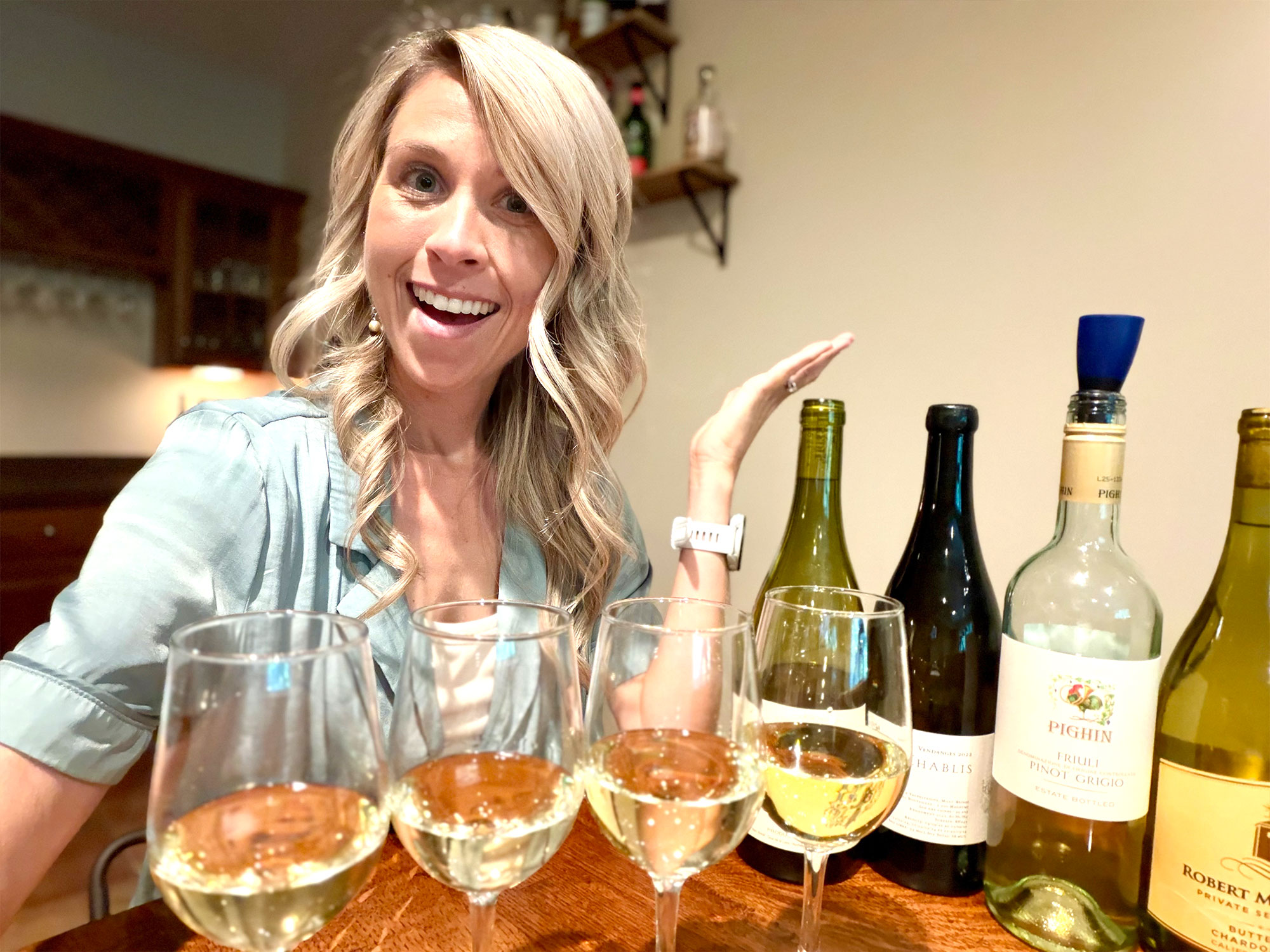
Many of us (including myself) were taught to approach blind tasting as an identification exercise. Line up the wines, work through the structure, and then narrow down to a specific grape variety, region, or vintage. It’s a valuable framework… but it also puts a lot of pressure on every single tasting, which can make things feel way more intimidating!
I have another way for you to practice! It’s an exercise that trains the same underlying skill without making every blind tasting lineup feel like a test you might fail.
It is called the outlier drill!
Here is what tends to happen when students sit down with four “mystery” wines: our brains immediately start categorizing. You smell the first wine and think, “This could be Pinot Noir” and from that point forward, you are looking for evidence that confirms your guess. Believe me when I say, most things that contradict your initial guess will get ignored.
This is called confirmation bias, and it is one of the more common traps in tasting. You have forced the wine into an answer you already chose, vs choosing to look at all the sensory evidence.
This “outlier drill” changes the task entirely. Instead of asking “what is this wine?”, you will be asking “which of these wines is different?” It’s an exercise that changes how you pay attention.
The setup for this is simple. You have four wines in front of you. Three of them share a common theme, and one does not. Your job is to find the one that does not belong.😁
The theme can be almost anything: a shared grape variety, a country of origin, a structural characteristic like oak or sweetness, or a climate style. The taster’s job is to find the wine that breaks the pattern.
Identification is optional, at least at first. Your entire goal is pattern recognition in a lineup, not labeling the variety or region.
Think of it like “one of these things is not like the other.” You are training your brain to notice what the group has in common, and then to notice what deviates from that.
When three wines share a characteristic, your brain starts building a baseline.
You begin to think, “Okay… THIS is what this characteristic looks like on my palate.”
Maybe the three wines are all unoaked. Maybe they’re all high-acid. Maybe they all have a certain level of tannin. Whatever the theme, you’re giving your brain something to compare against.
And once that baseline exists, the outlier gets a whole lot easier to spot.
This also reduces the intimidation that comes with blind tasting. You can be right about the difference without knowing what caused it. You might notice that wine number three has more tannin without knowing whether that is because of the grape, the extraction, or the oak treatment. That is fine. Noticing the tannin is the first step, you can figure out why later.
Of course you don’t HAVE to do this blind to start! The open label version is an easier entry point, and it is where most people should start.
You know what the wines are going in. Maybe you have three Sauvignon Blanc wines and one Chardonnay. You are not trying to identify them. Instead, you are tasting through the lineup and asking yourself: what sensory characteristic makes one of these wines stand apart from the others?
This is where the pieces start to click. You notice something in the wine, you can put a name to it, and then you can start connecting it back to why it’s there. That connection is what helps you actually learn typicity and structural cues instead of just memorizing them.
You do not need to answer all of these for every wine. You are looking for the one cue that makes one of the wines behave differently from the group.
Once the open label version feels comfortable, you can remove the labels entirely. FUN!
Someone else sets up the lineup. You do not know which wine is the outlier (you can know the theme, but you don’t HAVE to necessarily know what the theme is). Your job is to find the deviation using only what you can smell, see, and taste!
The sequence:
Here your brain has to rely entirely on sensory information. There are no labels helping you out, and there is no shortcut to a guess.
One useful technique: do the same drill twice. Run it open label first, discuss why the outlier stands apart, then mix up the same wines and do it again blind. You will quickly discover whether you actually learned the characteristic.
The key to making this drill work is starting with differences that are VERY obvious. The outlier at the beginning should practically announce itself.
Here are themes that work well, roughly ordered from more obvious to more subtle:
You can also keep the variety the same and vary the style. Three unoaked Sauvignon Blancs and one oaked Sauvignon Blanc. Three Sauvignon Blancs from one climate and one from another. This is where the drill gets interesting for more advanced tasters, because the theme becomes about nuance rather than category.
| Theme | Matching Wines | Outlier | What to Notice |
|---|---|---|---|
| Same variety, different variety | Three Pinot Noirs | One Cabernet Sauvignon | Body, tannin, fruit weight |
| Same style: dry vs. off-dry | Three dry whites | One off-dry or sweet white | Sweetness perception, finish |
| Same oak treatment | Three unoaked whites | One oaked white | Texture, vanilla/toast aromas, weight |
| Same climate | Three cool-climate reds | One warm-climate red | Alcohol, fruit ripeness, body |
| Same tannin level | Three low-tannin wines | One high-tannin wine | Grip, dryness, finish length |
| Same ABV range | Three lower-alcohol wines | One higher-alcohol wine | Warmth, body, finish |
| Same country | Three wines from the US | One wine from France | Acid, fruit character, structure |
| Same variety, different country | Three Chardonnays from one region | One Chardonnay from another | Acid, oak, minerality |
| Sensory Cue | What It May Affect | Example Observation |
|---|---|---|
| Acid | Mouthwatering sensation, finish brightness | “This one makes my mouth water noticeably more” |
| Tannin | Grip, dryness, texture on the palate | “There is more drying sensation on the gums with this one” |
| Body | Weight and viscosity in the mouth | “This one feels heavier, almost fuller” |
| Alcohol | Warmth at the back of the throat | “There is more heat on the finish here” |
| Sweetness | Perception of residual sugar | “This one does not taste completely dry” |
| Oak | Texture, vanilla, toast, smoke aromas | “There is a creamier texture and something toasty in the nose” |
| Aromatic intensity | How expressive the nose is | “This one smells much more muted than the others” |
| Finish | Length and character of the aftertaste | “The finish here is noticeably shorter” |
A few things can turn this drill into another frustrating test.
Rushing to a grape guess. The whole point of the exercise is to notice before you name. If you find yourself immediately saying “this is Cabernet,” slow down. Stay in the comparison step longer.
Choosing lineups that are too subtle too soon. If the wines are too similar, the exercise stops being useful and starts feeling like a trick. Build up gradually.
Treating it like a pass/fail exam. You do not need to correctly identify the outlier every time. You need to practice noticing. Those are different goals.
Ignoring the baseline wines. The three matching wines are just as important as the outlier. They are what define the pattern. Spend real time with them.
Skipping repetition. One session does not build a skill. The outlier drill works because it is a repeatable practice session, not a one-time experiment.
Not writing anything down. Unstructured tasting notes, or no notes at all, make it hard to track what you are actually learning. Even a few lines per wine is enough.
A good rotation for blind tasting might look like:
Each of these trains a slightly different part of the same skill. The outlier drill is particularly useful early in the rotation because it builds sensory memory and pattern recognition before asking you to make definitive calls.
For students studying within any exam-based wine study contexts, this kind of systematic tasting approach supports the calibration work that makes tasting under pressure feel more manageable. The focus is on building reliable sensory habits, not on predicting exam questions.
The outlier drill will not make every blind tasting easy. But it will make the first step feel less impossible. You are not asking your brain to solve a mystery from scratch. You are asking it to notice what does not fit, which is a skill, and like any skill, it gets better with repetition!
The best way to get better at tasting is to keep tasting. In our Tasting Group, we make that easier with regular open-label and blind tasting sessions, so you can experiment with different wines, build your sensory memory, and get more comfortable trusting what you notice.
You don’t have to be studying for an exam or have all the answers. Just bring your curiosity, your palate, and a willingness to taste something new.
Explore six commonly used yet vague wine terms like “natural,” “clean,” and “small production” and learn why they often lack clear definitions or regulations.
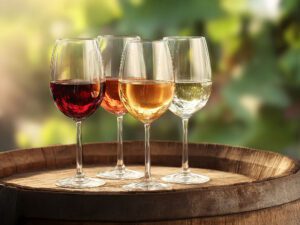
Dive into how hue reveals grape variety, winemaking choices, and aging: what subtle shades whisper about your wine.
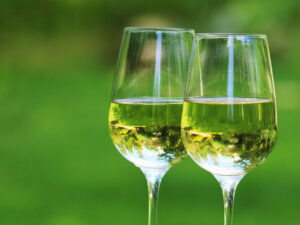
Albariño and Sauvignon Blanc can look similar at first glance. A structured comparison makes the differences easier to spot, especially in aroma, acidity, and texture.
(Learn to Taste or Refresh Foundations)
(Ask, Discuss, & Connect)
(Gain Tasting Confidence)
Join our totally free community, which includes:
Just submit your info to receive your invite!
By submitting, you are consenting to receive marketing emails from The Grape Grind, including much of the core educational content you’re specifically signing up for now. You can unsubscribe at any time.
Joining the free Grape Grind community means your wine tasting journey begins NOW!
STEP 1 of 2 – Fill this out:
After you click the button above, you’ll be asked to enter your email again to set up your free account. Please use this same email address to create your account.
By submitting, you are consenting to receive marketing emails from The Grape Grind, including much of the core educational content you’re specifically signing up for now. You can unsubscribe at any time.
Learn & improve your wine tasting skills for free!