
The Story of Malbec, Carménère, and Tannat
Follow three grapes from endangered in France to thriving icons in the New World.
Make 2026 THE year.
Take 10% OFF your first 12 months of Tasting Group!
Code:
Minerality might be the most ‘unsettled’ word in wine. Some professionals use it constantly, critics will reach for it often. I’ve heard winemakers drop it without hesitation. ..And then there are the people who are largely skeptical, because the term does not map cleanly onto any single compound, aroma, or flavor.
So what is actually happening when we call a wine mineral driven? And how much of that impression is just a wine with less fruit?
My honest answer is that “minerality” means different things to different tasters. Some use it to describe a stony, chalky, or slate-like quality, or when a wine smells flinty or slightly smoky. Others reach for it when a wine feels tense or fresh. A few use it almost by default when a wine does not smell like much of anything. That’s often me.
This is why the term persists. It is flexible enough to cover a lot of sensory territory, which makes it useful in conversation even when it has nothing to do with tasting rocks.
Let’s clear the biggest thing out of the way first.
You are not tasting rocks. You are not tasting soil. The limestone under a vineyard does not dissolve into the vine and translate directly into a limestone flavor in the glass. Geologically, the mineral nutrients present in wine are chemically very different from the minerals found in rock formations.
This is why some tasters push back at the classic “terroir” explanation. Soil absolutely influences how a vine grows, including water availability, pH, vine vigor, and nutrient uptake, all of which shape the final wine. But that is a long and indirect chain of influence. Saying a wine “tastes like the rocks” is a shorthand that the science does not support well.
Minerality is also not a single aroma. It is not a single flavor molecule. To me, it is merely a sensory category. One that emerges from multiple things happening at once.
Wine professionals use “minerality” often, and consumers pick it up from critics and tasting notes. It shows up constantly in wine writing. But scientists are cautious, because the term is imprecise and does not correspond to a single measurable compound or a reproducible sensory trigger.
The result is a word that is simultaneously everywhere and nowhere. …Useful in conversation, frustrating under scrutiny.
However, I don’t think ambiguity is a reason to abandon the term. I think it’s is a reason to use it more carefully.
Several things can contribute to what we perceive as minerality. They do not always appear together, and no single one defines the category.
| Possible Driver | What It Can Smell or Feel Like | Notes for Tasters |
|---|---|---|
| Sulfur compounds | Flinty, struck match, smoky, oyster shell, shellfish | At low levels, these can read as mineral-associated; at high levels, they become unpleasant |
| Reduction | Smoky, gunpowder, slightly closed, flinty | A winemaking condition, not a flavor in itself; can produce sulfur-related aromas |
| High acidity | Tension, freshness, a kind of “electric” quality | Malic and tartaric acid are associated with mineral perception; acidity alone does not equal minerality |
| Low fruit intensity | A wine that registers as restrained, quiet, or stripped back | When fruit is absent, other impressions become more prominent |
| Temperature | Cooler wine suppresses aromatics; warmer wine opens them up | A cooler serve can make a wine seem more mineral; this is perception, not a change in the wine itself |
| Oxygen exposure | Aroma shifts over time in the glass | Reduction can lift as a wine breathes; what seemed flinty may soften |
Sulfur compounds are probably the most discussed driver. Certain sulfur-derived compounds can create aromas that tasters describe as flinty, struck match, smoky, or shell-like. These are actual volatile compounds. Some research suggests that wines judged as more mineral-driven tend to have higher levels of certain sulfur-related compounds and lower levels of norisoprenoids, which are associated with fruit and floral aromas. So two things can happen at once: more sulfur character, and less obvious fruit, and together they push the perception toward minerality.
Reduction is a related but distinct concept. Reductive winemaking means keeping oxygen away from the wine. When there isn’t much oxygen around, some sulfur compounds stick around instead of changing or disappearing and contribute to that flinty or smoky quality. Wines made in sealed tanks, with less racking, or under screwcap are sometimes more reductive in style. But not every reductive wine is mineral, and not every mineral wine is reductive. Reduction is one possible pathway into the category.
Think about what gives wine its aromatic richness. Esters contribute fruit aromas. Terpenes can add floral and citrus character. Oak adds vanilla, toast, and spice. Residual sugar or higher alcohol can make a wine feel rounder and sweeter-smelling. When all of those elements are present and prominent, a wine smells full, expressive, and aromatic.
Now take most of those away. What you are left with is a wine that is drier, less fruity, less floral, less sweet-smelling, and generally higher in acid. And suddenly, the other sensory impressions, the tension, the freshness, the faint smokiness or stony quality, become much easier to notice. They were probably there before. They just had nowhere to stand out.
This however, isnt a rule… a wine is not mineral simply because it lacks fruit. But the absence of fruit can make mineral-associated impressions feel more prominent.
These one’s are easy to overlook, but they can shift our perception significantly.
Temperature: A really cold wine can seem more restrained because fewer aroma compounds are released. As it warms up, more of those aromas come forward, and you may suddenly notice more fruit, flowers, or oak. A wine that seemed tight and stony at 45°F might feel fuller and more expressive at 55°F.
The wine itself hasn’t changed its underlying structure, but your perception of it has. And that can change the way you describe it.
Oxygen: A wine that seems flinty, closed, or muted when you first pour it may open up as it sits in the glass. So giving a wine a little time to breathe isn’t just a formality, it’s part of tasting it.
Temperature, oxygen, and even the way a wine is served can all affect what you perceive. Paying attention to those things is part of becoming a more consistent taster.🤗
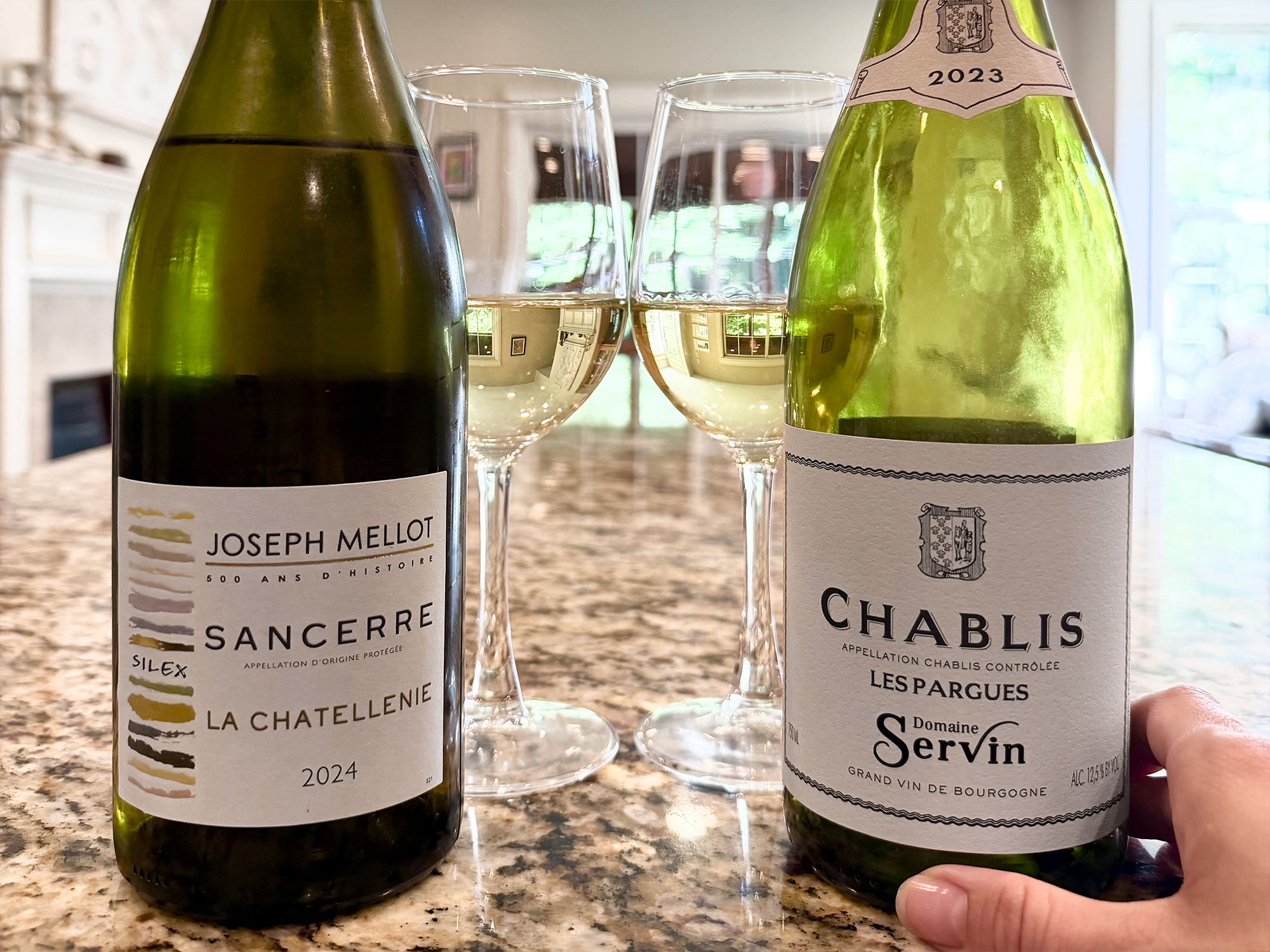
One of the best ways to calibrate the term is to taste two wines side by side.
A useful starting point: a basic, stainless-steel Pinot Grigio from a neutral, high-volume producer alongside a Chablis-style Chardonnay.
Both grapes are relatively neutral. Both wines are likely to be restrained in fruit and moderate to high in acidity. But the Chablis-style wine is more likely to carry saline, stony, or smoky associations, the kind of character that can come from reductive handling or sulfur-derived compounds. It tends to have more tension, more of that electric quality that tasters associate with minerality.
The Pinot Grigio may be quiet and neutral without producing that same impression. It is not necessarily mineral, even though it is not fruity.
Tasting them together lets you feel the difference between a wine that is simply restrained and a wine that has something else going on underneath.

Before you call it mineral, ask yourself three things.
Minerality is not a banned word. I think it’s a very useful descriptor especially when you can think about why it might be there!
If you call a wine mineral, ask yourself what is actually behind that impression. Is there a flinty or smoky quality in the aroma? Is the acid creating a sense of tension? Is the fruit genuinely suppressed, or is it just subtle?
Use “minerality” as a provisional descriptor, not a final answer. Write down what you actually smell. Stony. Smoky. Saline. Struck match. Oyster shell. Then decide whether “mineral” is the right umbrella, or whether something more specific would serve you better.
| Descriptor | Sensory Clue | What to Verify |
|---|---|---|
| Mineral impression | Stony, saline, flinty, or shell-like quality; tension; high acid | Is there an actual aroma, or is this just quiet and restrained? |
| Low fruit | Restrained, neutral, not obviously fruity or floral | Is fruit absent, or is it present but subtle? Check temperature. |
| Reductive character | Struck match, smoky, gunpowder, closed on the nose | Does the aroma shift with oxygen? Does the flinty quality lift? |
| High acidity | Freshness, tension, electric quality, mouth-watering | Acidity alone is not minerality; look for additional aromatic evidence |
| Saline impression | Sea spray, oyster shell, briny | Often associated with coastal regions or specific winemaking; if making regional claims |
| Flinty note | Struck flint, sparks, gunpowder | Likely sulfur-derived; check for reductive handling |
So is “minerality” real? The experience of it absolutely is, but it doesn’t come from one single compound or one simple thing in the wine. It’s a word we use to describe a combination of sensory cues, and different tasters may experience or describe those cues differently. That’s what makes minerality both useful and frustrating, and why the best way to understand it is to taste, compare, and build your own reference points.
Want more chances to taste, compare, and build those reference points? Join us in Tasting Circle, where we do exactly that together.
Now that you’ve thought about all the pieces that can create that impression, what does “minerality” mean to you?

Follow three grapes from endangered in France to thriving icons in the New World.

Dive into the Finger Lakes’ Riesling culture through an immersive four-day program, blending tastings, blending trials, and insights from top winemakers.
Chardonnay and Chenin Blanc can overlap more than many tasters expect. This guide focuses on the clues that matter most, including acid, texture, oak, and fruit profile, so you can make a more reliable call.
(Learn to Taste or Refresh Foundations)
(Ask, Discuss, & Connect)
(Gain Tasting Confidence)
Join our totally free community, which includes:
Just submit your info to receive your invite!
By submitting, you are consenting to receive marketing emails from The Grape Grind, including much of the core educational content you’re specifically signing up for now. You can unsubscribe at any time.
Joining the free Grape Grind community means your wine tasting journey begins NOW!
STEP 1 of 2 – Fill this out:
After you click the button above, you’ll be asked to enter your email again to set up your free account. Please use this same email address to create your account.
By submitting, you are consenting to receive marketing emails from The Grape Grind, including much of the core educational content you’re specifically signing up for now. You can unsubscribe at any time.
Learn & improve your wine tasting skills for free!