Everything You Need to Know About GSM Blends: A Quick Guide
Explore the seductive alchemy of Grenache, Syrah & Mourvèdre: deep, layered blends with spice, smoke, and elegance.
Make 2026 THE year.
Take 10% OFF your first 12 months of Tasting Group!
Code:
“Balanced” is one of those wine words you hear constantly. And if you are just starting to hone in on tasting, it is easy to assume it is a compliment that means something like smooth, or fruity, or easy to drink.
It does not mean any of those things.
Balance in wine means the structural elements feel proportionate to each other. No single element dominates in a way that feels out of place. The wine feels complete & harmonious …like everything belongs.
Once you know what balance actually is, you will start thinking about it in every glass.
Balance is about the relationship of structural elements in wine.
The structural elements in wine are acid, tannin, alcohol, body, sweetness (or residual sugar), and fruit concentration. Balance happens when those elements feel proportionate to each other. When one supports the others rather than overwhelming them.
A wine can still be balanced even if one structural element is very high or very low. What matters is whether the other elements are there to support it.
Winemakers chase balance because a balanced wine simply makes sense on the palate. It truly makes a wine complete.
I’ve heard “balanced” described in a way that means “pleasant” or “smooth.” And because smooth wines are often easy to drink, the two ideas get tangled together.
But a wine can be bold, structured, tannic, and high in acid and still be completely balanced. Think of a well-made Cabernet Sauvignon with firm tannins, bright acidity, and enough dark fruit concentration to hold it all together. That wine is not soft. It is balanced.
Another misconception is that a “medium” structured wine is balanced. Also not the case.
A wine that has noticeably high tannin is not automatically unbalanced. A wine with mouthwatering acidity is not automatically unbalanced. What you are looking for is whether the rest of the wine is there to meet it.
Again, balance is based on relationships between all the structural elements!
For most white wines, acidity is the primary structural element. It creates freshness and lift. It makes your mouth water. It is what makes a wine feel alive rather than flat.
But here is something worth knowing: a low-acid white can still be balanced.
Gewurztraminer is a good example. The variety tends to produce wines with lower acidity than something like Riesling or Sauvignon Blanc. But quality examples of Gewurztraminer often have enough body, enough fruit concentration, sometimes a touch of residual sugar, and enough alcohol that the whole thing holds together. The acid is not loud, but the other elements are there to fill that space.
Winemakers working with high-acid grapes sometimes choose to soften the acidity through malolactic fermentation, or they might leave a small amount of residual sugar on the wine to bring things into proportion. These are deliberate choices made in pursuit of balance, not softness.
When you taste a white wine, ask yourself: does the acidity feel supported by the body, the fruit, the finish? Or does it feel sharp and isolated?
In red wines, tannin is often the dominant structural force. It is what gives a wine grip, dryness, and structure on the palate.
Unbalanced tannin is not subtle. It can feel bitter, astringent, or too grippy. It leaves your mouth feeling dry in a way that is not satisfying.
But tannin can be balanced when the fruit concentration is there to meet it, when the alcohol provides some weight and warmth, or when oak aging has softened the perception of the tannin over time. A tannic wine with strong fruit and good structure is not a problem. It is a well-built red.
Merlot and Cabernet Sauvignon are useful varieties to practice with here, because they give you a range of tannin levels and fruit expression to compare. More on that in the practice section below.
These three elements do not always get the attention they deserve when people talk about balance, but they matter.
High alcohol can feel hot, heavy, or bloated on the palate if nothing else is there to support it. Wines like Zinfandel or Amarone can reach quite high alcohol levels, and when they are well made, the fruit concentration, oak, and acidity hold everything in place. When they are not well made, you feel the heat sitting on its own.
Residual sugar works similarly. A small amount of sweetness can actually help balance a wine with high acidity or firm tannin. But if the sugar is excessive and the other elements are not there to support it, the wine can taste syrupy and heavy.
Body is the structure piece that holds everything together. A wine with good body feels complete. A wine that is thin in body might have its structural elements showing more starkly, even if none of them are extreme.
Balance is about the whole structure, not any one piece of it.
The easiest question you can ask yourself when tasting is: what is the loudest structural element in my mouth right now?
Is it the acidity? The tannin? The alcohol? The sweetness? The fruit?
Once you find it, ask yourself if other structural elements are balancing it enought for the wine to feel pleasing.
If one thing is dominating and nothing else is meeting it, that is a sign the wine may be out of balance.
Here is what imbalance can feel like in practice:
Think of it like a stool. If one leg is missing or much shorter than the others, the whole thing feels unstable. You notice it immediately, even if you cannot name exactly why. That instability is what imbalance feels like on the palate.
When a wine is out of balance, one element announces itself and the rest of the wine does not follow. The finish might feel sharp and short. Or heavy and flat. Or grippy without any fruit to smooth the finish. The finish can feel like something was missing, or like something was too much.
Balanced wines tend to happily linger. They feel resolved.
Balance is not fixed. It can shift depending on context.
Temperature affects how structural elements are perceived. A red wine served too warm can feel more alcoholic and heavy. A white wine served too cold can seem more acidic or tight than it actually is.
Bottle age can change balance significantly. Young wines with firm tannins may integrate over time as the wine develops. A wine that feels angular and grippy at release might feel far more harmonious after a few years in the cellar.
Food changes things too. A tannic red that feels a bit aggressive on its own might feel perfectly balanced alongside a fatty, protein-rich dish. Your palate and the food can work together to shift how the wine registers.
None of this means you cannot make observations about balance. It just means those observations are always a little contextual, which is part of what makes tasting interesting!
Here is a simple exercise that works well for building pattern recognition around balance.
Find two bottles of red wine, a Merlot and Cabernet Sauvignon works well for this. One from the bottom shelf of your grocery store, the cheapest example you can find. One at $30 or above.
Taste them side by side and focus not on which one you prefer, but on the structural harmony of each.
It’s possible that in the cheaper bottle, you’ll notice that one element stands out in a way that feels unsupported. The tannins might feel grippy without much fruit behind them. The finish might be short or sharp. The wine might feel like one thing rather than a complete whole.
In the $30+ bottle, you may notice that the elements feel more integrated. The tannin has fruit to meet it. The acidity feels like it belongs. The finish lingers a little longer.
Price is not a guarantee of balance.
After tasting, write a short note on each wine: what was the loudest structural element? Did anything feel unsupported? Did the wine feel proportionate, harmonious, or dominated by one trait?
Repeat this with wines of different styles over time. Revisit the same wine at a different temperature or with food. Deliberate practice is how tasting confidence builds!
| Element | What it contributes | What imbalance can feel like |
|---|---|---|
| Acid | Freshness, lift, mouthwatering sensation | Sharp, puckering, aggressive without weight |
| Tannin | Grip, structure, dryness | Bitter, astringent, too grippy, unsatisfying |
| Alcohol | Warmth, weight, body | Hot, heavy, bloated, syrupy |
| Body | Completeness, texture, presence | Thin, hollow, elements feel exposed |
| Residual Sugar | Softness, roundness, integration | Cloying, syrupy, unresolved sweetness |
| Fruit Concentration | Integration, support for structure | Thin or absent, leaving structure with nothing to hold onto |
| Wine Type | Primary Structure | What to Look For | Common Imbalance Cue |
|---|---|---|---|
| White Wine | Acid | Freshness supported by body, fruit, and sometimes sugar | Acid feels sharp or flat without support |
| Red Wine | Tannin | Grip softened by fruit concentration, alcohol, and oak | Tannin feels bitter, astringent, or grippy |
| High-Alcohol Styles | Alcohol | Warmth balanced by fruit, acid, and oak | Heat dominates; wine feels heavy or syrupy |
| Sweet Styles | Residual Sugar | Sweetness balanced by acid and fruit | Wine tastes cloying or one-dimensional |
Balance is one of the most practical anchors in structured tasting because it reflects the wine’s overall makeup.
What is the loudest structural element? Is it supported? Does the wine feel complete?
Students preparing within formal wine education systems, including those studying within the WSET framework or skills assessed across major certification programs, are often expected to evaluate balance as part of a structured tasting approach. Balance is not a vague compliment in those contexts. It is an observable, describable quality.
The more you practice noticing it, the more reliable your observations become. That is calibration.
If you want a framework to practice this kind of structured observation from the beginning, our free Intro to Wine Tasting Course & Intro to Blind Tasting Course walks you through exactly that. These were created for wine students who want to develop tasting confidence in a repeatable way!

Balance is not the same as smoothness.
A bold, tannic, high-acid wine can be perfectly balanced. What matters is whether the structural elements feel proportionate to each other, not whether the wine is easy or soft.
Ask yourself: what is the loudest structural element?
Acid? Tannin? Alcohol? Sweetness? Fruit? If one thing is dominating and nothing is meeting it, that is where imbalance lives.
Three things that can change balance in the glass:

Explore the seductive alchemy of Grenache, Syrah & Mourvèdre: deep, layered blends with spice, smoke, and elegance.
More bottles do not automatically lead to better blind tasting. What matters more is revisiting benchmark wines, building a repeatable tasting process, and sharpening calibration over time.
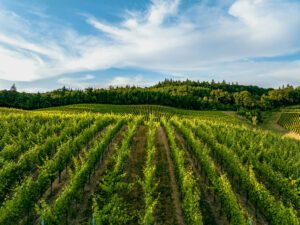
Explore Oregon’s 23 AVAs, from the renowned Willamette Valley to emerging regions like Rogue and Applegate, where cool-climate wines thrive.
(Learn to Taste or Refresh Foundations)
(Ask, Discuss, & Connect)
(Gain Tasting Confidence)
Join our totally free community, which includes:
Just submit your info to receive your invite!
By submitting, you are consenting to receive marketing emails from The Grape Grind, including much of the core educational content you’re specifically signing up for now. You can unsubscribe at any time.
Joining the free Grape Grind community means your wine tasting journey begins NOW!
STEP 1 of 2 – Fill this out:
After you click the button above, you’ll be asked to enter your email again to set up your free account. Please use this same email address to create your account.
By submitting, you are consenting to receive marketing emails from The Grape Grind, including much of the core educational content you’re specifically signing up for now. You can unsubscribe at any time.
Learn & improve your wine tasting skills for free!