How to Stay Calm During Timed Blind Tastings
Timed blind tastings can change how you think, remember, and describe wine. The answer is not to force yourself to feel relaxed. It is to build a repeatable process that holds up under pressure.
Make 2026 THE year.
Take 10% OFF your first 12 months of Tasting Group!
Code:
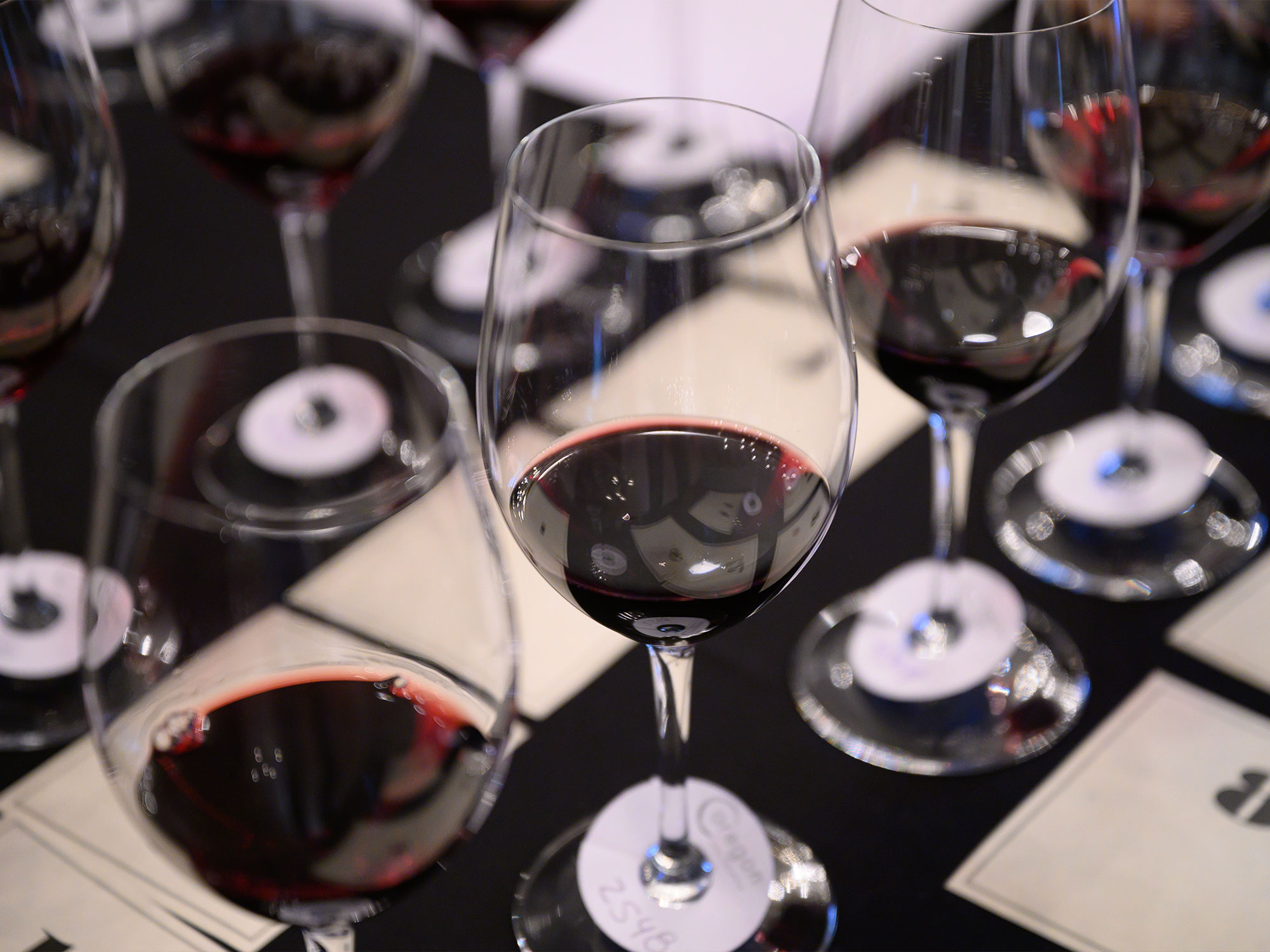
There is no single “way” to taste wine.
However there is a solid, repeatable framework that gives you a backbone. A way to move through a tasting with intention so you notice more, guess less, and build real confidence over time. That is what this post is about.
Wine tasting has always lived somewhere between analysis and emotion. Analysis helps you organize your thoughts. Emotion brings those thoughts to life. Both belong.
The word “formal” carries a lot of weight in wine. It can suggest there is a correct answer, a right vocabulary, a performance you are expected to deliver.
What formal tasting actually means: Being intentional. Paying attention in a repeatable way. Noticing what is in front of you rather than guessing.
Structure in tasting involves a formal system that helps you organize your thoughts, improve consistency, make comparison easier, and train your palate over time. It is the backbone to tasting (used within many organizations and tasting groups).
Then there is “stiffness”. Stiffness is what happens when every tasting note sounds like a checklist. When the framework becomes a box you become trapped in. The goal with tasting, is on that provides formal structure that supports your own honest observations, not one that makes you feel “stiff”!
A lot of people come to wine tasting carrying some fear. Fear of being judged. Fear of saying the wrong thing. Fear of sounding inexperienced.
Wine has long carried a reputation for gatekeeping, and the language around it can feel strangely specific or intimidating at first. In tasting rooms or group classes, that pressure often gets amplified because everyone seems to be trying to sound confident and polished.
I have sat in tastings where nearly every person described the wine in the exact same way, same cadence, same exact vocabulary, same careful delivery… like robots. It can start to feel less like people arent actually experiencing the wine and more like they are reciting what they think they are supposed to say.
When you are around people who seem fluent in wine language, it is natural to either imitate them or stay quiet altogether. But neither of these responses help you learn your own palate.
Real tasting starts when you stop trying to sound impressive and start paying attention to what you actually notice!
You do not need to force descriptors you cannot find. You do not need to speak in polished tasting notes. And you definitely do not need to sound like a sommelier to taste wine thoughtfully.
Start simple. Focus on what genuinely stands out to you, maybe the wine feels fresh, creamy, sharp, juicy, earthy, or reminds you of something familiar. Those observations are not “wrong”; they are the beginning of building sensory awareness.
The goal of tasting is to become more observant over time!
This is the backbone. A repeatable tasting process you can use every time, with any wine, at any level.
This often comes after Appearance and Aroma in the tasting process. But if you are just starting out, you are probably immediately taking a sip of wine, not looking at it or smelling it…. so start here. This is where you taste for the building blocks: sweetness, acidity, tannin, body, and alcohol. More on each of these in the next section.
What do you actually taste? Fruit, Flowers, Dirt, Spice? How long do the flavors last after you swallow?
70–80% of what we perceive as “taste” is actually smell!
How does it smell? Fresh and tart? Ripe and fruity? More earthy than fruity? You do not need twenty descriptors. Two or three honest ones are better than a list you copied from somewhere else.
Look at the wine. Can you see through it? For whites, is it more straw-yellow or bright lemon? For reds, is it more purple or more garnet with orange at the rim?
Appearance matters more in a blind tasting context than in casual tasting, but it takes two seconds and starts building the habit of observation.
Do you like this wine? Would you want to drink it again? Who might enjoy it? Does it remind you of anything?
This is where the wine becomes yours!
| Step | What to notice | Example questions |
|---|---|---|
| Look | Color depth, hue, clarity | Is this pale or deep? Can I see through it? |
| Smell | Fruit character, earthiness, freshness | Does this smell tart and fresh or ripe and warm? |
| Taste | Sweetness, acidity, tannin, body | Does this feel grippy? Bright? Full or light? |
| Think | Flavor, finish, overall impression | What do I actually taste? How long does the finish last? |
| Decide | Personal reaction, quality, preference | Do I like this? Would I drink it again? Who is this for? |
These are the structural components. You do not need to memorize definitions. You just need a reference point.
Acidity is the liveliness in wine. High-acid wines feel lively and electric. Low-acid wines feel rounder and softer. Think about how much you drool. An example is the difference between biting into a lemon versus a ripe peach.
Tannin is the grippy, drying sensation you feel on your gums and the inside of your cheeks. It comes primarily from grape skins and oak. High-tannin wines feel firm and structured. Low-tannin wines feel smooth. Think about whether or not your tongue feels like sandpaper after you take a sip!
Body is how the wine feels in your mouth. Light-bodied wines feel closer to water. Full-bodied wines feel richer and heavier. Think skim milk versus whole milk.
Fruit character is the general style of fruit you are tasting. Fresh and citrusy? Red berries? Dark plum? Dried fruit? You do not need to be specific if you are not sure. “Red fruit” is a perfectly valid observation.
Texture is the overall mouthfeel. Silky, grippy, creamy, sharp, rough.
Start with three things you actually notice. Not thirty. Three. Acidity, fruit character, and body will take you a long way as a beginner. You can add more over time as your pattern recognition builds.
Benchmark notes exist for a reason. They create a shared language and help beginners orient themselves. When someone says they taste grapefruit in a Sauvignon Blanc, that is a recognized reference point that makes communication easier. These notes also train recognition and build consistency.
But they are a guide …not a script.
It is completely okay to say “this reminds me of autumn” or “this feels electric” or “this tastes like something I had at my grandmother’s house.” Those are real observations.
And it’s okay to disagree or not fully agree with “the benchmarks”. I have always gotten primarily red fruit from Malbec, even though dark fruit is the more classic benchmark. This is a geniune observation from my palate over years of tasting. I taste my own notes in Malbec. You can disagree with classic notes. You can notice your own patterns.
Use benchmark notes to orient yourself and communicate clearly with others. Use personal notes to make the experience yours. These don’t have to be in competition with each other.
| Structured note | Personal note | Why both matter |
|---|---|---|
| Medium-plus acidity | This feels electric | Structure gives precision; personal language gives texture |
| Red cherry, dried herb | This reminds me of autumn | Benchmarks orient; personal notes connect |
| Light-bodied, silky texture | Feels like cool silk | Technical terms communicate; personal terms resonate |
| Citrus, green apple | Tastes like a cold morning | Shared vocabulary builds; individual voice deepens |
The single most effective thing you can do is taste the same wine more than once. Deliberate practice over time is how calibration happens. Your observations become more consistent, your memory builds, and you start to trust what you are noticing.
Tasting a Pinot Noir once and reading about it afterward is useful. Tasting it three times over a few weeks and keeping short notes each time is significantly more useful.
Tasting two similar wines side by side speeds learning faster than isolated tasting. When you put a high-acid wine next to a low-acid wine, the difference becomes obvious in a way that no amount of reading can replicate. Comparative tasting is one of the best tools available to beginners.
It’s also helpful to taste with and experience how others talk about wine! This helps you understand how different palates experience the same wine. Someone may notice an herbal note you completely missed. Another person may describe the texture in a way that suddenly makes the wine click for you. Over time, those conversations help you build trust in your own palate instead of constantly questioning it.
That is a big part of the environment we try to create inside Tasting Group. It is a structured space to practice tasting out loud, hear how other palates experience the same wine, and build confidence without feeling pressure to sound like an expert.
Common Mistakes and Better Alternatives
| Mistake | Better move |
|---|---|
| Forcing aromas you do not actually smell | Note what you genuinely detect, even if it is simple |
| Copying tasting notes without understanding them | Use benchmark notes as reference, not replacement |
| Trying to sound like a textbook | Use your own language alongside structured observations |
| Staying silent because you are unsure | Share a simple observation, even one thing you notice |
| Confusing liking a wine with assessing quality | Ask both questions separately: do I like this? Is it well-made? |
| Overloading the note with too many words | Start with three honest observations |
| Treating tasting as memorization | Focus on skill-building through repetition |
| Using structure so rigidly it blocks honesty | Let structure guide you, not constrain you |
Practice over memorization is the principle that cuts through most of these. You are building a skill!
Wine tasting is a skill. Skills develop through repetition, attention, and honest feedback. It does not require talent or the right vocabulary on day one. It requires showing up and paying attention consistently.
The best tasters I have seen balance structure, benchmarks, personality, and curiosity. They are not performing. They are genuinely interested in what is in the glass. That curiosity is what keeps the practice alive.
Many students studying within formal systems like WSET or CMS use structured frameworks to build consistency and prepare for certification tasting exams. That kind of disciplined, systematic tasting approach is genuinely useful. But even within those systems, the most compelling tasters are the ones who bring something personal to the glass alongside the structure.
You do not need to memorize hundreds of aromas. You do not need to sound like anyone else. All you need is a repeatable tasting process you can use consistently, and the patience to let your palate develop through actual tasting.
Reducing guesswork is the outcome of this practice. Not perfection. Consistency!
Wine becomes more interesting when you bring yourself into it. Start with structure. Add your own voice over time. Both belong here!
Timed blind tastings can change how you think, remember, and describe wine. The answer is not to force yourself to feel relaxed. It is to build a repeatable process that holds up under pressure.
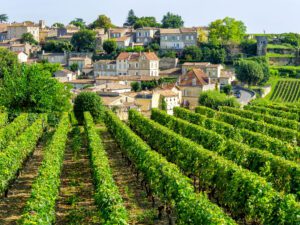
Discover Bordeaux’s diverse terroirs, from the Cabernet Sauvignon-dominant Left Bank to the Merlot-rich Right Bank, and explore its renowned sweet wines and classifications.
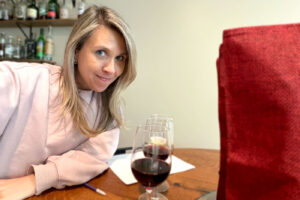
Intuition has a place in wine tasting, but blind tasting under pressure asks for something more reliable. Here’s why calibration matters more than guesswork, and how serious tasters build it.
(Learn to Taste or Refresh Foundations)
(Ask, Discuss, & Connect)
(Gain Tasting Confidence)
Join our totally free community, which includes:
Just submit your info to receive your invite!
By submitting, you are consenting to receive marketing emails from The Grape Grind, including much of the core educational content you’re specifically signing up for now. You can unsubscribe at any time.
Joining the free Grape Grind community means your wine tasting journey begins NOW!
STEP 1 of 2 – Fill this out:
After you click the button above, you’ll be asked to enter your email again to set up your free account. Please use this same email address to create your account.
By submitting, you are consenting to receive marketing emails from The Grape Grind, including much of the core educational content you’re specifically signing up for now. You can unsubscribe at any time.
Learn & improve your wine tasting skills for free!