5 Top Tips for the CSW Exam
Boost your Certified Specialist of Wine exam success with expert strategies, study techniques, and practical advice to confidently navigate theory and tasting challenges.
Make 2026 THE year.
Take 10% OFF your first 12 months of Tasting Group!
Code:
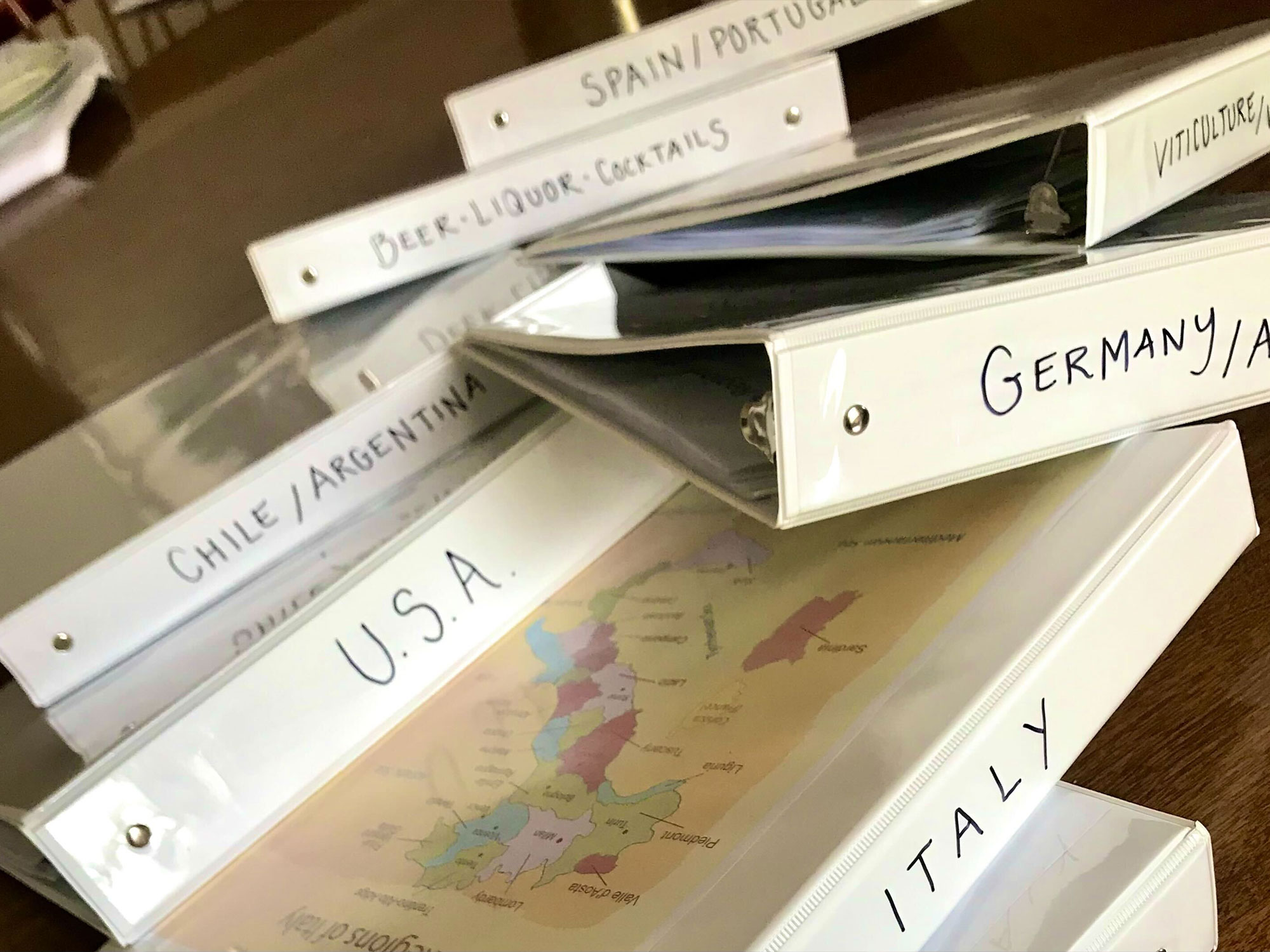
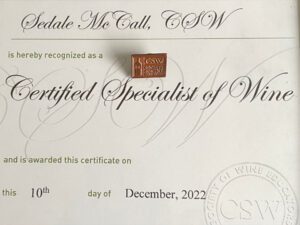
There was a period in my life when wine study felt almost effortless. I was working in restaurants, surrounded by wine every day, talking about it constantly. My kids were small, not yet in activities, not yet pulling my schedule in twelve directions. I moved through CMS certifications quickly. I completed my CSW. I moved into WSET 3 and kept going. So much momentum.
Then life shifted. My kids’ schedules got more demanding. Business got busier. We were navigating a neurodivergent child, and the kind of focused, uninterrupted study time I had taken for granted disappeared. But I still had the same mindset: push forward, keep the pace, do not fall behind.
So I crammed for my Diploma Unit 1 exam after a summer of intensity. And I failed.
That failure was one of the most clarifying things that has ever happened to me in wine education. Not because failing is good, but because it forced me to stop and actually look at what I was doing and why. I was measuring my progress against a timeline that no longer fit my life, and I was using the wrong metrics entirely.
If any of this sounds familiar, this post is for you.
Wine certification naturally produces visible milestones. Levels, passes, badges, distinctions! There is always a next thing, and that next thing is often public. When you complete a level, people know. When you do not, there’s a hidden pressure.
This isn’t a flaw in certification programs. Structure and progression are part of what makes them useful. But the visibility of those milestones can quietly turn a personal learning path into something that feels competitive (even when no one is actually competing with you).
Open Instagram or LinkedIn on any given day and you will likely see someone announcing a pass, a distinction, a new tasting role, a harvest trip, a diploma completion. I have seen “next stop MW” more times than I can count. And I love that people share those wins. Genuinely.
But we often only see the wins. We do not see the burnout behind them. We do not see the debt, the family sacrifices, the panic before exams, the relationships strained by study schedules, or the people who quietly lost their joy somewhere between D2 and D3. Nobody posts that. So we build a picture of other people’s journeys that is almost entirely made of their best moments, and then we hold our own messy, full, complicated lives up against it.
Noticing where others are relative to where you are is a very human thing to do. It is not something to feel total shame over. But in wine certification spaces, it tends to amplify quickly, especially for people who are serious about learning and genuinely care about doing well.
So, it’s not about avoiding comparison entirely; it’s about not letting it dictate choices that don’t fit the life you actually want!
Behind every polished announcement post is a full human life. Someone who may have failed before passing. Someone who studied at the expense of sleep for months. Someone who had to choose between exam fees and something else they needed. Someone who is quietly exhausted but would never say so publicly.
We overestimate how well others are doing because we only see the wins. The beautiful tasting lineups. The certification badges. The travel. What we do not see is everything that made those wins possible, or everything that was sacrificed along the way.
Different people come to wine study from very different circumstances. Some are single with flexible schedules. Some work in wine full-time and are surrounded by it daily. Some can dedicate entire weekends to tasting and theory. Others are parents, caregivers, people working multiple jobs, people managing their health, people building businesses while trying to carve out twenty minutes of study before the house wakes up.
Different capacities do not equal different intelligence. A slower timeline does not mean lower potential. It means a different life.
There are people who have worked in restaurants for years, who know producers intimately, who can tell the story of a wine with clarity and excitement, who taste carefully and thoughtfully, and who have never posted a single WIN online. Some don’t have any formal credentials at all. Some of the most grounded, capable tasters I have encountered are people who move through wine with curiosity over ego, without any urgency to broadcast it.
If you feel behind, it is worth asking: behind by whose measure?
Here are the metrics that have tripped me up personally:
Speed to pass. How quickly you can move through a certification level is not a meaningful indicator of how deeply you are learning. It is a measure of pace, and pace is heavily influenced by life circumstances, not just effort or ability.
Number of exams completed. A longer list of credentials does not automatically mean a richer understanding of wine. It can, but it is not the same thing.
How much you can do in one weekend. Cramming is not the same as learning. Pushing through a massive study block when you are exhausted is not productive. It is a way of performing effort, often for yourself more than anyone else.
When I stopped forcing an unrealistic timeline, I started learning better. Wine study started to feel like something that added to my life rather than something consuming it.
The metrics I use now look different:
Curiosity. Am I still genuinely interested? Am I asking questions, noticing things, wanting to understand more? Curiosity is one of the most reliable signs that your relationship with wine study is healthy.
Retention. Can I recall and apply what I have been working on? Not just for an exam, but in real conversations and tastings?
Clarity of explanation. Can I explain a concept clearly to someone else? If I can, I probably understand it. If I cannot, I probably have more work to do.
Enjoyment. Is this adding to my life? Is there still something here that feels meaningful and engaging, or has it become pure obligation?
Sustainability. Is the pace I am keeping one I could maintain for months or years without burning out?
These are the things that matter.
A sustainable study rhythm is not a rigid schedule. I have a hard time with rigid schedules. Sustainable study to me means a practice I can actually maintain across busy weeks, slow weeks, sick kids, work crunches, and the random Tuesday when everything goes sideways.
How to build a healthy study Rhythm:
Start with what is actually available to you, not what you wish was available. If you have thirty minutes three times a week, that is your baseline. Build from there. Repeatable practice sessions do not need to be long to be effective. They need to be consistent.
Flexibility is not failure. I have changed my Diploma plan more than once. Each time I did, I was not giving up. I was recalibrating to fit my real life rather than an imagined one. That recalibration is why I still love wine.
If a study schedule stops working, adjust it. Forcing a plan that no longer fits is how study becomes something you dread.
Rest is not a reward for studying enough. It is a prerequisite for learning at all. If you are running on empty, your tasting suffers, your retention suffers, and your enjoyment suffers. Protecting your mental bandwidth is part of the practice.
One of the most stabilizing things you can do when you feel behind is return to a simple, repeatable structure. A process you can use consistently, even on a single glass, gives you a sense of forward movement that does not depend on exam schedules or anyone else’s timeline. I can’t always sit down for a full 45 minutes of blind tasting, but I can usually do a quick blind where I run through one glass and jot down standouts on a post it before dinner!
Credentials have a lot of value. They create structure for learning. They build community. They open doors. I am not dismissing them, and I am not telling you not to pursue them, because I myself truly love persuing them.
However, if your only goal is the credential itself, the timeline anxiety never really goes away. There is always another level, another body, another distinction to chase. The finish line keeps moving.
A more grounding question is: what do you actually want to do with this knowledge?
Maybe it is building a business. Maybe it is leading tastings for your community. Maybe it is becoming a better service professional. Maybe it is teaching, mentoring, or just being the person in your friend group who can explain why a wine tastes the way it does. Maybe it is all of the above, and it is still evolving.
Having a purpose beyond the title changes the relationship with study. It shifts the question from “am I keeping up?” to “am I moving toward something that matters to me?” Those are very different questions, and the second one is a lot more sustainable!
Certifications are tools. They are not worth indicators. Your value in the wine world is not determined by how many acronyms you have after your name.
The biggest risk with exams is losing the joy.
Wine study becomes a problem when it turns into obligation. When tasting feels too performative. When you feel guilty for not studying on a Saturday when what you actually needed was a cookout and a beer. When the anxiety around advancement starts to outweigh the pleasure of learning.
I have a business and children. Parenting is naturally ruled by urgency and some anxiety. Business is too. Both have been my greatest teachers. Wine knowledge for me is my passion. It must remain fun. It shouldn’t be urgent. It will not make me anxious. I refuse to let it.
Leave space for real life. Family, rest, creativity, health, the things that have nothing to do with wine. Those things do not compete with your study, they truly help protect it.
If you are feeling behind right now, here is a practical reset.
Choose two or three “metrics” that actually reflect learning. Pick from the list above: curiosity, retention, clarity, enjoyment, sustainability, consistency in blind tasting. Write them down. These are your new benchmarks.
Create a repeatable tasting process you can actually maintain. Not an elaborate ritual. A simple, structured tasting approach you can use consistently, even on a single glass at the end of a Tuesday.
Set a study rhythm that can survive a busy week. If your plan only works when everything goes perfectly, it is not a real plan. Build in flexibility from the start!
Review whether your current pace feels energizing or draining. Honest answer only. If it feels draining, something needs to change, and that is not a sign of weakness.
Stay connected to curiosity. The goal is to keep your energy, keep your pace, and keep your joy long enough for real depth to develop.

You are not behind just because someone else is visible.
Wrong Metrics vs Better Metrics
| Metric | Why It Fails | Better Alternative |
|---|---|---|
| Speed to pass | Pace is driven by life circumstances, not just ability | Consistency of practice over time |
| Number of exams completed | Credential count does not equal depth of understanding | Clarity and retention of what you have already studied |
| How impressive your study looks online | Aesthetic is not learning | Enjoyment and curiosity as ongoing signals |
| How much you can do in one weekend | Cramming is not the same as learning | Repeatable, sustainable practice sessions |
| Comparing your timeline to others | Circumstances vary widely and are mostly invisible | Your own progress week over week |
Signs Your Study Rhythm Is Sustainable
| Signal | What It Looks Like | Why It Matters |
|---|---|---|
| You can maintain it during a busy week | Study does not collapse when life gets harder | Sustainability requires flexibility, not perfection |
| You feel curious, not obligated | You want to open the book or pour the glass | Curiosity is a reliable signal that joy is intact |
| You are retaining what you practice | Concepts stay with you between sessions | Retention confirms that the pace is working |
| You can adjust without guilt | You shift the plan when needed and keep going | Flexibility protects long-term commitment |
| You still enjoy wine | Tasting does not feel like a chore | Joy is not a luxury in wine education, it is the point |
If you feel like you need some direction in your actual tasting practice, that is something structure can genuinely help with.
Our Free Intro to Tasting and Intro to Blind Tasting course are a low-pressure place to start. They are built around deliberate practice and structured note-taking, not speed, credentials, or performance. Just a clear, repeatable process you can use at your own pace.
If that sounds like something you need right now, they are there when you are ready!
Wine education is a long practice. There is no real finish line, and the more you learn, the more you realize how much more there is to know. This isn’t a discouraging thing, it’s one of the most honest and beautiful things about learning about wine!
Stay connected to curiosity. Keep your pace. Keep your joy. The wine world genuinely needs that.
The Grape Grind is an independent wine education resource. We are not affiliated with WSET, the Court of Master Sommeliers, the Society of Wine Educators, or any other certifying body. All certification references are informational only.
Boost your Certified Specialist of Wine exam success with expert strategies, study techniques, and practical advice to confidently navigate theory and tasting challenges.
Unearth a curated selection of thoughtful gifts for wine students, from study tools and tasting journals to immersive experiences and small-batch resources.
Studying alone does not have to slow you down. With a simple tasting framework, a few comparison wines, and a repeatable practice routine, you can build real tasting confidence on your own.
(Learn to Taste or Refresh Foundations)
(Ask, Discuss, & Connect)
(Gain Tasting Confidence)
Join our totally free community, which includes:
Just submit your info to receive your invite!
By submitting, you are consenting to receive marketing emails from The Grape Grind, including much of the core educational content you’re specifically signing up for now. You can unsubscribe at any time.
Joining the free Grape Grind community means your wine tasting journey begins NOW!
STEP 1 of 2 – Fill this out:
After you click the button above, you’ll be asked to enter your email again to set up your free account. Please use this same email address to create your account.
By submitting, you are consenting to receive marketing emails from The Grape Grind, including much of the core educational content you’re specifically signing up for now. You can unsubscribe at any time.
Learn & improve your wine tasting skills for free!