A Quick Guide to Oak Barrels (and how the affect wine)
Explore why oak and wine are inseparable—vanilla, smoke, structure—and the many faces of barrel aging.
Make 2026 THE year.
Take 10% OFF your first 12 months of Tasting Group!
Code:
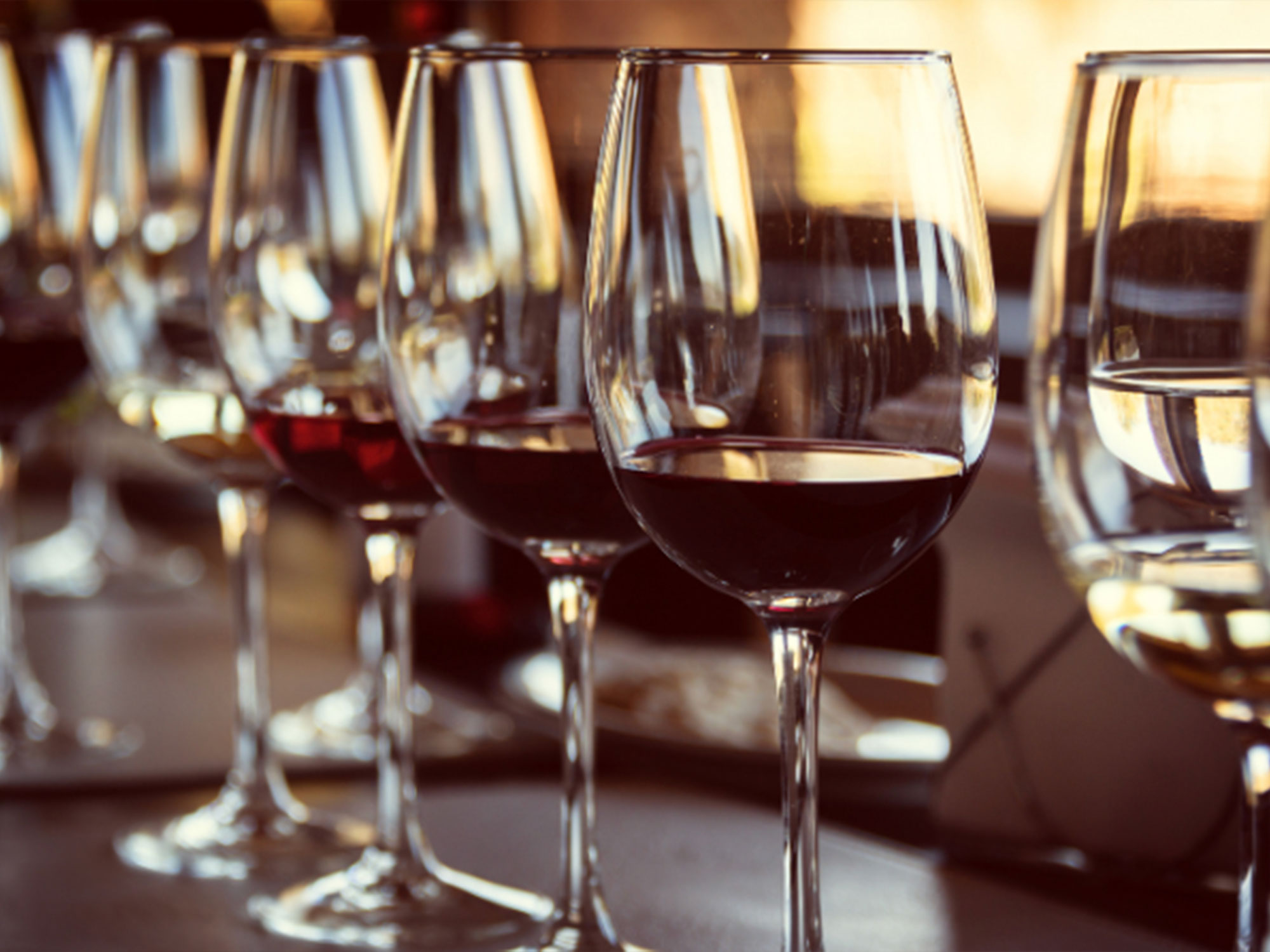
One of the most frustrating parts of blind tasting is that moment right after you taste the wine… and your brain starts cycling through every grape you’ve ever heard of. Nothing quite sticks, and somehow everything feels possible at the same time.
What actually works is a different approach entirely. You do not identify your way to the answer. You eliminate your way there.
This post walks through that process step by step.
Before we get into the method, a few terms worth defining up front:
Blind tasting is often taught, or at least perceived, as a final-answer exercise. Watch enough tasting videos and you start to believe the whole point is to name the wine confidently and quickly.
The actual skill is often unseen here.
Guessing immediately is pattern-matching based on one or two impressions, and that process is fragile. It’ll fall apart under pressure, with unfamiliar wines, and in exam-level contexts where the wines are deliberately chosen to challenge assumptions.
Narrowing works differently. Instead of asking “what is this?” you ask “what can I rule out?” This moves you from a field of hundreds of varieties to a short list of two or three candidates. Your final call becomes a reasoned conclusion rather than a guess.
Option paralysis is normal at the start. There are a lot of grapes. But when you work through a systematic tasting approach and let elimination do the heavy lifting, the list gets short fast!
Process beats intuition alone. That is the foundation of everything that follows.
Before you try to narrow a grape, ask yourself a simpler question: where in the world might this wine be from?
Place the wine in a broad world context using what you already know from the glass.
A useful starting distinction is whether the wine leans toward cooler climate character or warmer climate character. Wines from cooler climates tend to show higher acidity, leaner structure, and more savory or earth-driven qualities. Wines from warmer climates tend to show riper, more fruit-forward character, often with more body and a softer acid profile.
A rough but helpful filter is Europe (Old World) versus outside Europe (New World). European benchmark styles have historically leaned toward restraint, earthiness, and structure. Wines from regions outside Europe, particularly those that set the early quality benchmarks in their countries, have often emphasized fruit purity, ripeness, and oak integration. This is a generalization, not a rule, and wine is always capable of surprising you. But it is a useful first filter before you start thinking about specific varieties.
Fruit-forward versus earth or savory-leaning is another way to frame this. If the wine has a lot of primary fruit and warmth, you are probably thinking about a different cluster of varieties than if it shows organic or mineral-driven character with less obvious fruit.
Use this step as a first filter. Not a final answer.
Color is one of the fastest tools you have, and it is especially useful with red wines.
A pale, translucent garnet tells you something. A deep, opaque purple tells you something very different. You do not need to identify the variety from color alone, but you can immediately eliminate a large number of candidates.
Some varieties are almost always pale. Pinot Noir is the classic example. Thin-skinned, lighter in color, often showing that translucent quality where you can see through the wine in the glass. If you are staring at something opaque and inky, Pinot Noir is probably not your best guess.
Cabernet Sauvignon, by contrast, is typically deeper in color. Thicker skin, more pigment, more likely to be opaque. That color difference alone helps separate two of the most commonly confused varieties at the early stages of tasting.
For reds, building a mental list of your pale varieties and your deep varieties is one of the most efficient things you can do. When you pick up a glass, color immediately tells you which cluster you are working from.
For whites, color is less dramatic but still useful. Depth of gold, greenish tints, and oxidative hues can all point you in useful directions without locking you into a conclusion.
It’s natural to lean on aroma first in blind tasting. It’s immediate, it’s familiar, and it gives your brain something to grab onto right away. A hint of violet and suddenly you may be convinced it is Syrah. A green pepper note and the answer becomes Cabernet Sauvignon before you have even tasted the wine.
Structure is almost always more reliable than aroma alone, and it should come before chasing specific tasting notes.
The four pillars to work through are:
Work through these in order. Use each one to eliminate, then refine. By the time you have assessed all four, you have already ruled out a significant portion of the grape list without relying on a single aroma.
In exam settings, structure usually comes after your tasting notes. But when you’re training your palate, I believe it’s worth giving structure your full attention first, before you move into tasting notes.
Once you have color and structure, fruit profile becomes your next sorting tool.
The goal here is not to identify a specific note. It is to place the wine into a broad fruit cluster, then see which varieties belong there.
For red wines, the most useful clusters are:
For white wines, the most useful sorting distinction is often between aromatic and neutral:
The point of these clusters is not to memorize a list. It is to build your own internal reference through tasting. The only way these banks become useful is if you have actually tasted the wines and felt where they land for you personally.
Even when you have a strong leading candidate, do not stop there. Always bring in two or three alternatives and ask why the wine cannot be those instead.
Make your conclusion earn its place.
The question to ask is: what is this wine definitely not, and why?
In our tasting group recently, we had a same-variety call where the wine was Syrah. A lot of people guessed Merlot, Cabernet Sauvignon, or Zinfandel. The tasters who landed on Syrah had to articulate why it could not be the others. The wines had more dark fruit than red fruit. There was a savory, almost meaty quality running through most of them. That kind of savory depth is not a common feature of Merlot, which tends to be softer and more plummy. So Merlot fell away. Cabernet Sauvignon was a closer call, but the tannin texture and the specific savory character helped separate them. The process was comparative from start to finish.
Another useful example is Pinot Noir versus Nebbiolo. Both are pale varieties. Both show high acidity. Both can show red fruit. If you are only working from color and fruit, you might keep both in play for a long time.
But then you get to tannin. Nebbiolo tannin is extraordinary. It grips the palate in a way that is hard to miss. It dries your tongue. Pinot Noir tannin is almost the opposite, soft and fine-grained. That one structural difference separates two varieties that look nearly identical on color and fruit. Process of elimination, working through each cluster in sequence, is what gets you there.
| Wine | Color | Fruit | Structure | Why the Others Fall Away |
|---|---|---|---|---|
| Pinot Noir | Pale, translucent garnet | Red fruit: strawberry, red cherry | High acid, soft tannin, light to medium body | Cabernet Sauvignon is deeper in color, higher tannin, darker fruit; Nebbiolo shares acid and pale color but has dramatically higher tannin |
| Nebbiolo | Pale to medium garnet, often with orange rim | Red fruit: cherry, rose, dried herbs | High acid, very high tannin, medium body | Pinot Noir shares color and acid but tannin is much softer; Cabernet has darker fruit and different color profile |
| Cabernet Sauvignon | Deep, opaque ruby to purple | Dark fruit: blackcurrant, black cherry, cedar | High tannin, full body, medium-high acid | Pinot Noir is too pale and light; Syrah shares dark fruit but often shows more savory/pepper character and different tannin texture |
| Syrah | Medium to deep purple | Dark fruit with savory, pepper, or meaty notes | Medium-high tannin, medium-full body, often warming alcohol | Merlot is softer, rounder, less savory, more fruity; Zinfandel shows more jammy, high-alcohol character |
What changes the decision at each stage is usually a combination of two or three clues working together. One note alone is rarely enough. Structure plus fruit profile plus color, used in sequence, is what makes the conclusion reliable.
The reveal is where the real learning happens, and most tasters do not use it well.
After you make your call, compare it to the actual answer. If you were right, ask yourself what worked. Which cluster got you there? Which structural clue was the deciding factor? Write it down.
If you were wrong, that is even more valuable. Where did the process fail? Did you skip a step? Did you over-rely on one note? Did a structural clue point you in the wrong direction? Was the wine deviating from its typical profile?
Building a tasting library over time means keeping notes that capture not just what you smelled and tasted, but what your reasoning was and where it held up. Over many sessions, patterns emerge. You start to see where your clusters are solid and where they have gaps.
The method above only becomes useful if you actually practice it. Here is a simple routine for building your variety banks over time.
Over time, this kind of structured blind tasting practice builds something that memorization never can: a reliable internal reference that holds up under pressure.
This is exactly what we work on inside the Tasting Group each month. It’s where you can put this method into practice consistently, tasting alongside others, checking your thinking, and building that internal library of structure and variety in a way that actually sticks.
Once you stop trying to guess and start narrowing, blind tasting becomes less overwhelming, and a lot more workable!
Explore why oak and wine are inseparable—vanilla, smoke, structure—and the many faces of barrel aging.
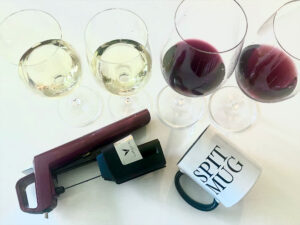
A good beginner tasting routine does not need to be fancy. With a few small habits, you can build tasting confidence, notice structure more clearly, and learn from each wine instead of just drinking it.

Albariño and Sauvignon Blanc can look similar at first glance. A structured comparison makes the differences easier to spot, especially in aroma, acidity, and texture.
(Learn to Taste or Refresh Foundations)
(Ask, Discuss, & Connect)
(Gain Tasting Confidence)
Join our totally free community, which includes:
Just submit your info to receive your invite!
By submitting, you are consenting to receive marketing emails from The Grape Grind, including much of the core educational content you’re specifically signing up for now. You can unsubscribe at any time.
Joining the free Grape Grind community means your wine tasting journey begins NOW!
STEP 1 of 2 – Fill this out:
After you click the button above, you’ll be asked to enter your email again to set up your free account. Please use this same email address to create your account.
By submitting, you are consenting to receive marketing emails from The Grape Grind, including much of the core educational content you’re specifically signing up for now. You can unsubscribe at any time.
Learn & improve your wine tasting skills for free!