The Revival of Amphoras
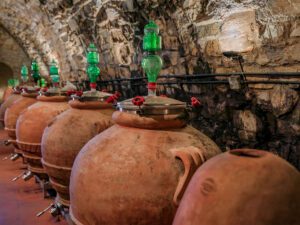
Experience the revival of ancient winemaking: amphoras offer natural fermentation, micro-oxygenation, and a pure expression of terroir, all while reducing tannin bitterness.
Make 2026 THE year.
Take 10% OFF your first 12 months of Tasting Group!
Code:
One of my favorite things about teaching wine is realizing that almost everyone has the same questions when they’re getting started.
Yet somehow, everyone thinks they’re the only one asking them.
They hesitate to speak up on calls, keep themselves on mute during tastings, or send me a message afterward that starts with, “This is probably a dumb question, but…”
(For the record, it never is.)
Wine can feel intimidating when you’re new. There are a lot of terms, a lot of opinions, and a lot of information coming at you all at once.
So let’s make it simpler. Here are some of the questions I hear most often from beginners, along with the answers I wish someone had given me when I was first getting started.
This is probably the question we hear most often, and it is a great one.
You open a bottle, smell it, and think: this smells like wine. Then you read a tasting note describing Meyer lemon, white peach, Acacia blossom, and wet stone. The gap between those two experiences can feel enormous.
Here is the thing though…nobody starts with a full tasting note. What you are seeing when you read or hear a detailed note is the endpoint of a long process of learning, not a starting point.
Aroma recognition develops gradually through repeated exposure.
I think about it a lot like when you’re a kid learning to recognize dogs…
At first, every four-legged animal is a dog. Then you start noticing differences. Some are big, some are small. Some have floppy ears, some don’t. Before long, you can spot the difference between a Labrador and a Golden Retriever without even thinking about it.
But that didn’t happen because you sat down and memorized dog breeds. It happened because you saw them over and over again.
Wine works the same way. First a wine smells like white wine. Then it smells fruity. Then the fruit starts to feel more like citrus. Then you notice whether it leans toward lemon or grapefruit. Over time, with enough practice, lemon becomes lemon zest etc.
Each stage of that progression is real progress!
Rather than trying to land on a specific descriptor immediately, start by sorting into clusters or categories.
To start, you can ask, is this wine more fruity or more earthy? If it is fruity, is it citrus fruit or tropical fruit? If it is citrus, does it lean toward yellow citrus or something more like grapefruit?
That pathway is much easier to navigate than jumping straight to a specific note. And it teaches you something useful: how to organize your thought process.
The best way to build this skill is to pick a grape variety, taste it consistently over time, and practice writing down clusters first. Specific descriptors will follow naturally as your sensory memory develops.
| Stage | What it feels like | Example descriptor range |
|---|---|---|
| Stage 1 | Everything smells like “wine” | White wine, red wine |
| Stage 2 | You notice broad categories | Fruity, earthy, floral, savory |
| Stage 3 | You narrow within categories | Citrus fruit, stone fruit, dark fruit |
| Stage 4 | You identify specific notes | Lemon, peach, blackcurrant |
| Stage 5 | You add texture and nuance | Lemon zest, ripe white peach, dried blackcurrant |
Once students understand that they need to practice tasting, the next question is usually: which wines should I be practicing with?
Every wine style started somewhere. Over time, certain producers became known for making wines that clearly expressed that style, and other winemakers looked to them as examples of what that grape or region could be… they are the benchmark.
Of course, wine doesn’t stand still. If every producer made the exact same wine forever, things would get pretty boring. Today’s winemakers often experiment, push boundaries, and create their own interpretations of a style. That’s part of what makes wine so much fun.
For learning purposes, benchmark wines are especially useful because they give you a reliable reference point. When you taste a benchmark Sauvignon Blanc from Sancerre and then a Sauvignon Blanc from New Zealand, you are not just tasting two wines. You are learning what climate, soil, and winemaking choices do to the same grape. You are learning each regions benchmark style for the same variety!
Benchmark wines tend to share a few characteristics:
Bottles that “break the rules” can be fascinating. But they are harder to learn from when you are just starting to build pattern recognition and sensory memory.
A few practical starting points:
We include benchmark-specific examples on our variety posts, along with a free downloadable list of classic producers.
Jancis Robinson’s variety pages include benchmark examples. GuildSomm, a membership-based platform, has benchmark reference materials for students in formal study programs.
If you are studying within a formal wine education system, benchmark wines are especially useful for building the kind of calibration that structured tasting programs typically expect.
| What to look for | Why it helps | Where to find it |
|---|---|---|
| Regional typicality | Teaches you what the grape looks like in a specific place | Independent wine shops, restaurant sommeliers |
| Moderate production | More consistent vintage to vintage, easier to find again | Wine.com, specialty retailers |
| Representative style (not experimental) | Builds reliable sensory memory | Trusted reference lists, variety posts |
| Track record of quality | Gives you confidence the wine reflects the region well | GuildSomm, Jancis Robinson variety pages |
This is actually where I recommend starting, even though it’s a little different from the approach most exam bodies take.
Most exam tasting grids ask you to note color, then aromas, then flavors, then structure. That sequence makes sense on paper. But for someone just starting out, jumping straight into aromas and flavor descriptors before you have a feel for structure tends to produce scattered, hard-to-use notes.
Wine structure refers to the core elements that shape how a wine feels in your mouth: acid, tannin, body, and alcohol. These are not subjective in the way aroma descriptors are. Acid makes your mouth water. Tannin creates grip and dryness. Body is the weight of the wine. Alcohol adds warmth.
Learning to notice and name these elements first gives you a foundation. Everything else, including aromas and flavors, sits on top of that foundation.
Never taste a wine in isolation if you can avoid it. Your brain learns through contrast, and contrast requires comparison.
Side-by-side tasting means opening two or more wines at the same time and tasting them against each other. A Sauvignon Blanc from Sancerre next to one from New Zealand. A warmer-climate Cabernet Sauvignon next to a cooler-climate one. The differences become immediately more obvious, and those differences are exactly what you are trying to learn!
Open-label tasting, where you can see what you are drinking, is a completely valid and productive starting point. Blind tasting comes later.
| Tasting element | Why it matters | Beginner action |
|---|---|---|
| Acid | Shapes freshness, balance, and food pairing | Notice how much your mouth waters after a sip |
| Tannin | Affects texture and aging potential | Notice grip, dryness, or bitterness on gums and teeth |
| Body | Signals weight and alcohol level | Compare how light or heavy the wine feels |
| Alcohol | Contributes warmth and weight | Notice any heat at the back of the throat |
Most beginners assume there is a correct answer somewhere, and that they are probably missing it.
The reality is more nuanced.
Two tasters can describe the same wine differently and both be broadly correct. One person gets peach. Another gets apricot. A third says white nectarine. These are all stone fruits. If you are landing in the right general category, you are doing meaningful work, even if your specific word differs from someone else’s.
This is where comparative tasting and group tasting become especially useful. Tasting with others who are also studying gives you a natural calibration check. You start to see where your calls align with the group and where they diverge, and that information is useful.
If you are not tasting with a group, a tasting framework or variety reference can serve a similar function. Having a benchmark description for a grape gives you something to compare your notes against, not to copy, but to orient yourself.
We include variety frameworks in our resources with benchmark-specific examples and space for your own notes. The goal is not to match a template. It is to notice whether your observations are in the general neighborhood of what the wine typically expresses.
A memorable tasting note is not automatically wrong. If a wine reminds you of something specific and you can connect it to a sensory memory, that is useful. Structured note-taking is about building a record you can actually learn from, not producing a perfect description!
Blind tasting is one of those skills that feels mysterious from the outside. It is not.
It is a repeatable tasting process built on pattern recognition, process of elimination, and honest review of what you get wrong.
One of the biggest mistakes I see students make is trying to memorize exactly what every grape tastes like.
Instead, focus on learning a grape’s overall profile. (Especially what is identifiable to YOU)
For example, Cabernet Sauvignon often shows high tannin, high acid, darker fruit, and sometimes herbal notes. Not every Cabernet will taste the same, but many will share that general structure.
This is why blind tasting isn’t really about naming the grape variety. It’s about accurately describing what’s in the glass.
If you can identify the fruit family, body, acid, tannin, and overall style, you’re building the right skills, even if you don’t land on the exact grape.
The goal isn’t to memorize wines. It’s to recognize patterns. Naming the grape variety comes last in the sequence for a reason.
Blind tasting is not a guessing game. It is a deductive process. You gather structural information, note the aromatic profile, consider the climate implied by the fruit and acid, and eliminate what does not fit.
Working through that process consistently, even when you are wrong, builds tasting confidence over time.
This is one of the most underused tools in tasting practice.
When you miss a blind guess, do not just ask what the correct answer was. Ask yourself why you thought it was something else. What did your brain pick up on? What sent you in the wrong direction?
That review process is where the best learning happens. It turns wrong guesses into useful data, and it helps you understand your own patterns of perception.
Deliberate practice means tasting with intention, reviewing what you got wrong, and repeating the process. It is not about getting every wine right. It is about reducing guesswork through structured repetition.
If you are just starting out, here is a simple action plan.
Start with structure. Before you worry about aromas or flavor descriptors, get comfortable noticing acid, tannin, body, and alcohol. These are the building blocks everything else rests on.
Taste side-by-side. Open two wines at the same time whenever possible. Comparison teaches you more than isolation ever will.
Use benchmark wines. Not every bottle is equally useful for learning. Wines that express a grape and region reliably give you a more consistent reference point.
Write notes, then revisit them. Keep your notes simple enough that you can spot patterns over time. You are building a tasting library, not writing a review.
Review what you get wrong. Wrong guesses are not wasted practice. They are information.
Repeat. Tasting confidence comes from repetition and structure, not from talent or prior knowledge.
If you want a structured starting point for all of this, our Intro to Wine Tasting course is free and designed specifically for students at this stage. It walks through the fundamentals in a clear sequence, so you are not piecing things together from scattered sources.
If you have been holding back because you thought your questions were too basic, or because you were not sure where to start, this is a good place to begin.
The questions in this post are the same ones serious wine students ask all the time. They are not signs that you are behind. They are signs that you are paying attention.
Tasting with structure is a learnable skill. It builds through comparison, repetition, and honest review. It does not require a perfect palate or years of experience before you start.
Our Intro to Wine Tasting course is free, and it is built around exactly this kind of foundational, structured practice. If you are ready to move from passive drinking to intentional tasting, it is a good first step.
| Question | Short answer | Practical next step |
|---|---|---|
| How do people smell so many aromas? | Aroma recognition builds gradually through repeated exposure | Start with broad categories (fruity vs. earthy), then narrow down |
| What wines should I use as benchmarks? | Wines that express a grape and region typically and reliably | Ask a retailer or sommelier, or use trusted reference lists |
| What should I focus on first? | Structure: acid, tannin, body, alcohol | Taste two wines side-by-side and notice structural differences first |
| How do I know if my notes are right? | There is no single correct note, but there are general benchmark categories | Taste with a group or use a variety reference framework |
| How do I get better at blind tasting? | Learn grape profiles and patterns, not individual bottles | Review wrong guesses and repeat the same variety over time |
Experience the revival of ancient winemaking: amphoras offer natural fermentation, micro-oxygenation, and a pure expression of terroir, all while reducing tannin bitterness.
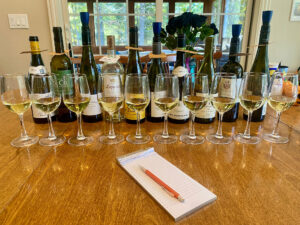
Studying alone does not have to slow you down. With a simple tasting framework, a few comparison wines, and a repeatable practice routine, you can build real tasting confidence on your own.
Acidity is one of the most important structural components in wine, especially in white wine. Here’s how to tell what you’re actually measuring, and how to calibrate it with a simple tasting framework.
(Learn to Taste or Refresh Foundations)
(Ask, Discuss, & Connect)
(Gain Tasting Confidence)
Join our totally free community, which includes:
Just submit your info to receive your invite!
By submitting, you are consenting to receive marketing emails from The Grape Grind, including much of the core educational content you’re specifically signing up for now. You can unsubscribe at any time.
Joining the free Grape Grind community means your wine tasting journey begins NOW!
STEP 1 of 2 – Fill this out:
After you click the button above, you’ll be asked to enter your email again to set up your free account. Please use this same email address to create your account.
By submitting, you are consenting to receive marketing emails from The Grape Grind, including much of the core educational content you’re specifically signing up for now. You can unsubscribe at any time.
Learn & improve your wine tasting skills for free!