Make 2026 THE year.
Take 10% OFF your first 12 months of Tasting Group!
Code:
$17.00 – $55.00Price range: $17.00 through $55.00
NEW & IMPROVED!
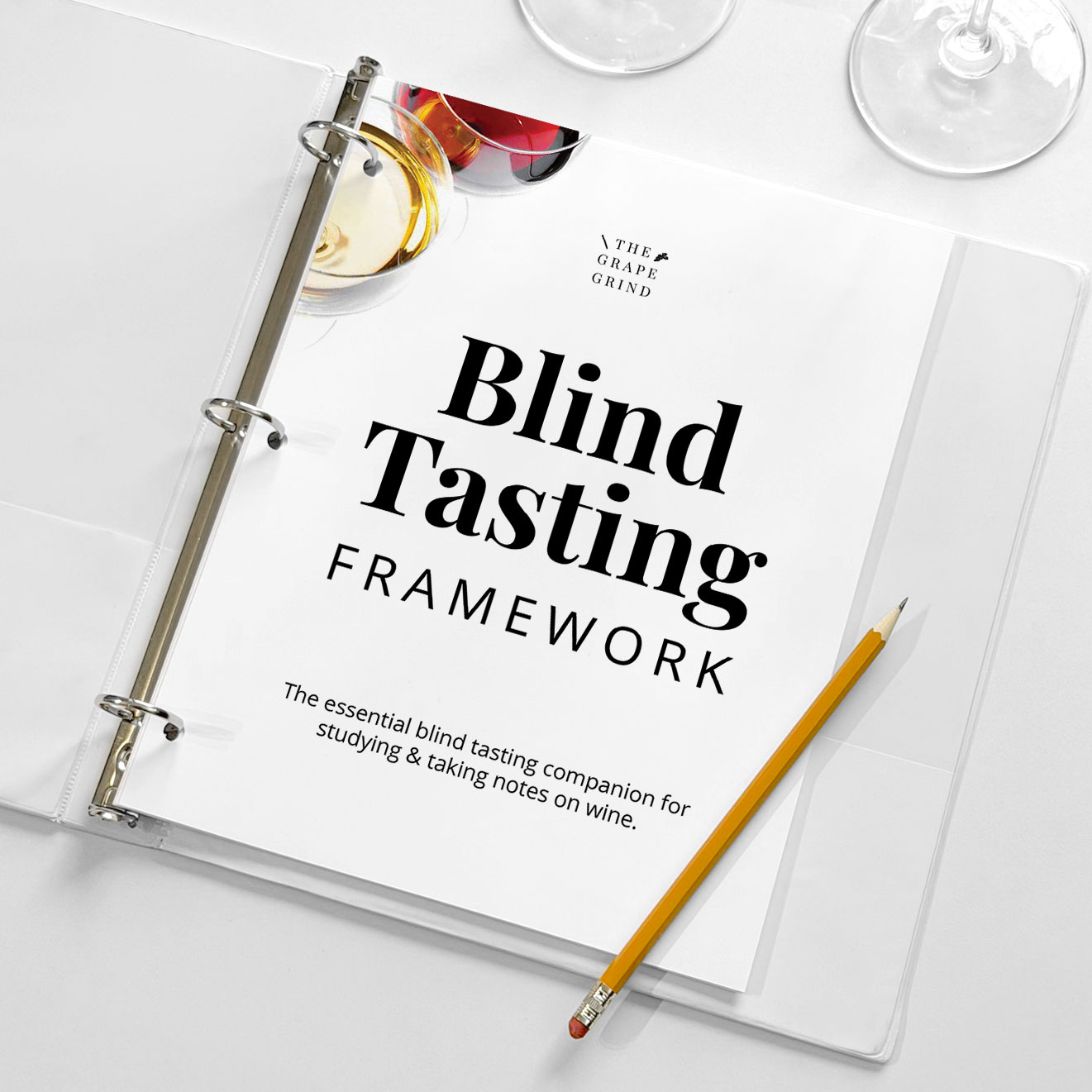
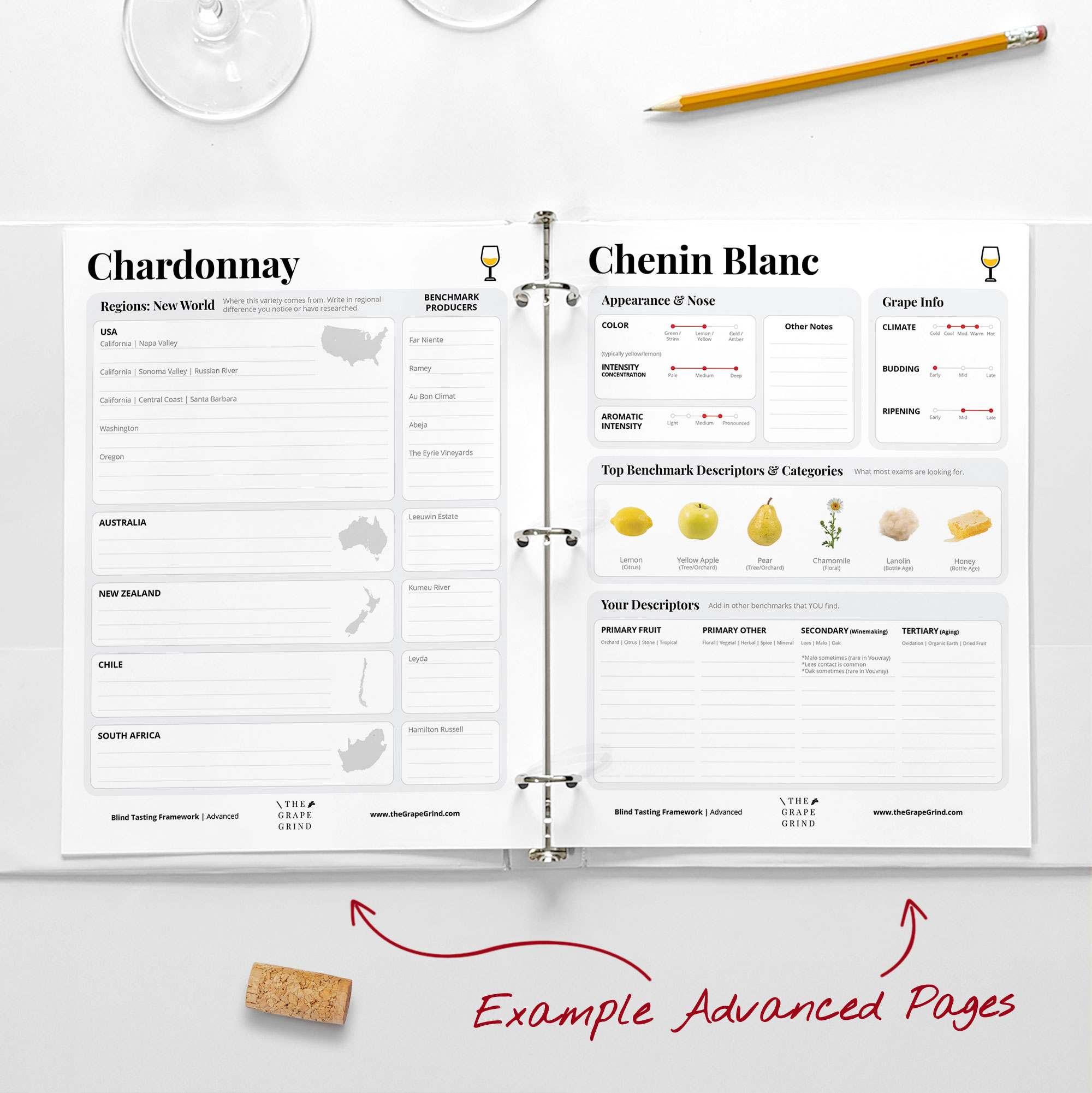
This Blind Tasting Framework is a must-have visual note-taking system for anyone practicing blind tasting or learning about wine varieties. This is the critical framework that allows you to organize and consolidate your variety-specific notes so you can pass your Blind Tasting tests, while providing essential baseline information for each variety. Choose based on what you’re studying for:
Beginner: CMS Intro | WSET L1 | WSET L2 | Hobbyist / Just getting started
Advanced: CMS Certified+ | WSET L3+
Advanced Expansion: CMS Advanced+ | WSET Diploma+ | CWE
Digital Copy: You will be able to download the file after completing checkout. It will then also be available for download from your account portal. You can create an account during the checkout process. (recommended!)
Physical Copy: FREE Shipping! Ships within 2-4 business days. Transit time varies by distance, typically takes 1-5 business days. Shipping available to USA only. You will also gain access to the digital download version with this option, as stated above.
Digital Copy: No returns accepted due to the informational nature of the product. Refunds handled on a case-by-case basis per our Refund and Returns Policy.
Physical Copy: Returns accepted only on the physical copy portion as long as it is unused and in the same new condition as it was received. Digital portion adheres to policy stated above. Once we receive the physical copy back, the eligible refund is the physical product purchase price less the full MSRP value of digital version. See Refund and Returns Policy for more details.
We stand behind every product we create — built to delight, educate, and inspire! Shipped with care and speed, and backed by our promise to make things right if ever needed.
Finally, a way to get organized and keep your notes and observations where you can study them. This Blind Tasting Framework is a system that provides you with the rudimentary information you need for specific varieties, while also giving you the flexibility to add to and expand on what’s provided, resulting in your own unique and perfected grape variety blind tasting library.
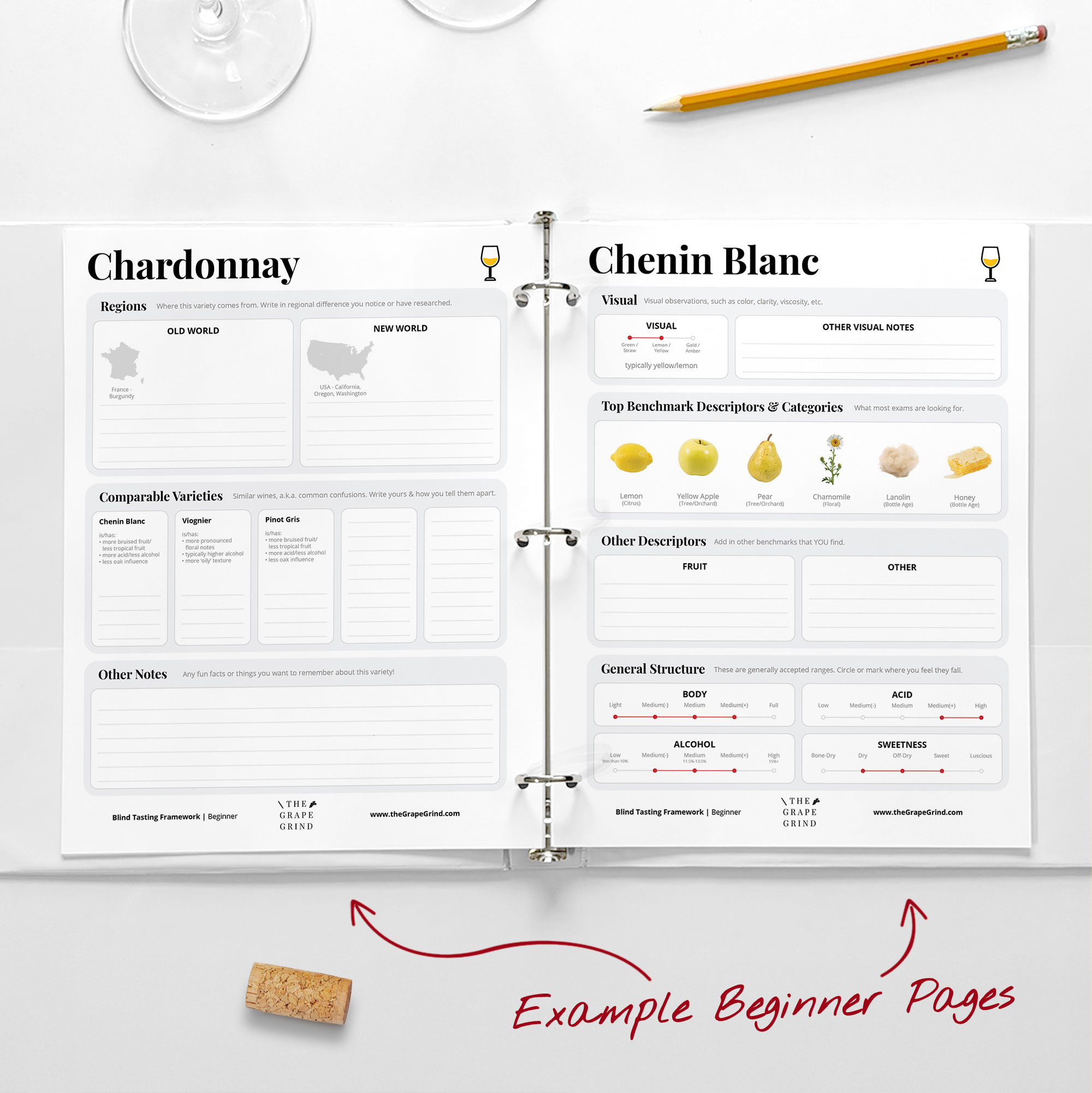
⭐️ Beginner: Includes 22 varieties, each of which is two full pages of benchmark information & notes space, focused on the basic information appropriate to this study level (without overwhelming you!)
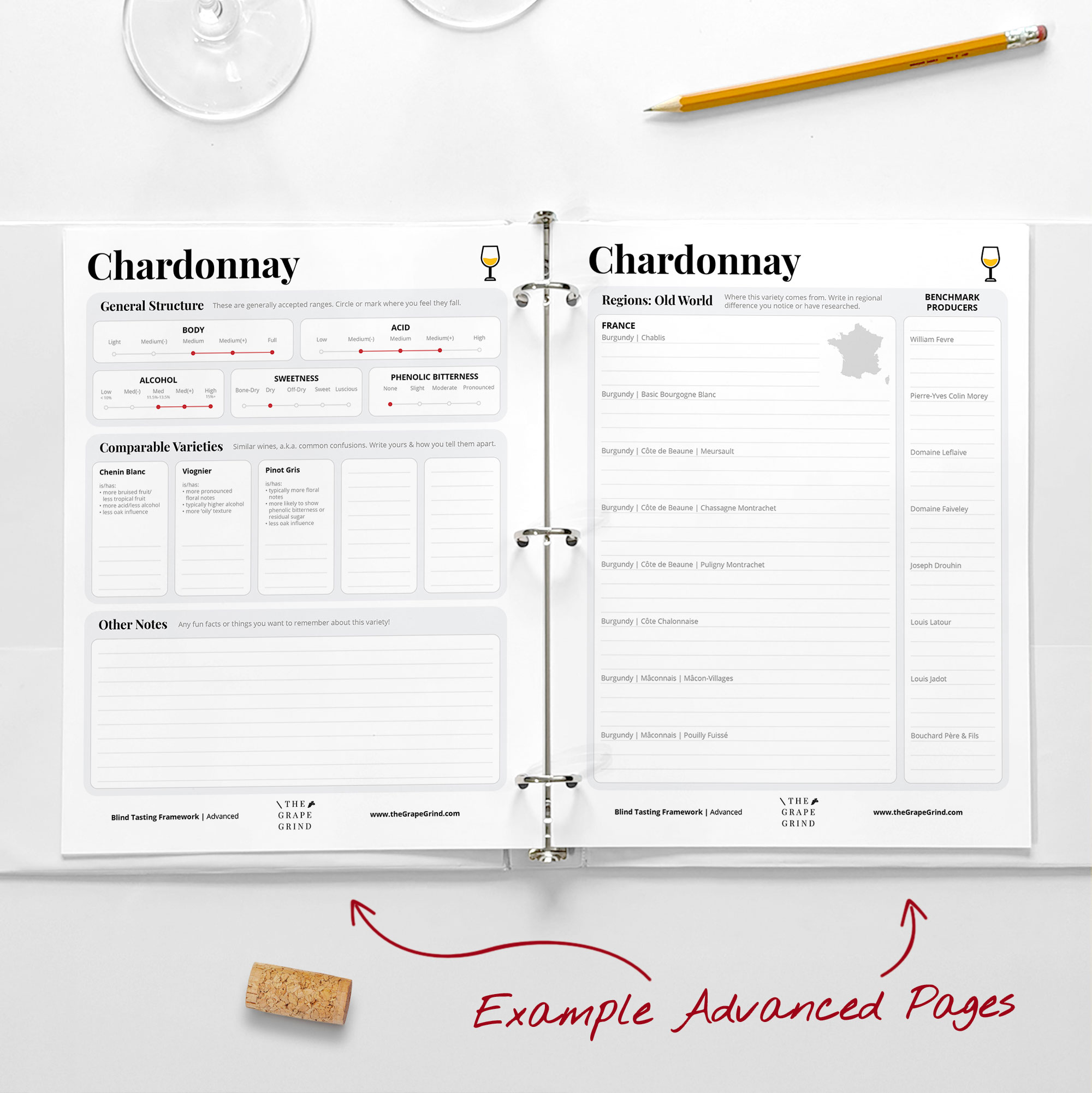
⭐️ Advanced: Includes 22 varieties, each of which is four full pages of benchmark information & notes space, focused on the more expanded, in-depth information appropriate to this more advanced study level.
PLUS
‘Fill in’ space to consolidate YOUR personal tasting notes and new information obtained each time you practice blind tasting or learn more about a variety.
⭐️ Expansion Pack: Includes 20 additional varieties at the Advanced level.
Digital vs. Physical: With the digital version, print it yourself at home as needed! It’s formatted to print on standard 8.5″ x 11″ paper. No printer? No problem. Choose the Physical option and we’ll ship a printed version on high quality paper that will become a trusted companion on your wine-study journey. Physical copy comes 3-hole punched, ready to be put directly into your 3-ring binder (3-ring binder is not included). Note that if you buy a physical copy, you will ALSO gain access to the digital version to re-print if ever needed.
WHITES

Albariño
Chardonnay
Chenin Blanc
Gewurztraminer
Grüner Veltliner
Pinot Grigio
Riesling
Sauvignon Blanc
Torrontés
Viognier
REDS
Cabernet Franc
Cabernet Sauvignon
Gamay
Grenache
Malbec
Merlot
Nebbiolo
Pinot Noir
Sangiovese
Syrah
Tempranillo
Zinfandel
WHITES
Assyrtiko
Cortese
Fiano
Furmint
Garganega
Greco
Melon de Bourgogne
Pinot Blanc
Sémillon
Verdejo
REDS
Aglianico
Barbera
Carménère
Corvina
Mourvèdre
Negroamaro
Nero d’Avola
Pinotage
Touriga Nacional
Xinomavro
Here are explainer videos that will help you better understand how to use your Blind Tasting Frameworks. Select the video that corresponds with your Framework level below.
Hi everyone! Our updated blind tasting frameworks are live!
These are your new visual note-taking system for practicing blind tasting and learning wine varieties.
The framework helps you organize and consolidate variety-specific notes so you can perform more confidently in blind tasting exams.
It provides the foundational information you need for each grape, while also giving you the flexibility to expand on it, ultimately building your own personalized and well-organized grape variety library.
This version is the beginner-level framework, making it ideal for those just getting started with tasting.
It’s especially useful for students preparing for CMS Intro, WSET Level 1, or WSET Level 2, before blind tasting becomes more intense.
To show you how it works, let’s walk through an example using one of the most popular international grapes: Cabernet Sauvignon.
Imagine you’ve just tasted a Cabernet Sauvignon, either on its own or in a flight, and you want to record what you noticed so you can remember it later.
That’s exactly what this framework is designed for.
The first section focuses on visual notes: everything related to what the wine looks like.
Scales are already provided based on exam standards, but you can mark where you think the wine typically falls, extend the scales if needed, or add notes based on your own experience.
There’s also space for any additional visual observations, such as wine diamonds, staining, haze, or anything else you notice in the glass.
Next is the benchmark descriptors section for aromas and flavors.
This is often the most engaging part.
You’ll see benchmark fruit notes and benchmark non-fruit notes listed, aligned with exam expectations.
Each benchmark includes the category it belongs to, and there’s space for you to add additional fruits or non-fruit notes that you personally perceive, allowing the framework to evolve with your palate.
The structure section follows, focusing on palate elements such as body, acidity, alcohol, and tannin.
Benchmark ranges are provided for each variety, but you can mark where you most often experience these traits, such as consistently noticing medium-plus acidity in Cabernet Sauvignon, or adjust the scales if your perception differs.
This section serves as a reliable reference point for structural expectations.
After that, the framework covers regions.
Because varieties taste different depending on where they’re grown, key benchmark regions are listed with space to note distinctions.
A great exercise here is a side-by-side tasting, for example, comparing a Cabernet Sauvignon from Bordeaux with one from California, and recording how they differ.
There’s also a section for comparable varieties: grapes that are commonly confused with Cabernet Sauvignon in blind tastings, or varieties you might enjoy if you like Cabernet.
Differences are outlined, and you can add your own insights if you frequently mix certain varieties up.
Finally, there’s space for any additional notes you want to track about the variety.
All grapes in the framework follow this same structure, and there are extra pages at the end if you want to add new varieties, note color references, or capture anything beyond the core sections.
These frameworks are designed to be living documents! They’re meant to be updated, refined, and expanded over time as you taste more and build a grape variety library that truly makes sense for you.
Hi everyone! Our updated blind tasting frameworks are live!
If you’re not already familiar with them, these are your visual note-taking system for practicing blind tasting and learning wine varieties.
They’re a critical framework designed to help you organize and consolidate variety-specific notes so you can perform more confidently in blind tasting exams.
You get the essential baseline information for each grape, along with the flexibility to expand and personalize what’s provided, ultimately building your own refined and highly usable blind tasting library.
This version is the advanced-level framework, which builds on the beginner version and is intended for those who are seriously preparing for blind tasting exams.
It’s especially well suited for students studying for CMS Certified, WSET Level 3, and the WSET Diploma.
To give you a clear sense of how it works, let’s walk through an example using one of the most common international white varieties: Chardonnay.
Imagine you’ve just tasted Chardonnay (on its own, in a side-by-side comparison, or in a blind tasting) and you want one place to consolidate everything you’ve noticed.
This framework is where all of that information comes together.
One section is fixed reference material: the grape information box.
This includes the climate best suited to the variety, whether it buds early, mid, or late in the season, and when it ripens; background context you can apply directly to what you’re tasting.
The top section focuses on sight.
Here, you’ll note the wine’s color and the typical range you expect to see in the glass.
Chardonnay spans a range, so the color scales are already provided.
The same goes for intensity or concentration: how transparent or opaque the wine appears.
If you notice consistent patterns as you taste, you can mark where the wine typically falls and add any extra visual observations in the notes section.
There’s also a small area to record aromatic intensity, so you can track how expressive the variety tends to be.
Next are the aroma and flavor descriptor sections, organized into clear categories.
These capture what you’re smelling and tasting.
For each variety, the major benchmark fruit and non-fruit notes are listed, along with their broader categories.
This helps you see what shows up most consistently for you.
If, for example, a certain fruit category appears regularly but manifests as a different specific fruit on your palate, you can record that here.
Notes are organized into primary fruit, non-fruit characteristics, winemaking influences such as oak or malolactic fermentation, and tertiary (aged) notes.
Turning the page, you’ll find the structure section, with scales for body, acidity, alcohol, sweetness, and phenolic bitterness.
These ranges are aligned with exam expectations, but your personal perception may differ, so you can extend the scales or mark where these traits typically land for you.
This allows the framework to stay standardized while still reflecting your own palate.
You’ll also see a section for comparable varieties (common confusions in blind tasting).
These are grapes that can resemble Chardonnay and may be mistaken for it.
The framework lists key examples and highlights why each differs from Chardonnay, with space for you to add others you personally struggle with.
Below that is an open area for any additional notes you want to track about the variety.
The regional sections follow.
Chardonnay from France tastes different from Chardonnay from California, and this is where you capture those distinctions.
Major regions and subregions are listed so you can record tasting-specific notes as you explore them.
A benchmark producer section is included as well, with examples provided to help you anchor your understanding.
The framework covers both classic Old World regions and a wide range of New World regions, encouraging side-by-side tastings to compare how Chardonnay expresses itself across countries and climates.
At the back of the guide, you’ll find additional blank note pages you can print and insert if you want to go deeper on a variety.
These allow you to add color references, extended notes, or anything else that supports your learning.
Every white and red variety in the guide follows the same consistent format, so after any tasting, you know exactly where to go to record and review your notes.
The goal is simple: instead of scattered notes buried in notebooks, you have a structured, evolving personal variety library you can return to again and again, refining it as your palate develops and your tasting confidence grows!
Sorry, no reviews match your current selections
Grab our two totally FREE courses:
(Ease into wine tasting basics!)
(Build on basics & learn to blind taste!)
Just enter your email and we’ll send them right away!
By submitting, you are consenting to receive marketing emails from The Grape Grind. You can unsubscribe at any time.
Any purchase should appear in the account, for further acces.
Exactly right! Thanks for pointing this out. If you’ve purchased it, it will always appear in your account when you log in, so you can access it anytime.
The sheets provide a wealth of information, making them perfect for everyone from the beginner to the advanced taster. I especially appreciate the room to add my own observations and notes. The Beginner series tips have helped me get started along my journey, and has helped me focus on learning the necessary information about each grape varietal as my class covers it. Studying about wines can be so overwhelming with all the information available online and in books, but the Frameworks have helped me focus on the key information for my current level. I know the added information in the Advanced series is going to be a huge help as I continue learning and it’s hard not to jump into deeper waters too soon. I am so thankful I found Kendeigh and The Grape Grind early in my wine education journey.
When I first encountered the Tasting Frameworks, my hesitation wasn’t about the tool—it was about myself. How confident was I in my assessments without an answer key to validate them? The commitment to writing down my observations in pencil felt daunting.
But once I started actually using the frameworks, everything changed. I began writing things down as I tasted, sometimes disagreeing with traditional expectations, but always pushing myself to understand what I was—and wasn’t—picking up. (I’ve since learned I don’t detect green pepper at all, but jalapeño? That’s another story!)
The frameworks have helped me focus during tastings. With so much to consider—countless wines, regions, winemaking techniques—it can be overwhelming, especially when preparing for exams. The frameworks help me connect theory to practice: Has this Sauvignon Blanc been crushed or just pressed? How can I tell? How does it compare to a California Sauvignon Blanc?
I’m particularly fond of the “what it can be confused with and why” section. It helps me identify specific areas to work on and revisit in future tastings, making my learning targeted and progressive.
The Tasting Frameworks helped me organize information in the way I’d been looking for since I started my wine studies. I had begun building a spreadsheet to structure my notes, but it felt uninspiring and cumbersome. When the beta version of the Tasting Frameworks was released, I was incredibly grateful — it was far better than anything I’d tried to create myself. I later purchased the public version, even though the beta was already excellent, because the final release was even more refined.
It’s visually appealing, intuitive, and an excellent revision tool. It helps me retain information in a way that truly works for me. Best of all, it’s something I can continue to build and reference well beyond certification studies.
It’s allowed me to build a resource that feels cohesive and personal. I can input information in a way that connects directly to how I think and recall material. And honestly, it looks good — my previous notes were chaotic and difficult to revisit.
I’d been searching for something like this and couldn’t find it. Attempting to create my own version was frustrating and time-consuming. The Tasting Frameworks provide a beautifully structured base from which I can build a bespoke reference tool tailored to my needs.